Light Giver 11
ἁγιασθήτω - From Profane/Common → Holy
And he said to themselves, "Whenever you offer prayers, say, Father, let the Name of yourself be made holy,38 may the Queen of yourself come,I eat, therefore I am
the Bread Loaf of Ourselves, the Super-Being, give to ourselves the one according to a day.38b
turning time backward
ἐπιούσιον
Drawing on the preposition ἐπι (epi), meaning "toward" or "upon," in conjunction with οὐσία (ousia, meaning "essence" or "substance"). This results in an interpretation that sees τὸν ἐπιούσιον as not merely “daily bread” but as a bread necessary for sustaining existence—bread that is directed toward or upon the essence of life. In this case a super-existence, or "an existence beyond."
Project Forward | Project Backward
And send/hurl away to ourselves the Misses of ourselves, for also we, ourselves are hurling away everyone who is indebted to ourselves. And do not bring ourselves into a temptation."And he said toward themselves, "Who from out of yourselves will hold a friend and will lead over toward himself of midnight, and say to self, Friend, use for myself three bread loaves!39
Seeing how a friend of myself has become near from out of a road toward myself, and I am not holding anything I will set beside himself.
And that one also, he who has been separated inwardly, should say, Do not hold close to myself strikings! Already the Door has been shut/barred close, and the Little Children of myself are in company with myself into the Marriage-Bed. I am not able, he who has risen up, to give to yourself!
Ἀναίδεια Insolence, Shameless vs. Αἰδώς Noble Restraint/Modest
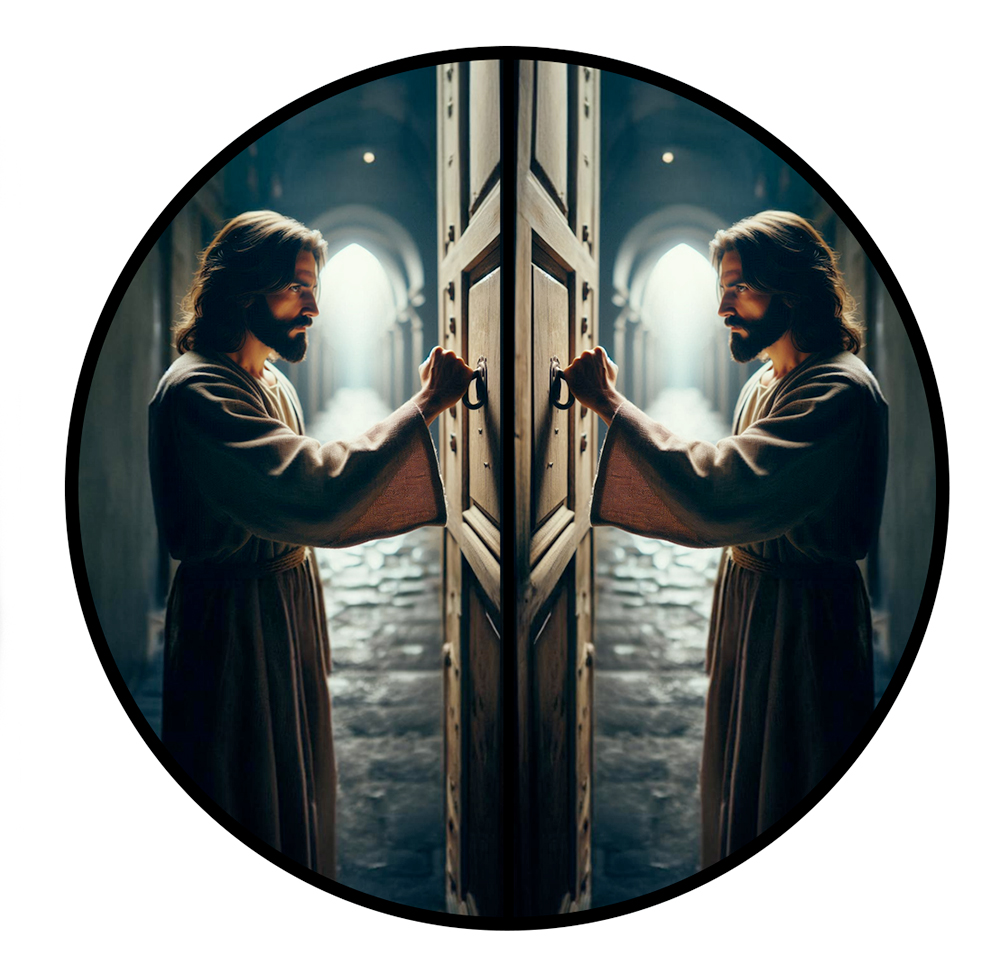
I am speaking to yourselves, if he will not give also to self, he who has risen up, because of the Being a Friend of himself, that is, because of the Shameless One of himself, he who has been woken up will give to self as much as he needs.40I, myself also am saying to yourselves, ask and it will be given to yourselves, seek and you will find, knock and it will be opened to yourselves.
For everyone who is asking is taking hold, and the one who is seeking is finding, and to the one who is knocking he will be opened.
And who from out of yourselves shall the Son ask the Father for a fish, and anti to a fish will give a serpent to self?
Or if he should ask for an egg, will give to self a scorpion?
Knowing to Give, But Not
If therefore you, yourselves, pain-ridden ones who are pre-existing, have seen good gifts to give to the Children of yourselves, how much more the Father, the one from out of a heavenly one, will give a spirit, a holy one, to the ones who are asking for himself?"As a man sharpens the blunt one...
And he was being him who is throwing out a demonic power, and self was being a blunted mute dull one, and he became, while the Demonic Power went out the Blunted Dull One talked, and the Multitude marveled.And certain ones from out of themselves said, "Within Lord of the Flies ("Beelzebul") the Prince of the Demonic Influences, he is casting out the Demonic Influences."
And others, those who are putting to the test, were seeking after a sign from out of a heavenly one close beside himself.
And he, himself who has seen the Thoughts of themselves, said to themselves, "Every queen who has been divided against her own self, she is being brought to desolation, and a home against a home is falling.
And if the Adversary also is divided upon his own self, how will the Queen himself stand up, since you all are speaking within Lord of the Flies ("Beelzebul") to cast out myself, the Demonic Influences!41
And if I, myself within Lord of the Flies am casting out the Demonic Influences, within who are the Sons of yourselves throwing out? Because of this they, themselves will be judges of yourselves!
And if within a finger of God I, myself am casting out the Demonic Influences, then the Queen the God has come beforehand upon yourselves!
When the Mighty One, he who has been armed, should watch over the House of his own self, the things pre-existing of himself are within a peace.
But when a mightier one than himself, he who has come beforehand, should conquer himself, the Full/Complete Armor of himself he will lift up upon her whom he had been persuaded in, and the Plunder of himself he is distributing.
The one who is not being in company with myself is down against myself, and the one who is not bringing together in company with myself is scattering.
The Raven
When the Unclean Spirit should he go out away from the Man it passes straight across through waterless places, that which is seeking after a rest/intermission and that which is not finding is speaking, I will turn back around into the Home of myself, from whence I came forth.And that which has come is finding him who was swept and him who has been arranged in order.
At that time it is leading across and is taking in other pain-ridden spirits of its own self, seven, and those who have come in are dwelling there, and the latter end ones of the Man, that one there, are becoming worse than the first ones.
And he has become within the Speaking of Himself these things, a woman, a certain one who lifted up a voice from out of the Multitude said to self, "Blessed is the Womb, the one who has carried yourself, and breasts at which you suckled!"
And he, himself said, "In that case, blessed are the ones who are hearing the Logos Ratio of the God, and those who are guarding!"
ἐπαθροιζομένων - Assembled en masse
And of the Multitudes, those who are being assembled en masse, he began to say, "The Generation, she, herself is a pain-ridden generation seeking after a sign, and no sign will be given to herself except the Sign of Dove ("Jonah")!Ninevah - "Place of the Goddess" (Inanna)
For just as the Dove ("Jonah") has become a sign to the Ninevites, in this way also the Son of the Human will be to the Generation, this one!42A queen of the South Wind will wake up within the Separation in company with the Males of the Generation, this one, and she will down-separate themselves because she came from out of the Limits of the Earthly One to hear the Wisdom of Solomon, and behold! many more of Solomon in here!43
Males, Ninevites, will stand up within the Separation in company with the Generation, this one, and they will down-separate herself because they changed the mind into the Proclamation of Dove ("Jonah"), and behold! many more of Dove ("Jonah") in here!
No one who has adhered to a lamp is setting into a crypt, nor underneath the Basket, but rather upon the Lampstand so that those who are entering may look at the Brightness.
The Lamp of the Body is the Eye of yourself. When the Eye of yourself should be without folds/single, also the Whole Body of yourself is luminous, but when it should be pain-ridden also the Body of yourself, darkness.
Watch out therefore that the Daylight, the one within yourself, is not darkness.
If therefore the Whole Body of yourself, luminous, that which is not holding any dark portion will be luminous entirely just like when the Lamp with the Lightning should illuminate yourself.
And within the Chirping a Separatist is asking himself in such a manner that he would dine close beside himself, and he who has entered fell back.
And the Separatist, he who has perceived, marveled that he was not plunged first in front of the Morning Meal.
ἁρπαγῆς - Violent Abduction, Rape
And the Master said toward himself, " you, yourselves the Separatists, are cleaning the outside of the Cup and the Dish, but the inside of yourselves is full of rape and a pain-ridden one!44Irrational ones! Did not the one who made the Outside also make the Inside?
Excepting the ones that are being, give a charity, and behold! everything is clean to yourselves!
παρίημι - Let fall to the Side, Disregard
But woe to yourselves, the Separatists! Because you take a tenth of the Mint and the Rue and every Herb and you pass by the Separation and the Agape-Love of the God, and these ones it was necessary to make, and not let those ones fall to the side!καθεδρίας Kathedria - Seat of Authority
Woe to yourselves, the Separatists, because you are agape-loving the First Cathedra within the Congregations and the Welcomings within the Public Assemblies!45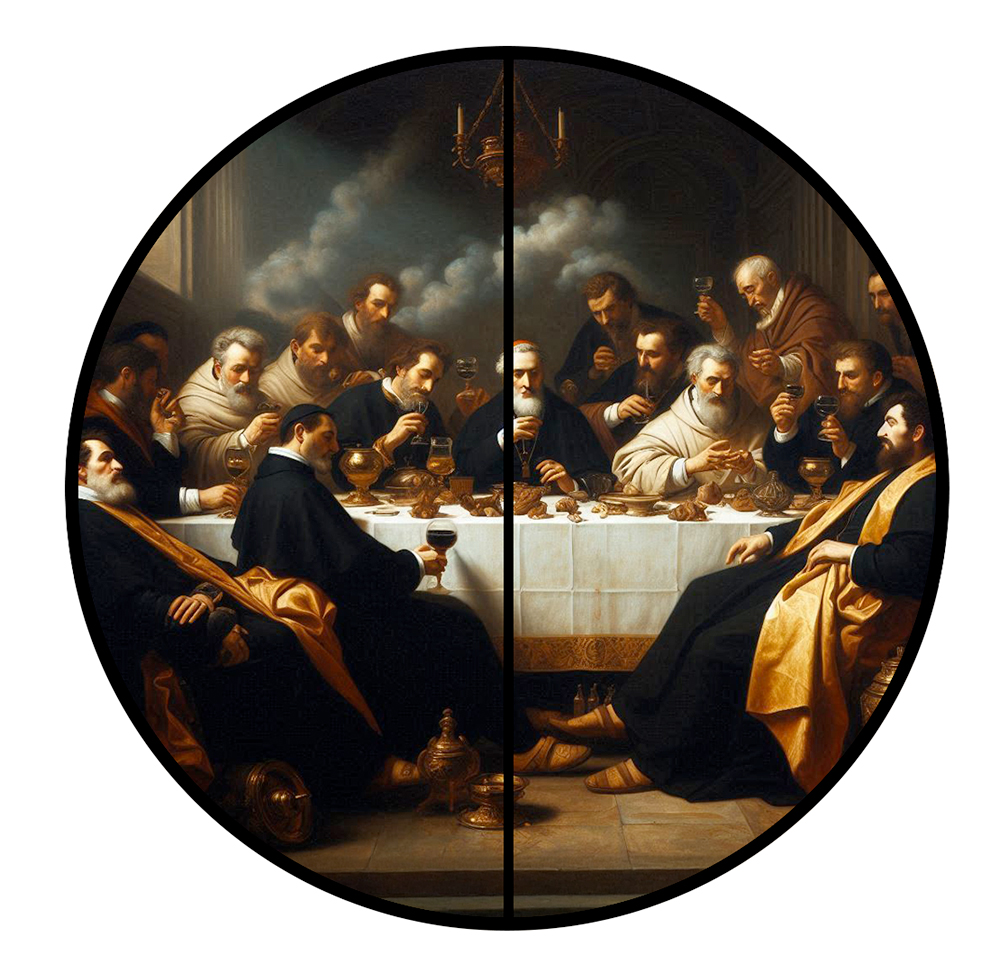
"To the Unknown/Unintelligible God"
Woe to yourselves because you all are just as the Unintelligible Memorials! And the Men, the ones who are treading all around up above/at the top, they have not seen!"
For if also an unintelligible trumpet voice she should give, who will prepare into a war?
(1 Corinthians 14:8 RBT)ὑβρίζεις - treat with excessive disrespect
And he who has been separated, anyone of the Law-Experts, is speaking to self, "Teacher, he who is saying these things, you are also treating ourselves with outrage!"And the one said, "Woe also to yourselves, the Law-Experts! Because you load the Humans, heavy intolerable loads! And you, yourselves do not touch upon the heavy loads with one of the Fingers of yourselves!
οἰκοδομέω - to Build a House
Woe to yourselves because you are home-building the Memorials of the Prophets, but the Fathers of yourselves have killed themselves off!Consequently you are witnesses and jointly approve of the Works of the Fathers of yourselves, for they, themselves indeed have killed away themselves, but you, yourselves are house-building!
"And he Girded up his loins, and ran"
And because of this the Wisdom of the God, she said, 'I will send away prophets and messengers into themselves, and from out of themselves they will kill/slay away and they will run after,'
And a hand of He Is, she has become toward God is Himself ("Elihu"), and he is girding up the loins of himself, and he is running to the faces of Brother of Father, until your coming to God Sowed ("Jezreel").
(1 Kings 18:46 RBT)so that the Blood of all the Prophets might be sought out, the one which has been poured out away from an implanting of an order, away from the Generation, this one!
Away from blood of Vanity ("Abel") as far as blood of He Is Remembered ("Zechariah"), the one who has perished between the Place of Sacrifice and the Home! Yes, I am speaking to yourselves! It will be sought out away from the Generation, this one!
Woe to yourselves, the Law-Experts! Because you have raised up the Key of the Knowledge! You, yourselves did not enter and the ones who are entering you have stopped!"
ἀποστοματίζω - To Catechize
And from there, of him who has gone forth of himself, the Scholars and the Separatists began to entangle/hold in terribly, and to provoke to speech/catechize himself around much more,those who are lying in wait/ambush for himself, to catch something from out of the Mouth of himself.
Footnotes
The verb ἁγιασθήτω is the third person singular aorist passive imperative of ἁγιάζω (“to sanctify,” “to make holy”). It does not mean “keep holy,” which would imply the preservation of a pre-existing state. Rather, the aorist passive imperative form expresses a petition that sanctification be brought about, not maintained. Thus, in the phrase ἁγιασθήτω τὸ ὄνομά σου (“Hallowed be Thy name,” Matt. 6:9), the prayer is not asserting that God’s name is already sanctified/holy and ought to remain so, but rather that it come to be holy.
The Rising of the Sun
This word has been heavily debated by scholars simply because of the philosophical/metaphysical implications of the grammatical compound. There is a simple meaning, according to its components, but not one any biblical scholar was willing to accept in theological discourse.
The term ἐπουσία, though formally straightforward as a compound of ἐπί- ("upon" or "in addition") and οὐσία ("essence" or "being"), has attracted disproportionate interpretive attention due to its latent philosophical and metaphysical potential. While the composite suggests a plausible surface meaning—that which is upon or beyond being—its implications have proven problematic for theological frameworks that resist any notion of intermediary or supervenient being beyond or beside a singular divine essence. Consequently, biblical and patristic scholars were reluctant to adopt the term in its literal or speculative fullness, biased to interpretive routes that maintain doctrinal coherence over lexical possibility. This reluctance underscores a broader tension in ancient metaphysical language: that linguistic derivation does not constrain conceptual interpretation, especially when dealing with terms at the intersection of grammar, ontology, and revelation.
If ἐπουσία is interpreted analogically within a framework of ontological emanation—where being radiates or "beams forth" akin to the sun's light—its prefix ἐπί-, denoting superposition or addition, could signify a plenitudinous extension of essence, not merely spatially, but existentially. Such a concept aligns with metaphysical models wherein existence is not linear or segmented but unfolds as a totality, analogous to perceiving a clock not as a sequence but as an integrated whole. In this sense, ἐπουσία might connote a form of omni-existence—a mode of being in which all times, places, and essences co-inhere without contradiction or division. This reading, while resonant with late Neoplatonic or mystical systems, remains rooted in a conceptual analysis of being as non-successive and non-localized, rather than in any strictly theological dogma.
What?
To put it in simpler terms, the basic meaning of this compound word has caused a lot of debate among scholars because it brings up deep and tricky questions about what it means to exist or to be. One could think about a kind of existence that is beyond normal time and space—like the way the sun shines everywhere in all directions or how a clock can be seen as a whole, not just ticking seconds one after another.
But because these ideas are so complicated and don’t fit easily into any religious beliefs—especially in any Biblical tradition (or early church writings)—most scholars didn’t want to accept the word’s full meaning. Instead, they preferred to distort it in ways that fit better with their religious teachings.
In other words, even though the word seems simple when you look at its parts, the big ideas it suggests made certain people nervous, so they avoided using it the way it naturally might be used.
The best translation of χρῆσόν μοι is generally rendered as “use me” or “employ me.” This rendering follows from the fact that χρῆσόν is the aorist imperative of χράω—a verb that, in its primary sense, means “to use” or “to employ.”
Who borrows food?
While there is a related semantic branch (attested in forms such as κίχρημι) that can convey the idea of “lending” or “borrowing,” the imperative form χρῆσόν belongs to the paradigm of χράω rather than to that of κίχρημι. Thus, unless the context specifically indicates the specialized “lending” usage, “use me” remains the most accurate and natural translation. The idea of "lending bread" is semantically out of place.
In summary, χρῆσόν μοι is best translated as “use me” in contexts where one is inviting someone to make use of one’s abilities, services, or presence.
The term ἀναίδεια (or ἀναιδεία) is uniformly pejorative in Classical Greek, denoting shamelessness, impudence, or insolence, i.e., the absence of αἰδώς (modesty, reverence).
It appears as a moral vice in authors such as Sophocles (El. 607), Euripides (Med. 472), and Plato (Phaedr. 254d), and is even personified as Ἀναίδεια, the allegorical counterpart to Αἰδώς (Xen. Symp. 8.35).
In legal contexts, it may also signify implacability or pitilessness (cf. the ἀναιδείας λίθος, Paus. 1.28.5).
The idea of a "rhetorically softened sense" akin to bold persistence, is hardly attested in Greek thought or literature, but is assumed (due to bias) to be the case in the one use of it in Luke 11:8.
Syntax:
-
ἐκβάλλειν — present active infinitive of ἐκβάλλω (to cast out, expel)
-
με — accusative singular of ἐγώ (me)
-
τὰ δαιμόνια — nominative or accusative plural neuter of τὸ δαιμόνιον (demon, spirit, divinity)
In the phrase ἐκβάλλειν με τὰ δαιμόνια, there would seem to be confusion over subject and object roles:
-
The construction implies: "to cast me out the demons/divinities," which is normally ungrammatical, semantically incoherent.
-
If τὰ δαιμόνια is the subject (i.e., the demons are casting me out), we must use a finite verb (e.g., ἐκβάλλουσι με τὰ δαιμόνια) or restructure accordingly.
-
If the intention is to say "to cast out the demons from me", then με should be in the genitive of separation or governed by a preposition.
Since both are in the accusative, the word δαιμόνια only fits in its neutral sense (divinity/divine power), otherwise we must change words, as every translation seems to have done by replacing the infinitive (to cast out) with a 1st person (I cast out).
(See Logeion on the word.)
Ishtar of Nineveh (Akkadian: Ištar Nīnuwā)
Ishtar (Sumerian: Inanna) was the Mesopotamian goddess of love, war, fertility, and sexuality. She was venerated throughout Mesopotamia, but particularly in Nineveh, where she was worshiped under the title Ishtar of Nineveh, distinguishing her from Ishtar of Arbela and others. The temple of Ishtar in Nineveh was one of the city's most important religious centers and likely central to its identity—possibly even influencing the etymology of the city's name.
The term πλεῖον (neuter of the comparative adjective πλείων, from πολύς) may function either partitive or comparative, depending on syntactic context.
When followed by a genitive, it typically means “more of” (e.g., πλεῖον τούτου – "more of this"); when followed by ἤ or a clause expressing comparison, it signifies “more than” (e.g., πλεῖον ἢ δεῖ – "more than is necessary"). The grammatical construction determines the nuance of the comparison.
This led to confusion for translators who were certain that this must be speaking somehow of the comparison, "greater than Solomon."
Greek ἁρπαγῆς = violent, forceful seizure. Consider how certain historical biases might avoid this word and its inherent meaning. This it not the normal word used for "robbers" (λῃστής) which occurs 15 times in the NT. This word is specific to violent, forceful taking.
Etymology and Core Sense:
-
ἁρπαγή comes from ἁρπάζω (to seize, snatch, carry off by force).
-
Its primary meaning is “violent taking,” which can be:
-
of persons (abduction, including of women for marriage or violation),
-
of property (plunder, robbery),
-
or metaphorical (moral rapacity or greed).
-
In early Greek usage, especially in myth, rape was understood as abduction, often with implied or actual sexual violation, though the texts may not always depict or describe the sexual act explicitly.
Examples:
-
The “Rape” of Helen (ἁρπαγὴ Ἑλένης):
Her abduction by Paris is called a ἁρπαγή in Herodotus and Euripides. -
Aeschylus, Agamemnon 534:
ὀφλὼν ἁρπαγῆς δίκην — “having incurred the penalty for rape”
→ Here, ἁρπαγή clearly denotes sexual violation, framed as a legal charge. -
Herodotus 1.2:
αἰτεῖν δίκας τῆς ἁρπαγῆς — “to demand justice for the seizure”
→ In reference to abducted women (Io, Europa, Medea), this implies sexual violation and/or marriage by force.
Fragment 4 of Solon’s poetry, which is part of his body of work as an ancient Athenian statesman and poet contains one of the first explicit uses of this word in a legal context. Solon is known for his reforms in the 6th century BCE, and many of his works, particularly his poems, deal with laws, morality, and justice.
The specific fragment Sol. 4.13 is part of his “Elegies”, where Solon addresses moral issues, the rule of law, and the behavior of citizens in Athens. It is generally considered to deal with the importance of justice and punishment for wrongdoing, although it does not necessarily have a modern equivalent in terms of written legal codes, but reflects Solon’s thoughts on ethics and crime.
In Solon 4.13, the line ὀφλὼν ἁρπαγῆς δίκην suggests that someone who has committed the crime of ἁρπαγή (rape or abduction) should be judged and held accountable, which is in line with Solon’s reforms that sought to codify moral and legal behavior. The word ἁρπαγή here has its broader meaning of violent taking, including both rape and abduction, emphasizing that such an offense should not be tolerated and that justice must be served.
The concept of rape or abduction of women as a serious offense certainly existed at least 600 years BCE, and Solon's writings reflect this. In his laws and moral teachings, he addresses the abduction of women, which could include both literal kidnapping and rape. The term ἁρπαγή (often translated as seizure, pillage, or abduction) in Solon 4.13 is indicative of a broader moral and legal framework in which actions like rape or forced abduction were condemned and punishable.
It is significant that by this time, in ancient Greece, the rape or abduction of women was seen not only as a personal violation but also as an offense that threatened the social and legal order. Solon, as a legislator, was concerned with the proper conduct of citizens and with upholding justice, which included dealing with crimes against women, including their abduction or sexual violation.
While the specific terminology for rape (as we understand it today) wasn't yet as clearly defined in ancient Greek law, the moral and legal concept of sexual violence and abduction was well-established by the 6th century BCE, and Solon’s code contributed to the evolution of legal principles surrounding such crimes.
In fact, even in earlier texts, like Homer’s epics (8th century BCE), the abduction of women—such as the abduction of Helen by Paris in the Iliad—was central to the plot and framed as a serious violation of social and familial order. However, it is in the 6th century with lawmakers like Solon that we start to see a more formalized, legal treatment of such crimes.
First Seat of Authority
The word "cathedral" derive from the Greek word καθέδρα (kathédra), which means "seat" or "chair".
The evolution of the word goes like this:
-
καθέδρα in Ancient Greek: It originally referred to a seat, often of authority, such as the seat of a judge or a ruler. It came from the verb καθίζω, meaning "to sit."
-
Latin: "cathedrālis": In Latin, the term cathedrālis meant "pertaining to a seat" or "of a bishop's seat." A cathedrālis ecclesia referred specifically to the church that housed the bishop’s official seat (the cathedra).
-
English "cathedral": This Latin term cathedrālis was borrowed into English as cathedral, which refers to the principal church of a diocese, where the bishop’s seat (the cathedra) is located.
Thus, the word "cathedral" directly stems from the concept of the bishop’s seat in the church, symbolizing the authority of the bishop over the diocese.
The term cathedratio refers to the enthronement or installation of a bishop, particularly the act of placing a bishop in his cathedra (seat) within his cathedral. The word cathedratio is derived from cathedra, the Latin word for seat or chair, which specifically refers to the seat of authority in a church, signifying the bishop’s office and jurisdiction over a particular diocese.
Historical Context:
The act of cathedratio involves the formal ceremony where a bishop is consecrated and then enthroned in his cathedra, signifying the commencement of his duties as the leader of the local church. This ritual can be seen as the bishop being given the authority to teach, rule, and guide his flock. The cathedra is not merely a physical seat; it symbolizes the bishop's spiritual authority and role in overseeing the diocese.
In the "Inventio Amundensis", a medieval text, the term is used to describe the enthronement or installation of St. Peter in his episcopal seat. The phrase "habetur in paruris historia B. Petri, que incipit ab ejus vocacione de navi et desinit in ejus ~one" roughly translates to something like: "It is contained in the small history of St. Peter, which begins with his calling from the ship and ends with his enthronement." The reference to vocatio de navi (his calling from the ship) ties into the biblical account of Peter's calling by the Christ, while cathedratio (enthronement) signifies the completion of his spiritual journey to becoming the first pope and bishop.
Symbolic Significance:
-
Cathedra as a symbol: The bishop's cathedra represents his role as the authoritative teacher and leader of the Church. It is often placed in the cathedral as a symbol of the bishop's jurisdiction over the diocese.
-
Enthronement: The enthronement of a bishop is a public acknowledgment of his authority and spiritual responsibility, which also marks the beginning of his service.