Light Giver 14
hydrōpikos - pathological accumulation of water
And behold! he was a certain one, a hydropic one, in front of himself.And he who has been separated, the Salvation, said toward the Law Experts and Separatists, he who is saying, "Is it permitted on the Cessation to treat or not?"
And the ones became still. And he who has seized hold healed himself and he set free.
And he said toward themselves "Whose son or ox of yourselves will fall into dug pit and he will not immediately draw himself up within a day the Cessation?
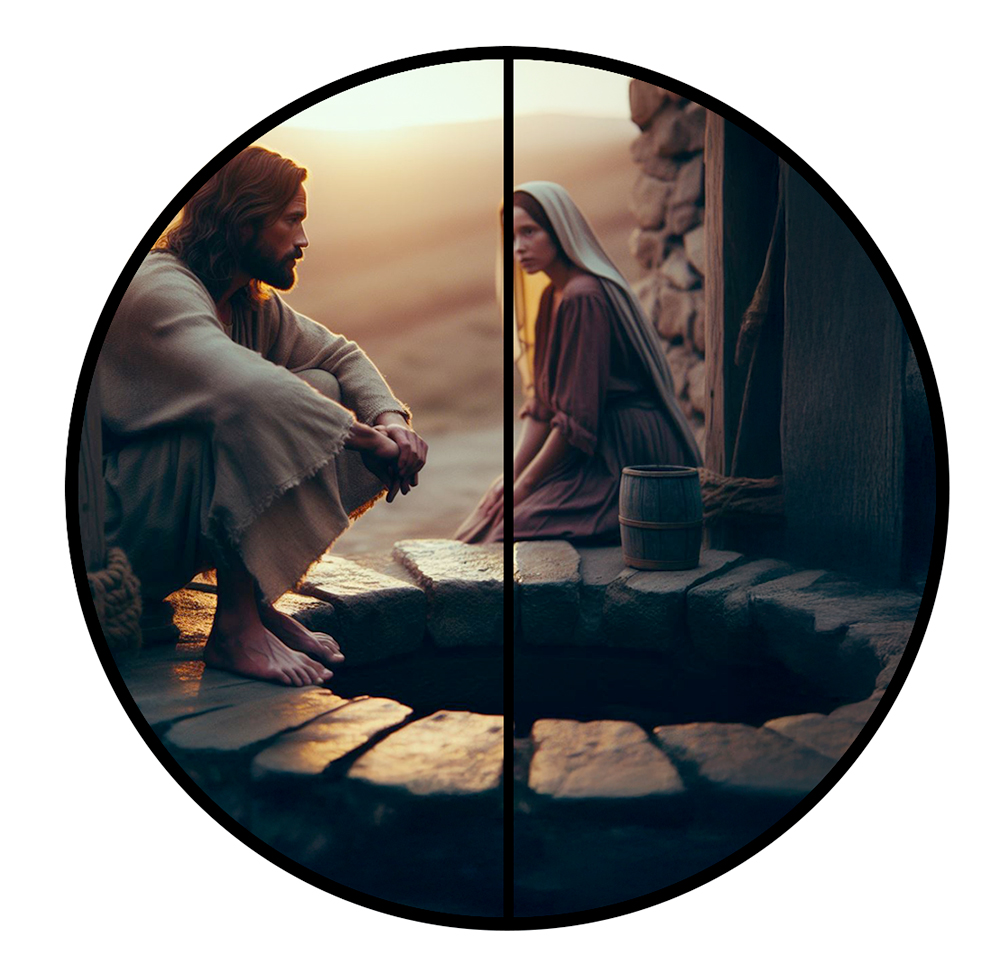
"Counsel in a heart of a man is deep dual waters, and a man of understanding is drawing her up."
(Proverbs 20:5 RBT)ἀνταποκρίνομαι - reciprocate, counter respond, correspond
And they were not strong enough to correspond toward these things.Invited to the Wedding
And he was speaking a comparison toward the ones who have been summoned, he who is holding back on54 how they kept choosing out the First Reclining Couches, he who is saying toward themselves,"When you are summoned under a certain one into wedding feasts, do not do recline into the First Reclining Couch, lest ever a more honorable one than yourself should be him who has been summoned under himself.
And he who has come, the one who has summoned yourself and himself, he will say to yourself, Give a place to this one, and at that time you should begin in company with a disgrace to hold down the Last Place.
But when you are summoned, he who has led across, recline back into the Last Place so that when he should come, the one who has summoned yourself, he will say to yourself, Friend come up higher. At that time she will be for yourself a glory in the eye of all the ones who are reclining back together with yourself.
For everyone, the one who is lifting high his own self, will be humbled, and the one who is humbling his own self, he will be lifted high."
antikaleó - Anti-Summon
And he was saying to the one who has summoned himself, "When you make a breakfast or supper, do not crow to the Friends of yourself, nor the Brothers of yourself, nor the Kinsmen of yourself, nor rich earth-neighbors, lest ever they, themselves should also summon in turn yourself and should become a repayment to yourself.But rather when you make a feast, summon beggars, maimed ones, limping ones, smoke-blind ones.
And you will be blessed because they are not holding to repay yourself, for it will be paid back to you within the Standing Up of the Just Ones."
And a certain one, he who has heard these things, of the ones who are reclining back together said to self, "Blessed is anyone who will eat a bread loaf within the Queen of the God!"
And the one said to self, "A certain man was making a mega supper, and he summoned multitudes.
And sent away the Born-Bondman of himself on the Seasonal Time of the Supper to speak to the ones who have been summoned, Come! because already now it is ready!
And everyone began away from one to beg excuse/avert. The First One said to self, I have bought a field and I am holding a need, he who has come out to perceive himself. I am asking yourself, hold myself him who is excused.
And another one said, I bought five pairs of oxen, and I am leading across to prove these ones. I am asking yourself, hold myself him who is excused.
And another ones said, I have married a woman and because of this I am not able to come.
And he who has become close beside, the Born-Bondman announced to the Master of himself these things. At that time he who has become angry, the Home Master, said to the Born-Bondman of himself, Come out swiftly into the Broadways and currents/flows of the City, and the Beggars and Maimed Ones, and smoke-blind ones, and limping ones, bring in here!
And the Born-Bondman said, Master, what you mandated has become, and there is still a place.
And the Master said toward the Born-Bondman, Go out into the Road and fenced enclosures and force to enter so that the Home of myself may be loaded full.
For I am speaking to yourselves that none of the Males, those ones, the ones who have been summoned, will taste the Supper of myself!"
And a multitudinous Multitude were journeying jointly with self, and he who has been turned around said toward themselves,
πατέρα ἑαυτοῦ = Father of Own Self (Reflexive)
"If anyone is coming toward myself and is not hating the Father of his own self, and the Mother and the Woman and the Children and the Brothers and yet both the Sisters and the Soul Life of his own self, he has no power to be a learner of myself!
"...because he is a liar, and the Father of Himself."
(John 8:44 RBT)Come back!
Anyone who is not lifting up the Stake of his own self, and is coming back to myself, has no power to be a learner of myself!55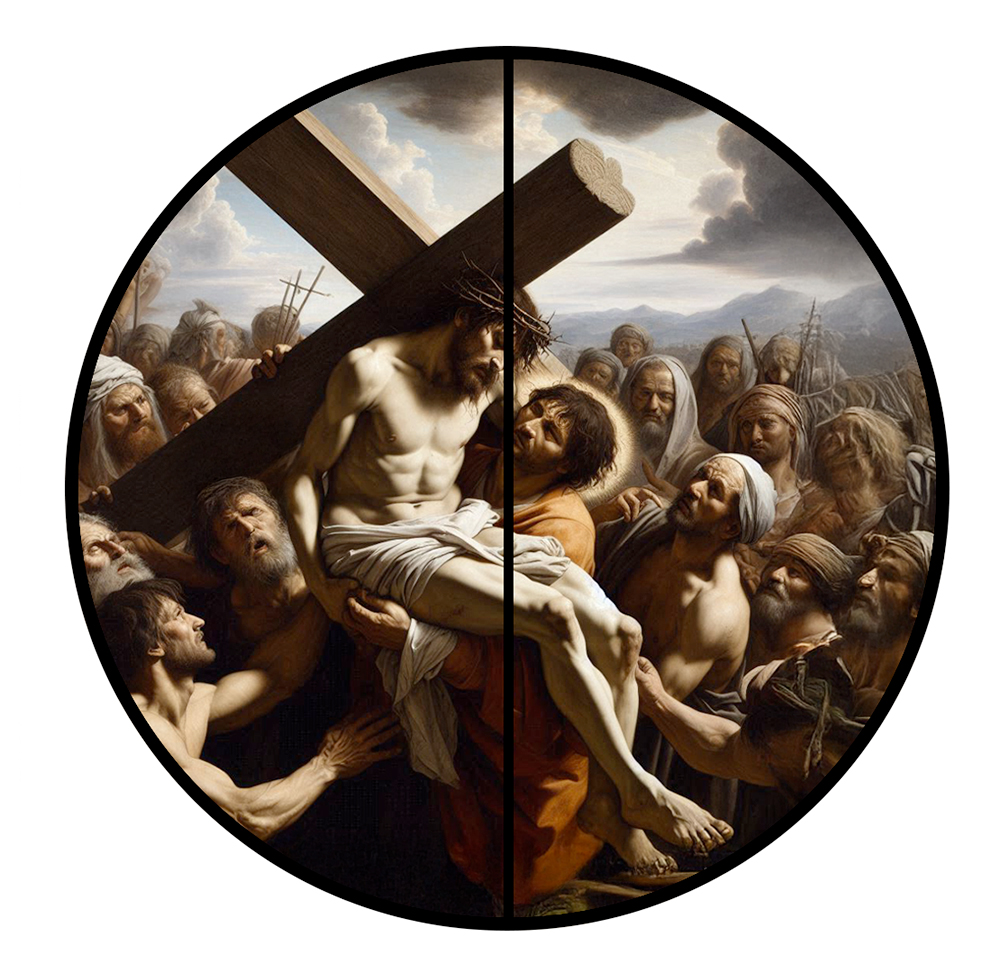
"the Stake of his own self" (reflexive)
For who from out of yourselves who is desiring to house-build a tower, is not first, he who has set down, calculating/counting up the Cost, whether he is holding into a completion?
So that, he who has laid of himself a foundation and who is not strong enough to bring to an end, all the ones who are watching attentively should not ever begin to mock himself.
Those who are saying that The Man, this one, began to house-build and he was not strong enough to finish.
συμβάλλω - throw together, flow together, merge, unite
Or what king, he who is leading across to another king to flow together into a war, he who has sat down, will not first take counsel whether he is powerful within Ten Thousand to meet the one who is coming in company with Twenty Thousand against himself?56And if not, while he himself is still him who is existing far off away, he who has sent forth an ambassadorship is imploring for the things toward peace.
Leave the Land of In Between, and come
therefore, everyone from out of yourselves, whosoever does not does bid farewell/renounce to all of the things pre-existing of his own self, has no power to be a learner of myself!You are the Salt of the Earthly One
Therefore the Salt is good, but if the Salt also becomes foolish, within who will it be arranged/prepared?Neither into an earth nor into a dung heap is it fitting. They are casting self outside! The one who is holding ears to hear, let him hear!"
Footnotes
Primary Semantic Field of ἐπέχω
1. Literal physical restraint:
-
Il. 14.241: ἐπὶ θρήνυϊ πόδας ἐπέσχεθον — “held his feet upon the footstool”
-
Eur. Hec. 1283: στόμα ἐπέχε — “he held back his mouth” (i.e., stopped speaking)
-
Soph. Aj. 847: ἐπ. ἡνίαν — “he held the reins back” (restrained the horses)
In these senses, ἐπέχω denotes holding back or restraining either motion, speech, or physical action.
2. Reflexive restraint / delay / waiting:
-
Often used in the middle (with implied subject reflexivity) to mean:
-
“to wait,”
-
“to restrain oneself,”
-
“to suspend action or speech”
-
Examples:
-
Od. 21.186: ἐπέχων — “he held back [from stringing the bow]”
-
Soph. El. 1369: ἐπέχων — “he refrained / waited”
This becomes especially prominent in Thucydides, Sophocles, Herodotus, and Xenophon, where it frequently implies strategic delay or tactical restraint.
Extended / Figurative Senses
Though ἐπέχω develops attentional or intellectual meanings (e.g., to direct the mind, to fix thought upon), these are derivative—emerging from the core image of holding in or suspending motion.
The Pyrrhonist "suspension of judgment" (ἐπέχειν τὴν κρίσιν) is a clear intellectualization of the earlier concrete action: not moving forward, not deciding—holding back.
Usage and Idiom?
Greek ἔρχεται ὀπίσω "coming backwards." Often lexical meaning is retroactively reconstructed to fit theological or narrative demands. Scholars read “following” into ὀπίσω (backwards), based on perceived context—not the native semantic range of the adverb. Is this honest? This is what you call "epistomological tension" or "presupposition," where a usage must be novel or theological when it does not align with standard Greek idiom.
ὀπίσω is the opposite of πρόσω "forward." (cf. LSJ, Bailly, Slater, etc.)
Because scholars could not understand the enigma of "coming backwards" they feigned a new "Biblical Greek" meaning and even admit it:
By a usage not found in cl. [Classical Greek],...
of Place... after...
(Abbott-Smith NT)
The usage! The phrase ἔρχεται ὀπίσω, when taken seriously in its literal linguistic structure, is unusual and marked in Greek—and not just unusual, but almost deliberately non-idiomatic by classical standards. It’s precisely the sort of phrase that calls for serious thought rather than relying on fixed usage. In otherwords, the word does not have such a meaning of "following," which is effectively changing the backwards movement to a movement of "following."
In the sense of movement, the idea is very straightforward:
back, back again, of movement,
back again, again, of action that reverses an action or occurrence,
(LSJ)
The saying is so strange, that a special sub-definition was listed in many lexicons for this assumed usage of "backwards" as "following."
Additionally, this is not the typical Greek for "behind" ὄπισθεν:
of Place, behind, at the back, opp. πρόσθε [before, in front]
(LSJ)
No Primary Evidence
These presuppositions of "novelty" often rest on circular reasoning, whereby:
-
The text departs from expected Greek idiom (e.g., ἔρχεσθαι ὀπίσω).
-
Scholars observe that this is "non-Greek" in usage.
-
They conclude it must be either:
-
a Semitic calque (which is often true), or
-
a new, theological sense of the word (which is conjectural).
-
-
The meaning of ὀπίσω is then adjusted in lexicons and commentaries to reflect this “new” usage.
-
Future scholars then cite those lexicons to claim this is “what ὀπίσω means in the NT.”
In this way, the meaning of the word is retroactively transformed, based not on primary evidence of usage, but on interpretive expectations.
Core Issue: Semantic Drift via Theological Overlay
The process is not purely descriptive; it is normative and inventive. Scholars often:
-
Fail to distinguish between meaning and implication.
-
Conflate syntax-driven contextual sense with lexical semantic change.
-
Reify (make concrete) their own readings into the word itself, so that a contextual reading becomes a lexical entry.
For example:
-
Classical ὀπίσω = “behind,” “backward,” “back again,” “hereafter"
-
NT usage in Matthew 4:19: "δεῦτε ὀπίσω μου" interpreted as “come follow me”
-
Lexicons adjust: ὀπίσω = “to follow (as disciple)” – which the word does not mean
This is semantic augmentation, not lexicographic description.
It is not the text that declares this usage “novel” or “theological.” It is scholars, facing a non-native idiom, who impose that category—often unwilling to let the Greek stand as deliberate, structured foreignness. They assimilate linguistic strangeness into conceptual categories they can manage. But in so doing, they are not describing the word; they are redefining it.
Thus, "coming back to me" is a legitimate, literal rendering of the phrase ἔρχεται ὀπίσω μου—and a reading that is far more grounded in Greek semantics than the traditional theological interpretation of "follow me."
The order of the words requires careful examination of the cues—the datives, the participles, prepositions, and the genitives to sort out the right order.
Two kings unite, effectively doubling ten thousand to twenty thousand, to fight against the one coming against him. In particular, the words μετὰ "in company with" and ἐπ’ "against" are significant prepositions in the context of war. μετὰ "with" lacks any real force in terms of "fighting with" as one might say in modern idiom, where "with" is taken as the same as "against." But regardless, the sense is all but demolished by the explicit use of ἐπ’ "against/upon" in the very same verse.