He is a Gift 22
Weddings
And he who has been separated, the Salvation, spoke backwards to themselves within comparisons, he who is saying,παραβολαῖς - juxtaposition, comparison, moving side by side, a placing beside
παραβολή = παρά + βολή
παρά — “beside,” “alongside,” “in comparison with”
βολή — from βάλλω, “to throw” → noun meaning “a throw,” “a cast,” or “that which is thrown”
So literally:
παραβολή = a placing or throwing beside (something)
"And she has tasted that he has become good, the profitable gain of herself; he is not extinguishing in the Loop, the Lamp of herself."
(Proverbs 31:18 RBT)
"The Queen of the Heavenly Ones has been likened to a man, a king, anyone who has made weddings for the Son of himself.
The Marriage Feast.
And he sent away the Born-Bondmen of himself to summon the ones who have been called into the Weddings and they were not willing to come.
He sent away backwards other born bondmen, he who is saying, "Say the those who have been called, 'Behold! I have prepared the Morning Meal of myself! The Bulls of myself and the Fattened Ones, those that have been burned in sacrifice, and all is ready; come here into the Weddings!'
Self Trafficking, Isolation
And the ones who were careless went away— indeed whosoever, into his own Field, and whosoever upon the Trafficking of himself."Reckless Abandon"
And the Remaining Ones/Posterity who have seized power, they treated the Born-Bondmen of himself shamefully, and they killed away.Kindled a Fire against the Blood-Thirsty
And the King was provoked to anger, and he who has sent the Army Hosts of himself laid waste the Murderous Ones, those ones, and he kindled the City of themselves.At that time he is speaking to the Born-Bondmen of himself, 'The Wedding indeed is ready, but the ones who have been called, they were not counterbalancing ones!
διεξόδους diexodos - exit, way out
Therefore lead across upon the Exoduses of the Roads, and as many as you might find, call into the Weddings!And the Born-Bondmen, those ones who have come into the Roads, they led together all whomever they found, both pain-ridden ones and good ones, and the Wedding was filled up of those who are being dedicated.41b
And the King, he who has come in to behold the ones who are dedicated perceived a man there, he who has not put on a garment of a wedding.
And he is speaking to self, 'Comrade, how did you come in here, he who is not holding a garment of a wedding?' But he was muzzled.
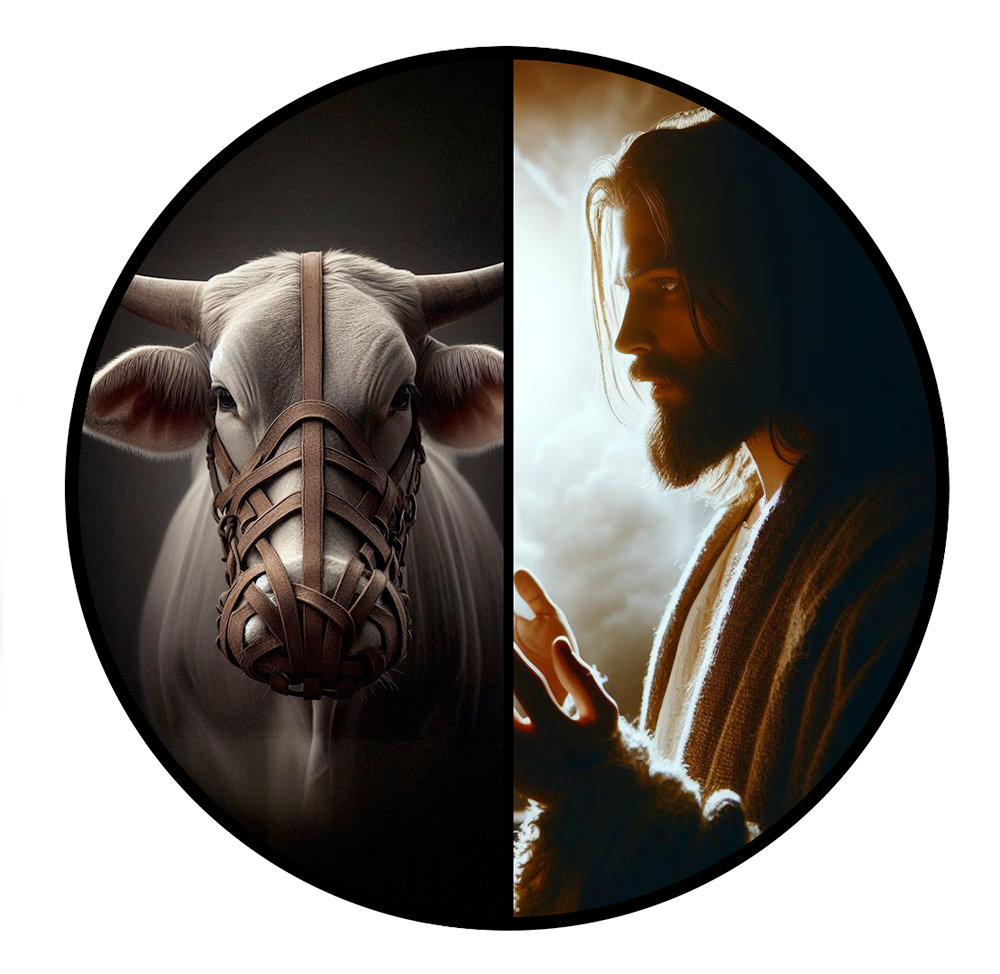
"For within the Law of Drawn Out ("Moses"), it is written, do not muzzle an ox, he who is treading out; is the ox not of concern to the God?"
(1 Corinthians 9:9 RBT)Those who chained feet and hands
At that time the King said to the Agents, "Those who have chained feet and hands of himself, cast out himself into the Outer Gloom; there he will be the Lamenting One and the Biting One of the Teeth.For multitudes are invited ones, but few selected ones!"
συμβούλιον - Deliberative Body of Counsellors
At that time the Separatists, those who have led across, took hold of an advisory council, so that they might entrap himself within a word.To entrap birds in a word
παγιδεύω primarily means to ensnare or trap, both literally (as in trapping birds) and metaphorically (as in attempting to trap someone with their words). It is an exclusive word to the NT and LXX. The verb's usage highlights its application in contexts of deception and entrapment. The base word παγίς "trap" was also metaphorically used to refer to the snares or traps of women, often in the context of their charms or manipulations (e.g., Amphis 23, Menander 689). Additionally, if a compound word, δεύω has the meaning of "drench, soak."
And the Learners of themselves are sending away to self in company with the Heroic ("Herodians"), those who are saying, "Teacher, we see that you are a true one, and you are teaching the Road of the God within Truth, and you, yourself do not care around to anyone, for you are not looking into a face of humans.
Tell us therefore, what does it seem to yourself, is it allowed to give a census to Dictator in Perpetuity ("Caesar") or not?"
And the Salvation, he who has recognized the Bad Condition of themselves, said, "Why do you put myself to the test, stage actors?
τὸ νόμισμα - custom, established practice
Show to myself the Established Usage of the Census." And the ones offered to self a ten-ass-coin ("worth ten asses").And he is saying to themselves, "Of whom is herself, the Mirror-Image, and the Inscription-Title?"
Ἀπόδοτε - Give it Back
They are saying, "Of Dictator in Perpetuity ("Caesar's")!" At that time, he is saying to themselves, "Therefore give back the things of Dictator in Perpetuity to Dictator in Perpetuity, and the things of the God to the God."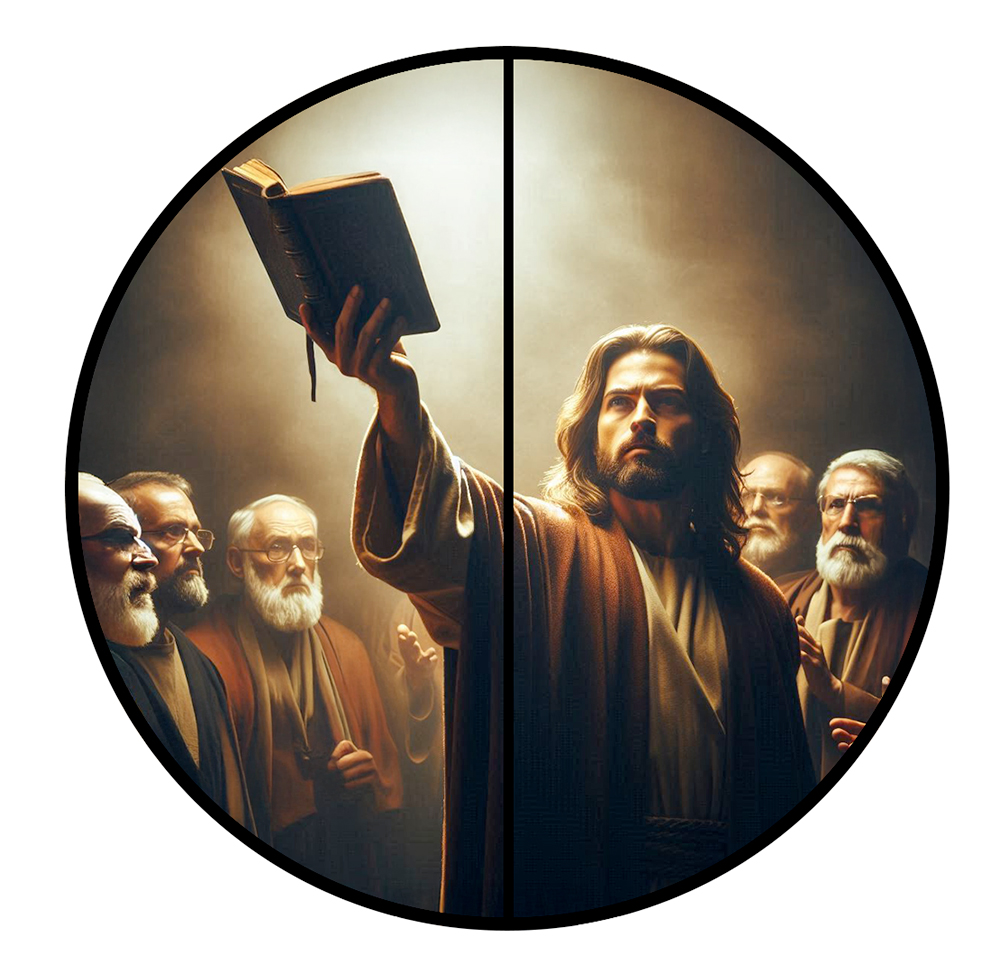
And those who have heard marveled, and those who have sent away himself, went away.
Within that one, the Day, Followers of the Just One ("Sadducees") drew near to self, those who are speaking to not be a standing-up, and they questioned himself.
Those who say, "Teacher, Drawn Out ("Moses") said, if anyone dies off, he who does not hold children, the Brother of himself will become a son-in-law to the Woman of himself, and he will stand up a seed to the Brother of himself.
And seven brothers were being close beside ourselves. And the First One, he who has married, finished, and he who is not holding a seed sent away the Woman of himself to the Brother of himself.
Likewise also the Second, and the Third, until the Seven.
And lastly, the Woman of everyone died off.
Within the Standing Up therefore, of which of the Seven will be a woman be? For everyone held herself.
And the Salvation, he who has been separated said to themselves, "You cause to wander, those who have not seen the Writings nor the Powerful One of the God!"
Already Married in the Aion
For within the Standing Up, they neither marry nor are they given in marriage, but rather they are as angels within the Heavenly One!And around to the Standing Up of the Dead Ones, you have not known certainly that which was spoken to yourselves under the God, he who is saying,
The God of Dead Ones vs. The God of Living Ones
'I, myself am the God of Father of Multitude ("Abraham") and the God of He Laughs ("Isaac") and the God of Heel Chaser ("Jacob").' The God is not of dead ones, but rather of those who are living!"42And those who have heard, the Multitude, they were struck with shock upon the Doctrine of himself.
τὸ αὐτό - The Self
And the Separatists, those who have heard that he had muzzled the Followers of the Just One ("Sadducees"), were led together upon the Self.43And one questioned from out of themselves, a law-expert, he who is putting to the test himself,
"Teacher, what kind is a mega commandment within the Usage?"
διανοίᾳ - Dianoia, Across the Mind
And the one was bringing to light to self, "You will agape-love Master the God of yourself, within the entire Heart of yourself and within the entire Soul-life of yourself and within the entire Dialectical-Thinking of yourself."Herself is the Mega One and First Commandment.
A second one, the same as herself, 'You will agape-love the Nearby One of yourself, even as your own self.'
Within these ones, the Two Commandments, the entire Law is hanging, also the Prophets."
Whose Son is the Christ?
And as they, the Separatists were led together, the Salvation questioned themselves,he who is saying, "What does it seem to yourselves, around to the Anointed One, of whom is he a son?" They are saying to self, "Of the Beloved One (David)."
He is saying to themselves, "How then is Beloved One summoning himself within a spirit, as Master? He who is saying,
'Master spoke to the Master of myself, Sit down from out of right sides of myself until I should set down the Hated Ones of yourselfdown below the Feet of yourself'?
The Heart of the Fathers upon the Sons, the Heart of the Sons upon the Fathers
If therefore Beloved One is summoning himself as master, how is he a son of himself?""And he is turning the heart of fathers back around upon sons, and the heart of sons upon the fathers of themselves; a corner, I am coming and I have struck the self eternal Earthly One with a ban/anathema!"
(Malachi 4:6 RBT)he is dusk | he is dawn
And no one had the power to separate a logos ratio to self, nor did anyone dare to question himself any more away from that one, the Day.
Footnotes
The verb ἀνάκειμαι (anakeimai) is formally the perfect middle-passive of ἀνατίθημι (“to set up,” “to dedicate,” “to lay upon”). In its earliest attestations—especially in Herodotus (1.14; 2.135)—it denotes an object set up or deposited as a votive offering within a sanctuary: “six golden mixing-bowls are laid up (ἀνακέαται) in the temple.” This use establishes the primary cultic nuance of the term, referring not to ordinary placement but to ritual dedication, implying transfer from common to sacred possession.
The semantic field extends into metaphorical uses, such as Pindar (Olymp. 10.8), where praise (αἶνος) is said to be “laid up” (ἄγκειται) for the Olympic victors, and Plato (Symp. 197e), where a discourse (λόγος) is “dedicated to the god.” Thus, the idea evolves from physical deposition in a shrine to figurative “consecration” or “reservation” in honor or memory.
Further, in Lysias (10.28) and Lycurgus (51), the verb is used of public statues “set up” (ἀνάκειται) as monuments—a civic analogue of temple dedication. Later authors like Josephus (AJ 17.6.5) employ it juridically or administratively: penalties “laid up” for offenders, famine “reserved” for shamelessness, etc., extending the semantic scope to “set apart,” “reserved,” or “appointed.”
Hence, ἀνάκειμαι carries the core notion of withdrawal from common use and permanent placement in a state of consecration or reservation. The meaning “to recline” (as at table, e.g., Matt 9:10) is secondary and metaphorically derived from the idea of “being laid out” or “set in place,” probably via Hellenistic resemanticization.
Translating ἀνάκειμαι as “to be dedicated,” “laid up,” or “reserved” thus reflects the original passive sense of ἀνατίθημι, rather than the later idiomatic sense of “to recline.” Context determines whether the reference is cultic, juridical, or social, but in all cases the underlying imagery is of something set apart and fixed in position, either literally or figuratively.
(cf. LSJ ἀνάκειμαι)
The earliest manuscripts, the more reliable ones,
οὐκ ἔστιν ὁ Θεὸς νεκρῶν ἀλλὰ ζώντων
equates to "the God, he is not of dead ones, but of living ones"
Perhaps because this was a bit too astonishing to swallow, some copies add a second word "God":
Οὐκ ἔστιν ὁ θεὸς θεὸς νεκρῶν, ἀλλὰ ζώντων
which equates to "God is not a God of...."
Exodus 3:6 uses the extended "I" pronoun myself/my own self אנכי
See note on אנכי from Genesis 3:10.
Almost all translations drop this phrase. τὸ αὐτό the self.
A few literal ones make a rather sandy attempt to include it:
"gathered together the same" - Berean Literal Bible
"gathered upon the same" - Smith's Literal Translation
"gathered unto Him" - Young's Literal Translation
"gathered together upon the same" - Literal Emphasis Translation