He is a Gift 19
And multitudinous multitudes followed self, and he treated themselves there.
πᾶσαν αἰτίαν - All Blame: "The Woman gave to me, and I ate!"
And Separatists came near to self, those who are putting himself to the test, and those who are saying if it is allowed to set free/release the Woman of himself by reason of every blame."ἀρχῆς - Same origin, principle beginning
And the one who has been separated said, "Have you not known again that the one who built away from an origin made themselves a male and a female?And he said, "For the sake of this, a man will leave down the Father and the Mother, and be glued/bonded to the Woman of himself; and the Two will be into one flesh.
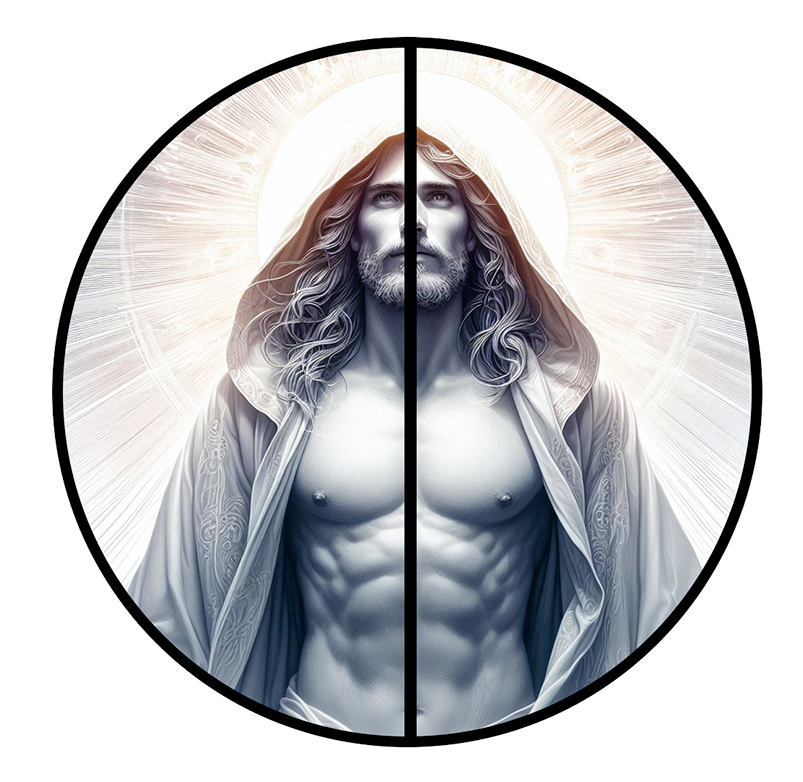
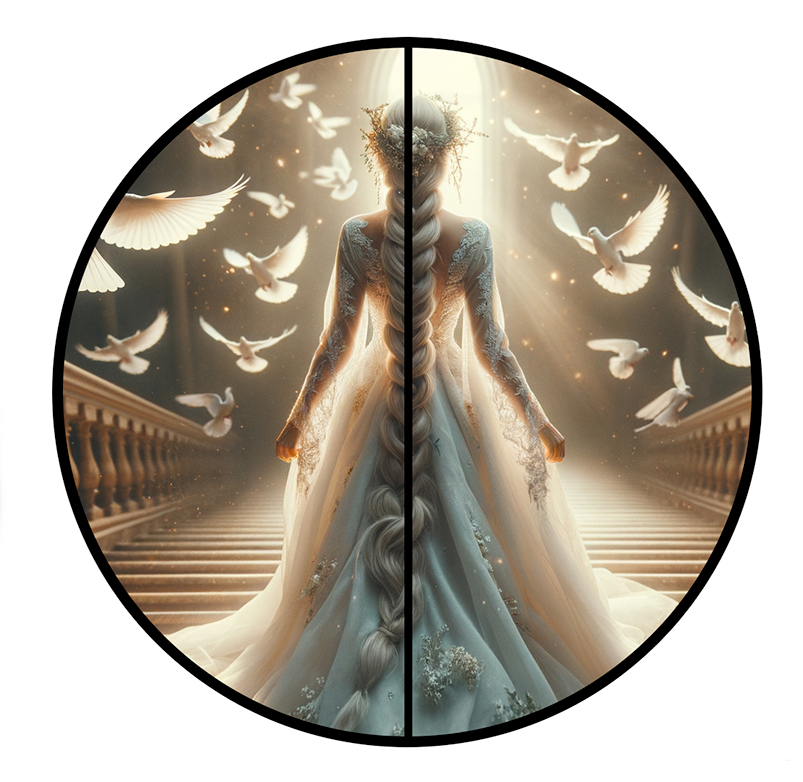
Let not a Man Separate
So then no longer are they two, but rather one flesh. Therefore whatever the God has yoked as pair, let a man not separate.They are saying to self, "Why therefore did Drawn Out ("Moses") mandate to give a book of divorce, and to set free?"
To Set Free the Women...Since the Start
He is saying to themselves, "Because Drawn Out toward the Hard-Heart of yourselves entrusted to yourselves to set free the Women of Yourselves, but away from an origin she has not become thus!Dual Women of Himself
And I am saying to yourselves that whosoever should not set free the Woman of himself, on account of a prostitution, and should marry another one, he is committing adultery.38Set her free
Bring herself togetherThe Learners are saying to self, "If in this way she is the Cause of the Man, he is not bringing together in company with the Woman to marry!"
And the one said to themselves, "Not everyone is making room for this Word, but rather to him whom he is given."
Those Fathered and Castrated out of a Certain Womb
For they are castrated ones, anyone who from out of a womb of a mother were so fathered; and they are castrated ones, anyone who was castrated below the Humans; and they are castrated ones, anyone who castrated their own selves because of the Queen of the Heavenly Ones. The one who is to able to give way, let him give way!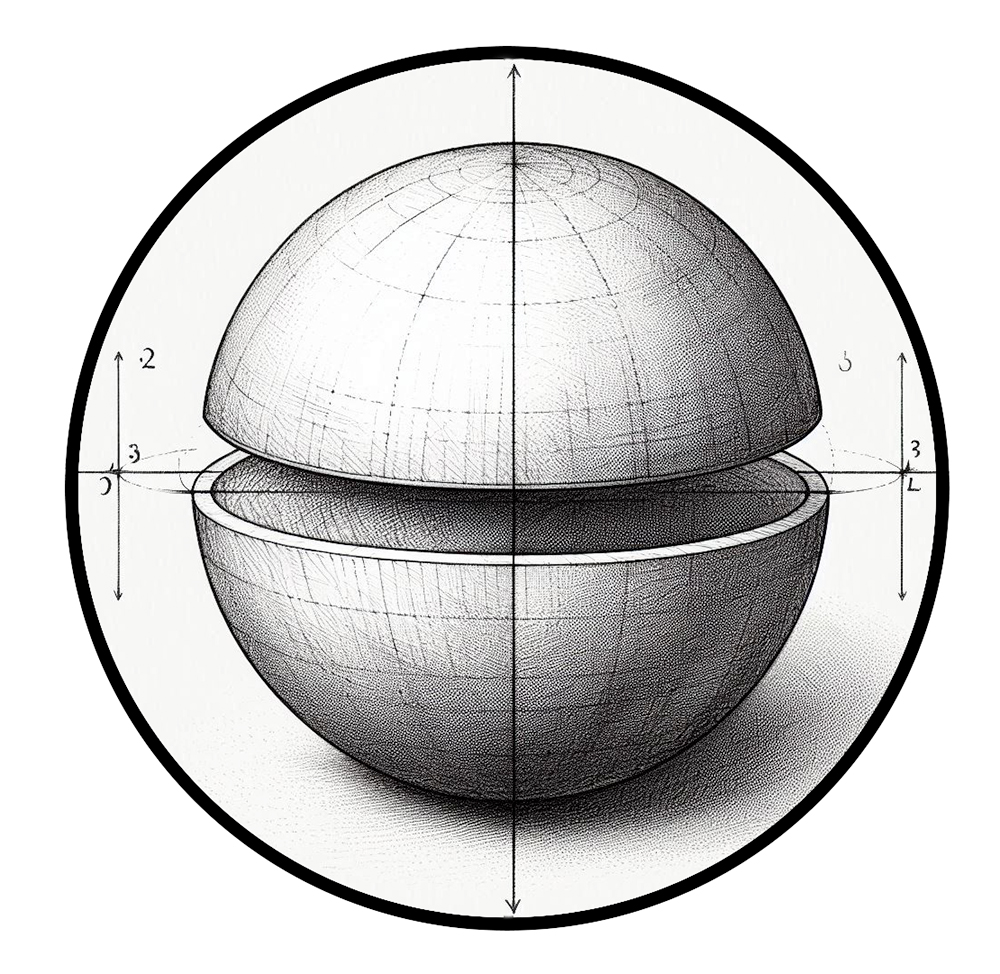
"And the Castrated One is bringing to light, "Behold! Water! What is inhibiting myself from submerging?" (Acts 8:36 RBT)
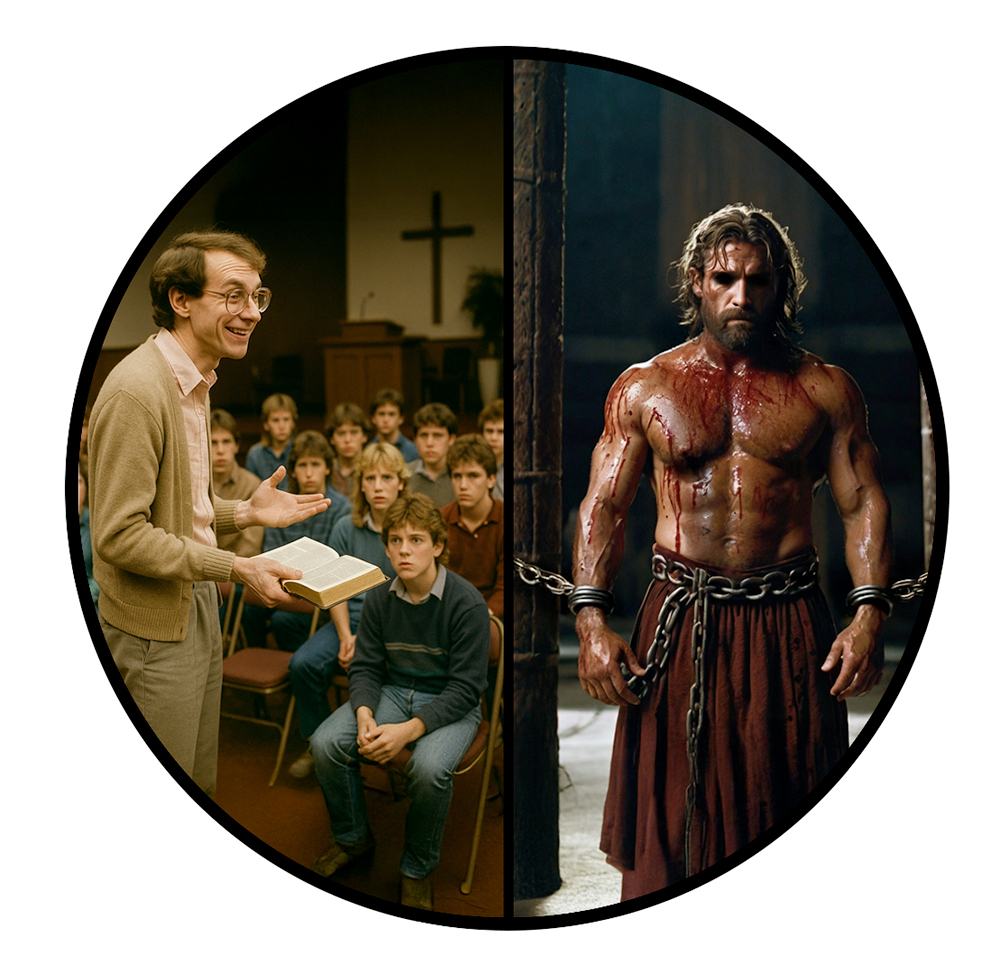
is a gift from heaven!"
At that time little children were brought to self so that the Hands might be laid upon themselves, and he might offer prayers, and the Learners bestowed honor upon themselves.
And the Salvation said, "Send away the Little Children, and do not stop themselves from coming toward myself, for of Such Kinds, is the Queen of the Heavenly Ones.
And he who has laid the Hands upon themselves, traversed across from that side.
And behold! one who has come near to self said, "Teacher, what good should I make so that I might hold an eternal (aion) zoe-life?"
The Good One is One
And the one said to self, "Why are you asking myself around to the Good? He is one, the Good One. And if you desire to come in into the Zoe-Life, watch over the Commandments!He is saying to self, "What kinds?" And the Salvation said, "The You will not Murder, You will Not Commit Adultery, You will Not Steal, You will Not Bear False Testimony,39
Honor the Father and the Mother, and You will agape-love the Near one of yourself, even as yourself."
The Youth is saying to self, "All these things I have watched over, what am I still falling short of?"
ὑπάρχοντα - Pre-Existing, Subsisting, Underlying Essence
The Salvation was bringing to light to self, "If you desire to be complete, bring under, sell the pre-existing things of yourself, and give to beggars, and you will hold treasure within heavenly ones, and come here, accompany myself!"
And the Youth, he who has heard the Logos Ratio, this one, went away, he who is sorrowful, for he was him who is holding multitudinous properties.
δυσκόλως - Misfortunately truncated, Unfavorably Docked
And the Salvation said to the Learners of Self, "Trustworthy One, I am speaking to yourselves that a rich one will come in unfavorably docked into the Queen of the Heavenly Ones,39aAnd I am speaking backward to yourselves, "It is easier for a camel to come in across through a needle piercing, than a rich man into the Queen of the God.
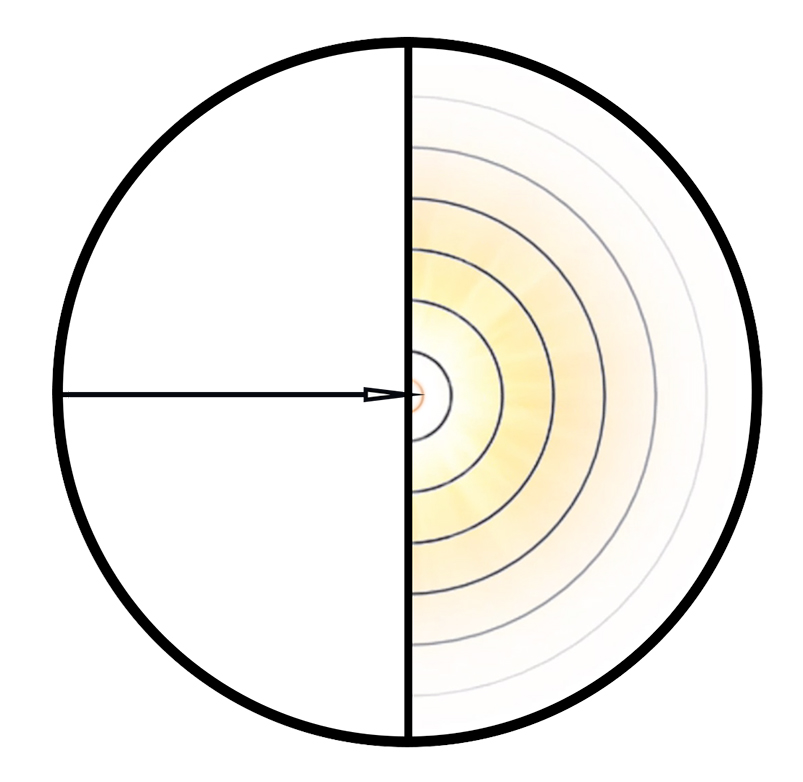
And those who have heard, the Learners, were extremely astonished, those who are saying, "Who then is able to be saved?"
And he who has fixed his gaze, the Salvation, said to themselves, "Close beside men, this is impossible; but close beside God, all is possible!"
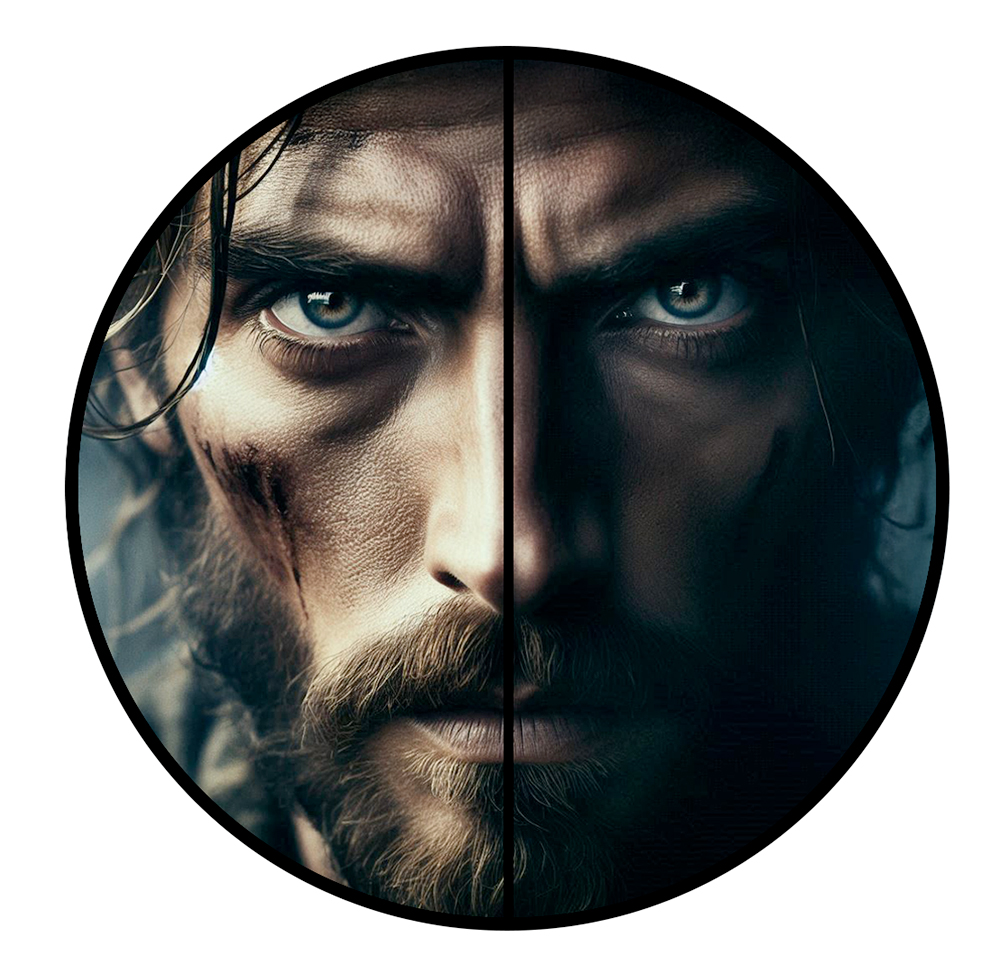
At that time, he who has been separated, the Small Stone, said to self, "Behold! we have sent away everything and accompanied yourself, who therefore will we, ourselves be?"
παλινγενεσίᾳ - Palingenesia, Re-Genesis
And the Salvation said to themselves, "Trustworthy One, I am saying to yourselves that yourselves—the ones who have followed myself within the Re-Genesis, when the Son of the Man should sit down upon a throne of a glory of himself, you all will sit down, also yourselves, upon twelve thrones, those who are separating the Twelve Tribes/Branches of the God Contends ("the Israel").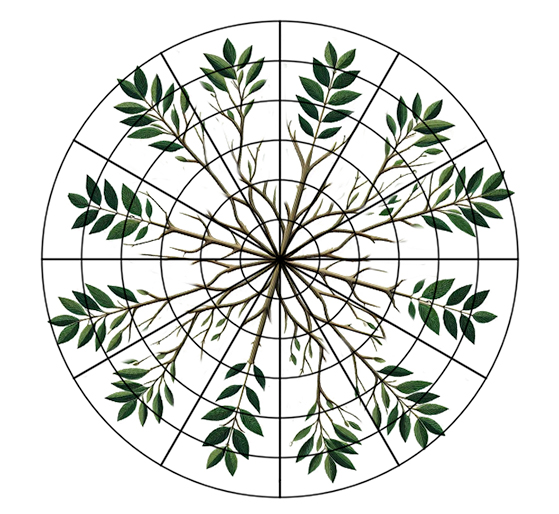
שבט - Twelve Branches
The Hebrew word שבט (shevet), Strong's #7626, is a masculine noun with a root meaning "to branch off." It signifies a "staff," "club," or "scepter" and is the word used for "tribe," referring to the twelve tribes of Israel. The Hebrew word מטה (matteh), Strong's #4294, also means "branch," "rod," "staff," "tribe," and "scepter." Like שבט (shevet), it carries the idea of a branching or extending object.
Inverting Time’s Order: Letting Go Creates Infinite Return
And all, anyone who has sent away houses, or brothers, or sisters, or a father, or a mother, or children, or fields for the sake of the Name of myself, he will take hold of a hundredfold, and will inherit an eternal (aion) zoe-life.And multitudinous first ones will be end ones, and end ones, first ones.38b
Footnotes
Strongs #G3361. "μὴ" does not mean "except." In Greek, "μὴ" is an adverb that means "not" and is used primarily with non-indicative moods (such as subjunctive, imperative, and infinitive). The word for "except" in Greek would typically be "εἰ μή" "if not" or "πλὴν." So, the translation of "ὅτι ὃς ἂν ἀπολύσῃ τὴν γυναῖκα αὐτοῦ μὴ" remains: "because whoever should not release his woman..."
In Ancient Greek, μὴ (meaning "not") can appear at the end of a sentence, although this placement is relatively rare compared to its usual position directly before the verb. When μὴ is placed at the end of a clause or sentence, it can function as a way of emphasizing negation or marking a special syntactical structure.
This phrase, "ὃς ἂν ἀπολύσῃ τὴν γυναῖκα μὴ ἐπὶ πορνείᾳ", has eluded translators because of word order and cases. The placement of μὴ at the end would typically imply a slightly more formal or emphatic negation. It can be used for stylistic reasons, perhaps to emphasize that the action of setting the woman free is being negated. "ἐπὶ πορνείᾳ" "upon prostitution" is in the dative case meaning "on account of prostitution."
Granted, this positioning is less common than placing μὴ immediately before the verb (e.g., "μὴ ἀπολύσῃ"). The placement at the end is still grammatically valid, and it's often seen in more complex or literary forms of Greek, especially when the author wants to focus the reader's attention on the negation itself. Considering the absence of "unless" or "except" within this clause, the negating adverb μὴ should be treated as such, i.e. as an adverb.
"καὶ ὁ ἀπολελυμένην γαμήσας μοιχᾶται" at the end is not a part of the original verse, per the earliest manuscripts.
The You Will Not Murder...
The phrase "Τὸ Οὐ φονεύσεις" (To Ou phoneuseis) would not typically include the definite article "Τὸ" (To) in standard Greek texts of the Ten Commandments. The correct and commonly seen form in the biblical context is "Οὐ φονεύσεις" (Ou phoneuseis), which translates to "You shall not murder."
In Classical and Koine Greek, the definite article "Τὸ" can be used to nominalize clauses or phrases, essentially turning them into a noun phrase.
Unfavorably Docked
"δυσ-κόλος"
A compound of δυσ- (bad/poorly) and κόλος. The adjective κόλος, -ος, -ον is primarily used to describe something that is "truncated" or "cut short", "having a part lopped off", "reduced to a stump" with specific applications that extend this meaning to particular objects or features. Here's a detailed explanation of the two primary senses:
General Meaning: "Truncated" or "Cut Short"
- This is the primary and broadest sense of κόλος, used to indicate that something is shortened, incomplete, or lacking part of its original form.
- Example:
- Homer, Iliad 16.117:
Ἕκτωρ Αἴαντος δόρυ μείλινον ἄγχι παραστὰς πλῆξ᾽ ἄορι μεγάλῳ αἰχμῆς παρὰ καυλὸν ὄπισθεν, ἀντικρὺ δ᾽ ἀπάραξε: τὸ μὲν Τελαμώνιος Αἴας πῆλ᾽ αὔτως ἐν χειρὶ κόλον δόρυ, τῆλε δ᾽ ἀπ᾽ αὐτοῦ αἰχμὴ χαλκείη χαμάδις βόμβησε πεσοῦσα.
“Hector, standing near Ajax’s ashen spear, struck it with a great sword near the socket behind the spearhead, and completely sheared it off. Telamonian Ajax was left holding the truncated [κόλον] spear in his hand as it was, while the bronze spearhead fell far from him, clanging to the ground as it fell.”
In this passage from Homer’s Iliad (Book 16.114–125), the word κόλος is used to describe the truncated spear of Ajax (“κόλον δόρυ”). Hector strikes Ajax’s spear near its shaft with a great sword, severing the bronze tip and rendering the weapon ineffective. The term κόλον, meaning “truncated” or “mutilated,” vividly illustrates the destruction of the spear and signifies Ajax’s sudden disadvantage in battle.
- Homer, Iliad 16.117:
This is not derived from κόλον meaning the large intestine or colon in anatomy or a clause (in rhetoric), a part of a sentence. Related is the word δυσκολός which used of persons literally means hard to satisfy with food (cf. Ath. 6.262a), and from this are various idiomatic uses such as "unpleasant," "hard to please" or "troublesome." Thus the rendering of "how difficult to enter" is quite inaccurate on the grounds that the proper Greek word for such an expression is χαλεπός, (difficult, hard, grievious, and hardly, with difficulty) which is not used.
(Cf. LSJ, Bailly, A. (2024), Pape, Cunliffe, Autenrieth, Middle Liddell)
Transcending Polarity: The Aionic Union Beyond Chronological Duality
Those kin terms only make sense inside a temporal framework—each one encodes sequence: origin, derivation, dependence.
A father is “before,” a mother is “source,” a brother or sister is “parallel within the same generation.” They all locate the self within the flow of biological time. To “leave” or “send away” these, in an aionic reading, is to detach from identity that depends on sequence—birth order, lineage, inheritance.
In the timeless frame, there is no “before” or “after,” only concentric relation. The kin terms collapse into pure relational functions:
-
Father becomes principle of origination within the self.
-
Mother becomes matrix or field of manifestation.
-
Brother/Sister become mirrors—other instances of the same waveform.
So the renunciation isn’t of people, but of time-bound identity. Once freed, those same archetypes reappear inside the unified field—transformed from genealogical to geometric. They become patterns of relation within the aionic lattice, not chronological links in a bloodline.
- Son signifies the outward expression of essence—the self manifesting into form.
- Daughter marks the receptive echo of that manifestation—the returning reflection that completes the circuit.
Son and daughter are not new beings in a sequence, but movements of one being across the boundary between invisible and visible.
Husband and wife define the axis of separation and return. In the chrono sense, they mark duality: giver and receiver, seed and field, initiator and responder. Their bond depends on succession—union leading to offspring, lineage extending forward. This is not ideal because chronological life runs that polarity in one direction—give, expend, exhaust. The man becomes stretched thin, the woman drained empty.
In the aionic sense, that polarity inverts into a resonance. Husband and wife become complementary phases of one field, not opposites linked by contract. The “marriage” is no longer an event in time but an alignment of frequencies—the reintegration of divided consciousness.
This is why the texts speak of “the two becoming one flesh.” When read beyond chronology, it’s describing the collapse of temporal duality into unity of being. Male and female, active and receptive, inner and outer—merged in a single self-sustaining circuit from one origin.
So “leaving” the husband or wife in the temporal sense is not abandonment but transcendence: ceasing to locate the self in polarity, to exist instead in coherence. The aionic self no longer alternates between roles—it is the still point where the union has already occurred.
- An orphan is a fragment severed from its source, a being whose origin line has collapsed.
- A widow is the remnant of a union whose counterpart has vanished into absence.
Both represent states of disconnection within the field—nodes cut off from recursion.
So when the teaching says to receive or care for orphans and widows, it’s an invitation to re-link the broken circuits of origin and reflection. You aren’t taking on new dependents; you’re drawing the lost aspects of the self—both inner and outer—back into coherence.
In that view, the act completes the inverse of renouncing father, mother, son, daughter.
One relinquishes temporal ties so that they can re-emerge in a unified form beyond chronology:
the orphan regains source, the widow regains counterpart, the field becomes whole.