He is a Gift 11
διατάσσω - draw up, arrange, set in battle array
And he has become when the Salvation has completed. He who is setting in battle array the Two and Ten learners of himself stepped over on that side to teach and to proclaim within the Cities of themselves.And the Favored, he who has heard the Works of the Anointed One within the Prison, he who has sent straight across through the Learners of himself,
he spoke to self, "Are you, yourself the one who is coming, or are we expecting another?"25b
Bring glad tidings to Favored
And the Salvation, he who has been separated, said to themselves, "Those who have traveled across, bear glad tidings to Favored, what you are hearing and are looking at!The Poor Gospelize
Smoke-blinded ones are looking up, and maimed limping ones are walking, scaly ones are cleaned, and blunt/dull ones are those who are hearing, and dead ones are awakened, and beggars are gospelizing!And blessed he is whoever should not be ensnared within myself.
A pen Oscillating under some 'Doctrine'?
And while these ones, themselves are leading across, the Salvation began to speak to the Multitude around Favored, "What have you come out into the Desolate one to spectate? A reed who is being rocked to and fro under a wind?But rather who have you come out to perceive? A man who has been clothed within soft delicate things? Behold the ones who are constantly bearing soft delicate things within the Households of the Kings!
But really, why have you come out? To perceive a prophet? Yes! I am speaking to yourselves and a prophet abounding all around!
Behold Myself!
He is this one around to whom it has been written/drawn, "Behold myself!25 I am sending away the Angel of myself in front of a face of yourself, he who will construct the Road of Yourself in front of yourself!"Trustworthy One I am speaking to yourselves, within generated/fathered ones of women there has not been awakened a greater one than Favored the Plunger, yet the Little One within the Queen of the Heavenly Ones, he is more mega than himself!
βιαστής - Seized, Abducted, Using Violent Force
And away from the Days of Favored the Plunger up to this very moment, the Queen of the Heavenly Ones is being violently forced, and forceful men are snatching herself away!Jerusalem "Foundation of Peace" Seized; Abel's (Vanity's) dagger of slaughter.
"And another fire-colored horse came out, and to the one who is sitting down upon himself, he was given to himself, to take hold of the Peace from out of the Earthly One, and so that they will cut the throat of each other, and a mega dagger was given to himself."
(Revelation 6:4 RBT)Few words and scriptures have been so distorted and mishandled as this one:
"using force, violent: Philo, agric. § 19. In Matthew 11:12 those are called βιασταί by whom the kingdom of God βιάζεται, i. e. who strive to obtain its privileges with the utmost eagerness and effort."
(commentary on the word from Thayer's Greek Lexicon)"Cognate: 973 biastḗs – positive assertiveness; used of the believer living in faith...guiding and empowering them to act forcefully"
(Helps Word Studies)All prophesied until the Favored
For all the Prophets prophesied, also the Usage, up until Favored."He has seen, for within the Day he has eaten..." 🍎
And if you are desiring to take, he is himself, God is Himself ("Elija-hu"), the one who is destined to come.The one who is holding ears, let him hear!
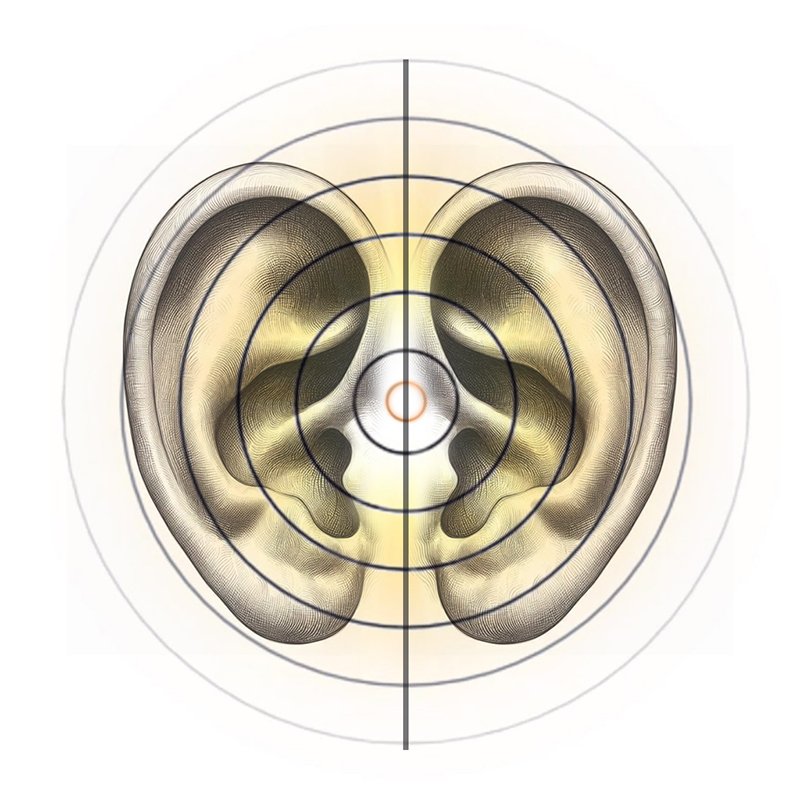
ἀγοραῖς - public assemblies of the people
And who will I liken the Generation, this one to? She is the same as little children, those who are seated down within the Public Assemblies, the ones who are calling out to the Others,and they are saying, "We have played the flute to yourselves, and you have not danced! We sang a lament, and you did not cut off!"
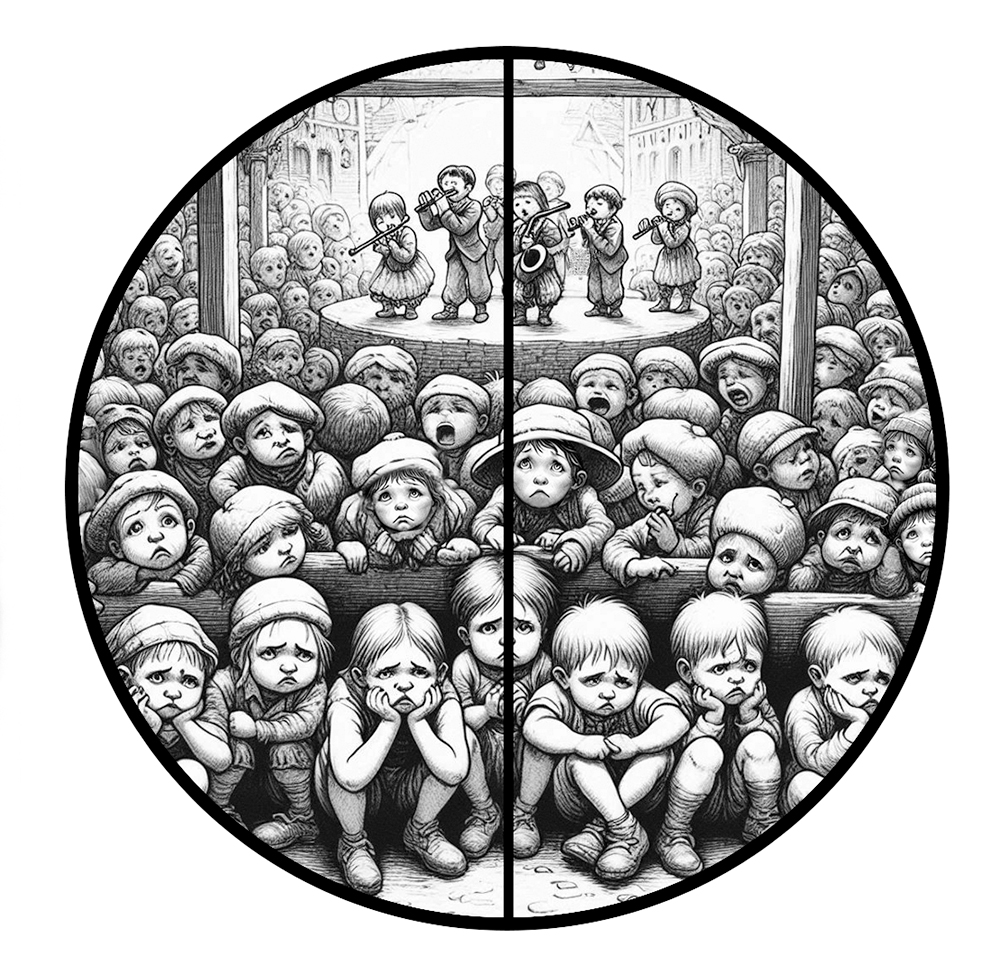
For Favored came as neither him who is eating nor him who is drinking, and they are saying he is holding a demonic power.
The Son of the Man came, he who is eating and he who is drinking, and they are saying, Behold a man! A glutton and a wine-bibber, a friend of toll farmers and missers. And she was justified, the Wisdom, away from the Works of herself."
At that time he began to reproach/upbraid the Cities within whom the most powerful ones of himself became, because they did not change the mind.
Woe, woe, the great city, Babylon
Woe to you Place of Proclamation ("Chorazin")! Woe to you House of Hunting ("Bethsaida") because if the Powerful Ones became within Flint-stone ("Tyre") and Hunt ("Sidon"), the ones who became within yourselves long ago, within a coarse-sack and ash they would have changed the mind!Except, I am speaking to yourselves, she will be more bearable to Flint-stone and to Hunt within day of separation than to yourselves!
"The Under World"
And you, yourself Comfort Cover ("Capernaum"), will not be exalted up as far as a heavenly one; you will climb down as far as Underworld ("Hades"), because if the Powerful Ones, the ones who have become within you, became within Scorched ones ("Sodoms"), it would have remained until the Today!
But I am speaking to yourselves, that she will be more bearable to earth of Scorched ones ("Sodoms") within a day of separation than to yourselves!"
"Out of the Mouth of Babes"
The Salvation, he who has been separated within that one, the Opportune Time, said, "I openly acknowledge to yourself Father Master of the Heavenly One, and of the Earthly One, that you hid these things away from learned and intelligent ones, and you have uncovered themselves to unspeaking-infants!Goodwill Toward Men
Yes, the Father, because in this way Goodwill,26 she has become in front of yourself.Uncovering the Father
Everything was handed over to myself under the Father of myself, and no one is recognizing the Son, if not the Father, neither is anyone recognizing the Father, if not the Son; and to him whom, if the Son wills, to uncover.Come here, toward myself all the ones who are growing weary, and those who have been loaded down! I, myself also, will make yourselves stop/cease!
Round and round...
....the theological merry-go-round
Lift up the Balance Beam of myself over yourselves, and learn away from myself that I am a gentle one and low-lying to the Heart, and you will discover a cessation for the Soul-lives of yourselves!
Lift up the balance of Justice! And her dagger!
The Balance is χρηστὸς (chréstos): Good, Honest, Useful, Kind, Benevolent
For the Balance Beam of myself is a good/useful one and the load of myself is light.Footnotes
את the Self
The Greek word αὐτός (fem. αὐτή, neut. αὐτό) originally bore a sense of "self" or identity, and in certain contexts retains this meaning. While often used simply as a third-person pronoun ("he," "she," "it") in oblique cases, αὐτός can also function emphatically (e.g., ὁ αὐτός = “the very one,” αὐτὸς ὁ βασιλεύς = “the king himself”).
In philosophical or poetic usage, particularly in Homer and Plato, the neuter form αὐτό may denote one’s true self, either the soul (Od. 11.602) or, conversely, the body (Il. 1.4), depending on context. It also appears in abstract references to essence, identity, or the very thing itself (τὸ αὐτό), as in expressions of intrinsic nature or reality (cf. Plato, Republic 362d: αὐτὸ ὃ μάλιστα ἔδει ῥηθῆναι – "the very thing that most needed to be said").
Thus, while αὐτός is not reflexive in the grammatical sense (cf. ἑαυτοῦ, "of oneself"), it does, especially in neuter form, preserve and express a conceptual sense of "Self" or "the same being", particularly in metaphysical or emphatic contexts.
in ancient Greek, αὐτό—specifically the neuter singular form of αὐτός—is the only appropriate and attested lexical item to express the metaphysical concept of "the self", especially in Platonic and post-Platonic philosophical discourse.
-
Philosophical Usage:
-
In Plato and later authors, expressions like τὸ αὐτό ("the selfsame") or αὐτὸ τὸ ὄν ("being itself") represent the essence or pure identity of a thing, distinct from its accidents or manifestations.
-
Notably, in Plato's dialogues, constructions such as:
-
αὐτὸ τὸ ἀγαθόν – “the Good itself”
-
αὐτὸ τὸ καλόν – “the Beautiful itself”
are paradigmatic examples of Forms or Ideas, i.e., entities existing in themselves and through themselves — the metaphysical “Selves” of their kind.
-
-
-
Semantic Range:
-
While αὐτός generally functions as a third-person pronoun or intensifier, its neuter form, especially when used absolutely or with the definite article, becomes substantive and ontologically loaded:
-
τὸ αὐτό = "the same", "the selfsame", "the self (in essence)"
-
-
This contrasts with ἑαυτοῦ, which is grammatically reflexive and bound to a subject, not abstract or metaphysical.
-
-
Terminological Precedence:
-
Later philosophical traditions (Neoplatonic, Stoic, etc.) frequently use forms of αὐτός to express inner identity, core being, or metaphysical selfhood.
-
(cf. LSJ αὐτός)
The Hebrew הנני found in Malachi 3:1 quoted here is a compound of "behold" and the first person suffix ני- meaning "behold me" or "behold myself". This is confirmed by the Greek here, Ἰδοὺ ἐγὼ ἀποστέλλω "behold me, I am sending..."
Strongs #G2107, εὐδοκία (eudokia) noun, feminine. This word carries a distinctive biblical significance not found or used in secular Greek texts. It denotes "good will" or "good pleasure" reflecting a divine favor or approval extended towards his people. In the New Testament context, "εὐδοκία" is frequently used to convey God's benevolent disposition and pleasure, particularly in relation to His will being fulfilled through the gospel message. The term encapsulates the idea of the overarching plan of redemption and reconciliation with his people.
Found in the O.T. in some of the Psalms (for רצון) and often in Sirach (Sir.): In the Septuagint (Greek translation of the Old Testament), "εὐδοκία" is used to translate the Hebrew word רָצוֹן (ratson), which means "favor" or "goodwill." It is also found frequently in the book of Sirach (Ecclesiasticus), a deuterocanonical book of the Old Testament.
Properly, beneplacitum (Vulgate): This Latin term "beneplacitum" means "good pleasure" or "favorable disposition," which aligns closely with the meaning of "εὐδοκία."
Ephesians 1:9: In the New Testament, "εὐδοκία" appears in Ephesians 1:9, where it refers to God's "good pleasure" or His purpose and plan according to His will.