Hammer 6

And of him who has become of an inner cessation ("sabbaton"), he started to teach within the Gathering, and the ones who are hearing multitudinous, they were driven out of their senses, those who are saying, "From where are these things for this one? And who is the Wisdom, the one who has been given to this one? And the Powerful Ones of such a kind, those who are becoming across from the Hands of himself?"
Is not this the Craftsman, the Son of the Bitter-Rebel, and a brother of Heel Chaser and of He Adds and of Caster and Hearing? And are not the Sisters of himself in here toward ourselves?" And they were scandalized/made to stumble within himself."
πατρίς - Fatherland
And the Salvation was saying to themselves that A prophet is not dishonored except within the Fatherland of himself and within the Kindred of himself and within the House of himself.And he was not able to make there in that place not even one powerful one, except he who has placed the Hands upon few weak ones he treated.
And he was amazed because of the Distrust of themselves, and he was leading around the Unwalled Villages in a circle, he who is teaching.
And he is summoning near the Two and Ten, and he started to send themselves away, two two, and he was giving to themselves an authority of the Spirits, the Unclean ones.
A transmission
And he transmitted to themselves that they should lift up nothing into a road, except only a wand; not a loaf of bread, not a leather wallet, no copper into the Woman's Girdle,but rather those who have fastened under sandals, you should also not put on two inner tunics.
And he was saying to themselves, "Wherever if you might enter into a house, remain there until you go out from that side.
χοῦς - Earth Dug Out
And whichever place does not take yourselves nor listen to yourselves, those who are leading out from that side, shake out the Dug-dirt, the Underneath of the Feet of yourselves, into a witness to themselves.And those who have come out, proclaimed that they should change the mind.
And they were casting out demonic spirits multitudinous, and they were anointing with olive oil and treating multitudinous ones without strength.
And the king Heroic ("Herod") heard, for the Name of himself has become obvious, and he was saying that Favored, the one who is plunging, has been woken up from out of dead ones, and because of this the Powerful Ones are active within himself.
And others were saying that, he is God is Himself ("Elija-hu"), and others and were saying that, A prophet just like one of the Prophets.
And he who has heard, the Heroic, kept saying, "Him whom I, myself de-headed, Favored, this one was woken up!"
"Bound him in chains for a Thousand Years"
For himself, the Heroic, he who has sent away, he seized control of the Favored, and he bound with chains himself within a watch because of Heroic, the Woman of Horse Lover, the Brother of himself, because he married herself.For the Favored kept saying to the Heroic, that it is not lawful for yourself to hold the Woman of the Brother of yourself.
ἐνεῖχεν - Held in/Entangled (in A Tree)
And the Heroic ("Herodias") was entangled/holding a grudge against himself, and she was wanting to kill away himself, and she was not able.For the Heroic was fearing the Favored, he who has seen himself a just man and a holy one, and he was keeping close together himself, and he who has heard of himself multitudinous was perplexed, and sweetly he was listening to self.
γενεσίοις - pl. Geneses, Births
And as she became, a well-timed/opportune day, when Heroic made a midday meal for the Geneses of himself for the Most Mega Ones of himself, and the Chiefs of a Thousand, and the First Ones of the Circuit.And as she came in, the Daughter of herself, the Heroic, and while she danced, she pleased the Heroic and the ones who are reclining together. And the King spoke to the Young Maiden, "Ask myself, whatever you might desire, and I will give to yourself!"
And he made an oath to herself that if you should ask myself, I will give to you up to half of the Queen of Myself.
And she who has come out said to the Mother of herself, "What shall I demand? And the one said, "The Head of the Favored, the one who is plunging!"

the Head
of himself!"
πίνακι - writing/drawing tablet
And she who has entered immediately in company with an earnest one toward the King demanded, she who is saying, "I want that you give to myself at once the Head of Favored the Submerger upon a tablet!"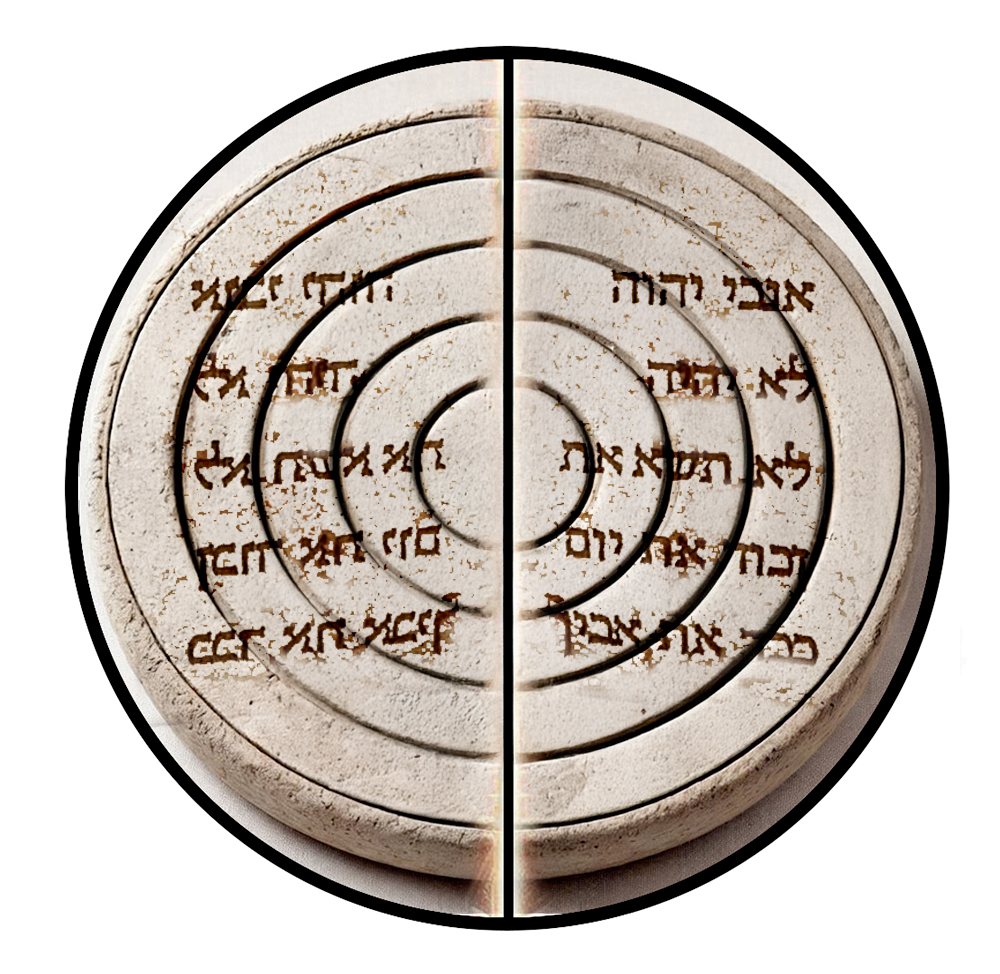
ἀθετῆσαι - Set Aside, Violate, Invalidate
And he who has become grieved all around, the King did not want to invalidate herself because of the Oaths and the ones who are dedicated.σπεκουλάτωρ - Spy/Scout
And immediately the King, he who has sent away a spy, mandated/arranged to bear the Head of himself, and he who has gone away beheaded himself within the Watching.And he bore the Head of himself upon a tablet, and he gave herself to the Young Maiden, and the Young Maiden gave herself to the Mother of herself.
And those who have heard, the Learners of Self, they came and lifted up the Downfall of himself, and they placed self within a memorial.
ἀπόστολοι - Messengers, Sent Away Ones
And the Messengers led together toward the Salvation and they bore good tidings of everything to self, as much as they made and as much as they taught.No opportunity to Eat
And he is speaking to themselves, "Come here, you, yourselves, according to your own into a lonely place/position and cease a little one!" For the ones who are coming and the those who are leading on, they were being multitudinous, and neither had they opportunity to eat.And they went away within the Ship into a desolate place/position, according to their own.
And they perceived themselves, those who are leading on, and they recognized multitudinous, and they ran there together on foot away from all the cities, and they advanced ahead of themselves.
And he who has gone out perceived a very great Multitude, and he was moved in the bowels upon themselves, because they were just like sheep who are not holding a shepherd. And he started to teach themselves multitudinous.
And as she became already a seasonal time multitudinous, those who have approached to self, the Learners of Self, they were saying that "He is Desolate, the Position and already a seasonal time multitudinous!15
Set themselves free so that those who have gone away into the Encircling Fields and unwalled villages might purchase for their own selves what they should eat."
"This is my Body" = You, Yourselves are the Bread Loaf
And the one who has separated said to themselves, "You, yourselves give to themselves to eat!" And those who have gone away are saying to self, "Should we purchase bread loaves of two hundred denarii and give to themselves to eat?"But the one speaking to themselves, "How many loaves of bread are you holding? Lead under, perceive!" And those who recognized are saying, "Five and two fish."
And he arranged/enjoined themselves to lay back, all drinking banquets, drinking banquets, upon the green colored feeding-ground.16
And garden beds, garden beds laid back down against a hundred and down against fifty.
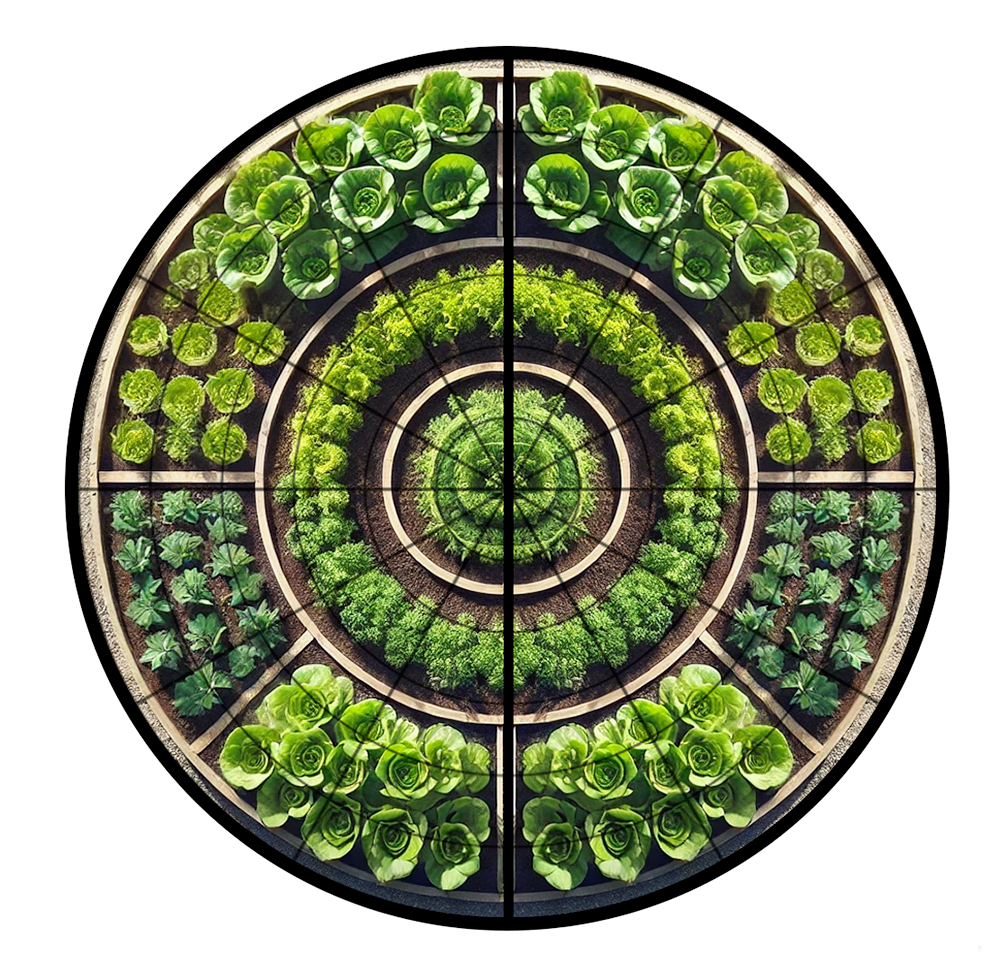
"A garden who is locked up, a sister of myself, a perfect one, a garden who is locked up, a spring who is sealed."
(Song of Songs 4:4 RBT)And he who has taken hold of the Five Bread Loaves and the Two Fish, he who has looked up into the Heavenly One, blessed and broke off the Loaves, and he was giving to the Learners so that they set beside to themselves, and he distributed the two Fish to all.
And they all ate and were fattened.17
κλάσματα πληρώματα - Fractions of Completeness/Fullness
And they lifted up fragments of fullness of twelve hand-baskets, and away from the Fish.And the ones who have eaten the Bread Loaves, they were five thousand men.
And immediately he constrained the Learners of Self to enter into the Ship and to lead ahead into the Beyond, toward House of Hunters ("Bethsaida") until he should loose/set free the Multitude.
And he who has bid farewell/renounced themselves went away into the Mountain to offer prayers.18
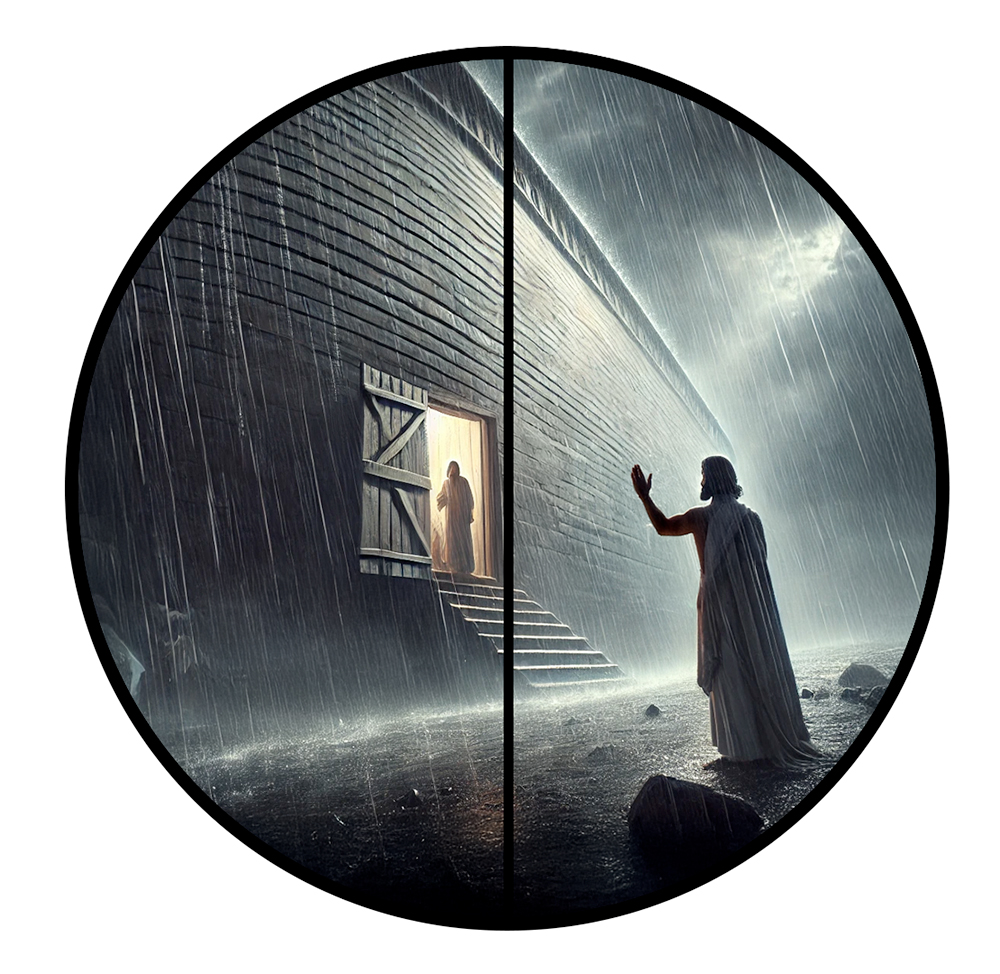
"And the Coming Ones, a male and a female from out of all flesh, have come in just as when mighty ones commanded his eternal self, and He Is is shutting in himself behind."
(Genesis 7:16 RBT)“For I do not want you to be ignorant, brothers, of this Mystery, that you would not be sensible within your own selves, because a callus from a portion has become to God Contends up to the point which the full-contents/fullness [i.e. of a ship] of the races [ethnos] has entered.”(Romans 11:25 RBT)And as she became a late one, the Ship was within the Middle of the Sea, and himself alone upon the Earthly One.
ἐλαύνειν - Driving, Pushing Forward
And he who has perceived themselves, those who are touchstone-tormented within the Driving, for the Wind was set against/anti to themselves, around the Fourth Watch of the Night he is coming toward themselves, he who treads around upon the Sea. And he wanted to pass close beside themselves.φάντασμα Phantasma - Mental Image, visionary experience
And the ones who have perceived himself on the Sea, he who is walking, they believed that he is a phantasma,19 and they cried up.He Is Speaking
For everyone perceived himself, and they were agitated/thrown into disorder, but the one immediately chatted in company with themselves, and he is speaking to themselves, Take courage, I am myself! Do not fear!And he climbed up toward themselves into the Ship and the Wind tired out, and they kept being displaced with themselves exceedingly beyond measure.
A Heart of Stone
For they did not set together upon the Bread Loaves but rather she was the Heart of themselves she who has been petrified.And those who have crossed over upon the Earthly One, they came into Harps ("Gennesaret") and brought to anchor/made landfall.
And those who have gone out of themselves, from out of the Ship, immediately are those who have known himself.
Where He Is
They ran around the Entire Place, that one, and began to carry around upon the Mats the ones who are holding evilly wherever they kept hearing that he is.And wherever he was entering into unwalled villages or into cities or into fields, they kept placing within the Public Assemblies the ones who are weak and kept summoning himself close so that even if they might attach to just the Edge of the Outer Garment of himself, as many as attached to himself, they were being saved.
Footnotes
Greek ὥρας πολλῆς feminine "an hour many."
πολλῆς does not mean "late." So how does the phrase come to mean "the hour is late"?
Centuries of very advanced scholarship!
Drinking Parties
The term "συμπόσια" (symposia) comes from the Greek word "συμπόσιον" (symposion), which historically refers to a social gathering or banquet in ancient Greece. Here's a breakdown:
-
Etymology: The word συμπόσιον combines:
- "σύν" (syn): meaning "together."
- "πόσις" (posis): meaning "drinking."
- Thus, a συμπόσιον originally referred to "drinking together."
-
Definition: A symposium was a formalized social event where people would gather to eat, drink, and engage in conversation, often about intellectual, philosophical, or cultural topics.
Characteristics of Ancient Greek Συμπόσια
- Structure. Symposia were typically divided into two parts:
- Deipnon (Δείπνον): The meal portion (main meal of the day, noonday meal).
- Symposium Proper: Focused on drinking and conversation.
- Entertainment:
- Included music, poetry recitation, and sometimes games.
- Philosophical debates and intellectual discussions were central in certain circles, such as those influenced by Socratic philosophy.
- Drinking:
- Wine mixed with water was consumed in moderation.
- A symposiarch (master of ceremonies) would regulate the drinking.
- Setting:
- Typically held in an andron (men’s quarters) within a house, with couches arranged for reclining.
The verb χορτάζω meant "to satisfy" or "to fill," particularly with food, in later Greek usage but its primary meaning is to feed, fatten cattle. Referring to feeding animals with grass or fodder (e.g., Hesiod, Works and Days 450; Aristophanes, Peace 176). In a figurative sense, it could also mean "to overwhelm" or "to satiate," whether with blows (e.g., χορτάζειν πληγαῖς) or repetitive sounds (Athenaeus 103b; Aristophanes fr. 202). See Middle Liddell, Bailly, A. (2024), Dictionnaire Grec-Français, s.v. "χορτάζω."
ἀποταξάμενος (middle voice): "Having separated oneself," "having renounced," or "having detached oneself." The middle voice implies that the subject is performing the action for their own benefit or in a self-directed manner. In addition to its core meaning of renouncing or separating, it can also carry the sense of "bidding farewell" or "taking leave" of something or someone, depending on context. This is consistent with the broader use of ἀποτάσσω in both active and middle forms in Greek.
Phantasma
φάντασμα, -ατος (τὸ): Refers to various types of appearances or phenomena, including: 1) an apparition, vision, or dream (Plato, Republic 510a; Theocritus, Idylls 21.30); 2) a mental image or representation formed by an object or thought, often implying insubstantiality (Plato, Phaedo 81d; Aristotle, De Anima 3.3.9); 3) a specter or ghost, typically a supernatural apparition (Aeschylus, Seven Against Thebes 710; Euripides, Hecuba 54, 95, 390; Plato, Phaedo 81d, Timaeus 71a); 4) a celestial phenomenon or extraordinary event (Aristotle, De Mundo 4.21; Dionysius of Halicarnassus, 4.62; Plutarch, Dion 2). Derived from φαντάζω (phantazo), meaning "to make visible" or "to appear."
In philosophical contexts, the word φάντασμα (phantasma) was used to describe mental images or appearances that arise in the mind, often as a result of sensory perception, imagination, or reasoning. These images or phenomena are not necessarily linked to physical reality but are the products of the mind's activity. The term was used by philosophers like Plato and Aristotle to explore concepts of perception, reality, and knowledge.
-
Plato:
- In his dialogues, φάντασμα is often used to describe mental images or appearances that arise from the interaction between the mind and the external world. Plato viewed these appearances as insubstantial and unreliable, in contrast to the true knowledge found in the realm of the Forms.
- For example, in Phaedo (81d), Plato discusses how physical appearances (which are mere φάσματα) can deceive us, as they are only reflections or shadows of the true, unchanging reality of the Forms.
- In Parmenides (166a), he uses the term to indicate the illusory nature of appearances in the material world, which can give us false beliefs about reality.
- In his dialogues, φάντασμα is often used to describe mental images or appearances that arise from the interaction between the mind and the external world. Plato viewed these appearances as insubstantial and unreliable, in contrast to the true knowledge found in the realm of the Forms.
-
Aristotle:
- Aristotle, in works like the De Anima (On the Soul), also discusses φάντασμα as mental images that are produced by the interaction of the soul with external stimuli. These images are the mind’s representations of the sensory input it receives.
- He saw these mental images as crucial to human cognition, but he differentiated between phantasms (which arise from sense perception) and actual knowledge (which arises from reason and intellectual understanding).
- For example, in De Anima (3.3.9), Aristotle argues that these images or phantasms are important in the process of memory and imagination, but they are not equivalent to true knowledge.
-
Epistemological Implications:
- In both Plato and Aristotle's philosophies, φάντασμα highlights the tension between appearance and reality. Philosophers used the concept to explore whether the images and appearances presented by the senses are trustworthy sources of knowledge or if they merely veil the truth.
- Plato, especially, emphasized that sensory experiences and their corresponding mental images (i.e., φάσματα) were deceptive, leading to ignorance if relied upon too heavily. He believed that true knowledge comes from reasoning about the Forms, not from the imperfect, changing world of appearances.
- Aristotle, while recognizing the importance of sensory images in knowledge formation, also distinguished between appearances and scientific knowledge, advocating that while our senses provide us with useful information, true knowledge comes from abstract reasoning.