Hammer 3
The Watchers, Ensuring He doesn't Treat Himself
And they were watching himself carefully, if on the Inner-Cessations he will treat himself so that they might accuse-down/speak against himself.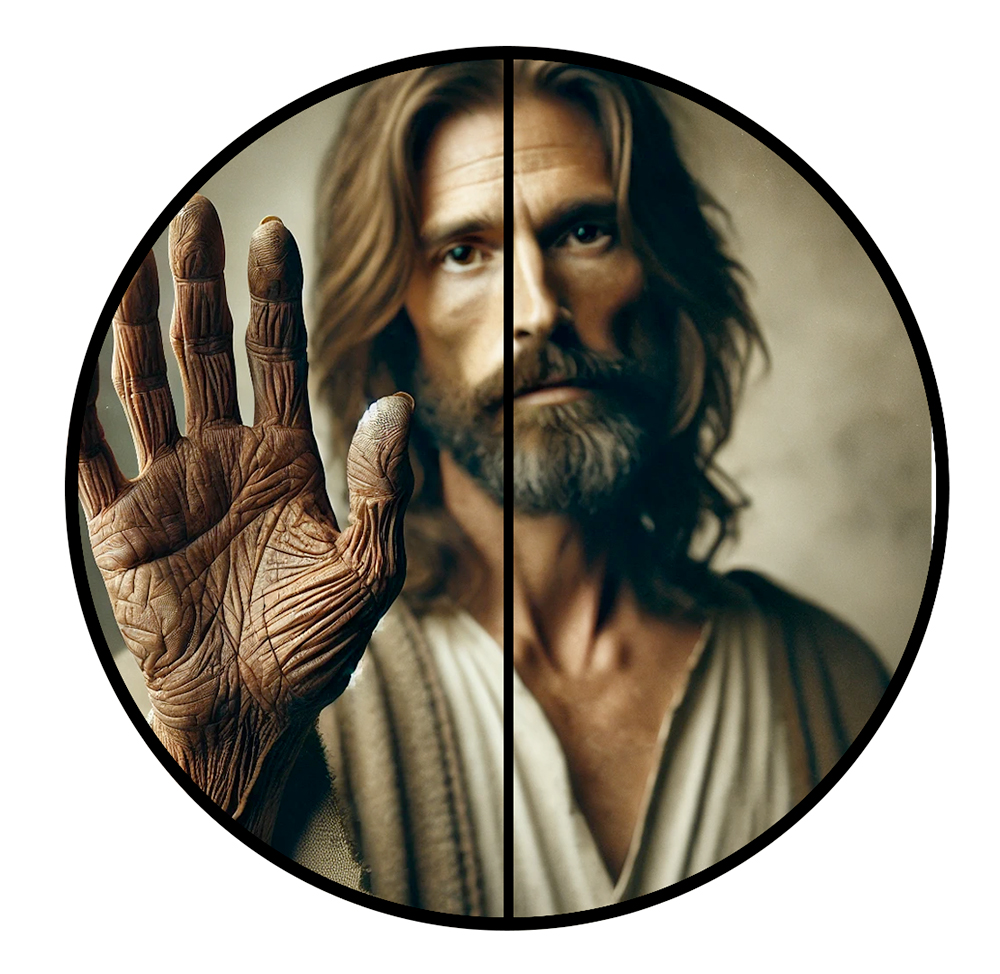
Save her
And he is speaking to the Man, to the one who is holding the Hand, a withered one, "Wake up into the Middle!"And he is speaking to themselves, "Is it allowed on the Cessations to good-make or to evil-make, to save a soul-life, or to kill off?"9 And the ones, they were silent.
μετ᾽ ὀργῆς - In company with a Wrath
And he who looked all around at themselves, in company with a wrath, he who is jointly grieving over the Callous of the Hearts of themselves, is speaking to the Man, "Stretch out the Hand. And she stretched out, and she was restored, the Hand of himself.And those who have come out, the Separatists, immediately in company with the Heroic Ones ("Herodians"), they kept giving an advisory council down from himself in such a way that they might destroy away himself.
And the Salvation in company with the Learners of Self, withdrew backward toward the Sea and a multitudinous multitude accompanied away from the Circuit ("Galilee"), and away from the Caster ("the Judean").
And away from Foundations of Peace ("Jerusalems") and away from the Red ("the Idumea/Edom"), and beyond from the Descending ("Jordan"), and around to Flint-stone ("Tyre") and Hunt ("Sidon"), a multitudinous multitude, those who are hearing as much as he was making, they came toward himself.
θλίβω - rub together, constrict, pinch, pressed together, oppressively afflict (a.k.a Dual Siege of Egypt)
And he said to the Learners of himself that a little boat should persevere devotedly to self because of the Multitude, so that they might not pinch himself.μαστιγόω - Horse Whips
For he treated multitudinous so as to fall upon self, so that they might fasten to himself, as many as kept holding scourges.And the Spirits, the Unclean Ones, when they were looking attentively at himself, they were falling down to self and they were cawing out, those who are saying, "You, yourself, are the Son of the God!"
And he was bestowing very much honor/value to themselves, so that they might not make himself manifest.
And he is climbing up into the Mountain and he is summoning near whosoever he, himself was desiring. And they went away toward himself.
And he made twelve, so that they might be in company with himself, and so that he might send themselves away to proclaim,
And to hold an authority to cast out the Demonic Influences.
And he made the Two and Ten, and He placed a name 'Small Stone' upon the Hearing ("Simon").
Sons of a Thunder
And to Heel Chaser, the one of the Endowment of He Is, and to Favored the Brother of the Heel Chaser, he placed upon themselves names, Sons of Thunder ("Boanerges"), whosoever he is, sons of a thunder.And to Manhood and Horse Lover, and Son of Furrows, and He is a Gift, and Twin and Heel Chaser, the one of Passing By, and to Big Hearted, and to Hearing, the Zealot.
And to Caster Man of Cities, whosoever also handed over himself.
And he is coming into a home, and the Multitude is coming together backward, so as for themselves to not have power, even to eat a loaf of bread.
ἐξίστημι - Out of Position, Displaced
And those who have heard, the ones close beside himself, came out to take control of himself, for they were saying that "He is Dislocated!"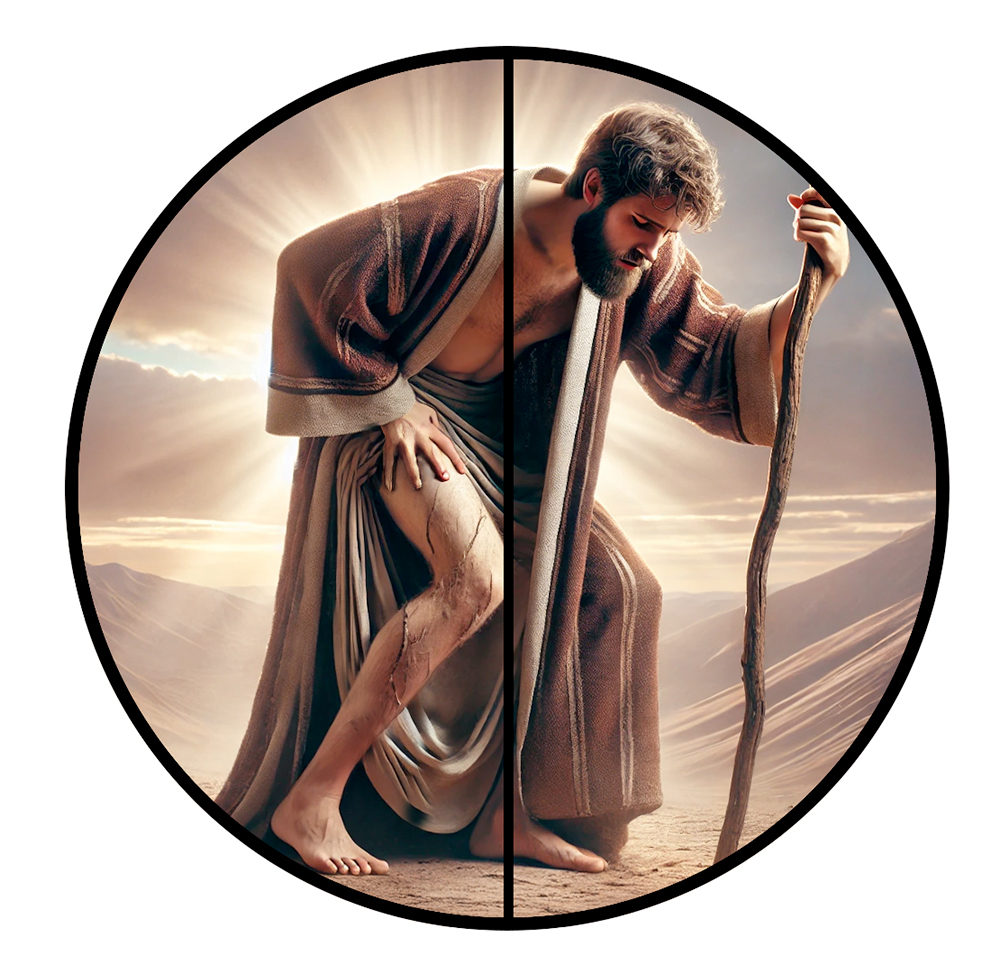
"And he is seeing that he is not prevailing over himself, and he is touching within the palm of the loin of himself, and the palm of the loin of Heel, she is being dislocated/alienated in the grappling of himself, in company with himself."
(Genesis 32:25 RBT)ἄρχοντι the "arch prince"
And the Scholars, the ones who have climbed down away from Foundations of Peace/Jerusalems, they were saying that he is holding Lord of the Flies ("Beelzebul"), and that he is casting out the Demonic Influences within the Prince/Commander of the Demonic Influences.And he who has summoned to self themselves within comparisons, was saying to themselves, "How is he able, an adversary an adversary to cast out?
And if a queen against her own self is partitioned/divided up, the Queen, that one, is not able to stand by!
And if a house against herself is divided up, the house, that one, will have no power to stand by!
And if the Adversary has stood up against his own self and he has been divided up, he has no power to stand ready, but rather he is holding an end-aim.
Like a Thief in the Night
But rather no one who has entered into the House of the Mighty One is able to snatch away the Instruments of himself, if he should not first chain the Mighty One, and at that time he will snatch away the House of himself!ἄνθρωπος - humans, mankind
Trustworthy One9b I am speaking to yourselves that all will be sent away to the Sons of the Humans, the Failures, and the Blasphemies, as much as they might have blasphemed.ἁμάρτημα - Mistake, Failure
And whosoever should have blasphemed into the Spirit, the Holy One, he is not holding a release into the Eternal (aiōn) One, but rather he is held/bound to an eternal (aiōn) failure,because they were saying he is holding an unclean spirit."
And the Mother of himself and the Brothers of himself are coming, and those who are standing outside sent away toward himself those who are summoning himself.
And a multitude was sitting around to himself and they are saying to self, "Behold! the Mother of yourself and the Brothers of yourself and the Sisters of yourself are seeking after yourself outside!"
The Sisters
And he who has been separated to themselves is saying, "Who is she, the Mother of Myself and the Brothers?"And he who looked all around at the ones who are sitting down in a ring around himself, is saying, "Behold! the Mother of myself and the Brothers of myself!
Whosoever should make the Pleasure of the God, this one is a brother of myself, and she is a sister and a mother!"10
Footnotes
Greek ἀγαθὸν ποιῆσαι ἢ κακοποιῆσαι
ἀγαθὸν ποιῆσαι being originally separate words "a good to make" (not a compound word) vs. the compound word κακοποιῆσαι "to do evil/harm"
ἀμήν amen, see note at John 1:51
οὗτος ἀδελφός μου καὶ ἀδελφὴ καὶ μήτηρ ἐστίν.
"this one the brother of myself, and a sister and a mother is."
Was this supposed to be a mixed gender reference (brother, sister, and mother) with a masculine singular demonstrative pronoun?
The Sister is a Mother
The phrasing οὗτος...ἀδελφὴ ἐστίν is grammatically anomalous in Classical and Koine Greek due to the discordance in gender agreement between the masculine singular demonstrative pronoun οὗτος and the feminine singular predicate noun ἀδελφὴ. Standard Greek grammar generally requires agreement or at least logical alignment in gender between the subject and predicate nominative, especially in copulative constructions. The verb ἐστίν is singular but does not mark gender explicitly; however, the predicate noun’s gender typically corresponds to the subject’s. Thus, a masculine pronoun governing a feminine predicate noun without contextual justification is considered incorrect or, at minimum, highly unusual. Acceptable alternatives would be οὗτος ἀδελφός ἐστίν (“this one is a brother”) for masculine agreement or a feminine demonstrative such as αὕτη ἀδελφή ἐστίν for feminine agreement.
-
The masculine generic use often appears in plural or collective contexts (e.g., οἱ γονεῖς “parents” includes both genders but uses masculine plural form).
-
It can also appear in poetic or rhetorical contexts where meaning overrides strict grammatical gender, often in attributive adjectives or periphrastic expressions.
-
However, this does not extend naturally to singular feminine nouns serving as predicate nominatives with a masculine singular subject and demonstrative.
-
Thus, a phrase like οὗτος ἀδελφὴ ἐστίν remains grammatically irregular and unexplained by the general flexibility described in Smyth §§1013–1015.
This presents a challenge as there are multiple subjects but only one verb, "is" which must also agree in number. There is no specific gender form to the verb. The verb ἐστίν "he/she/it is" is not plural "they are." The masculine demonstrative pronoun οὗτος "this one" specifically refers to the brother. Further, there should be agreement with the masculine demonstrative pronoun. A neuter singular could have been used (τοῦτο ἀδελφός μου καὶ ἀδελφὴ καὶ μήτηρ ἐστίν) or better, a plural, "These ones are" but this is not the case. Why?
To accomodate all the syntax present in this verse without breaking syntactical rules, without changing or adding words, without calling a brother 'a mother', ἐστίν can only fit as a feminine singular "she is" otherwise one is forced to read it as "this one is a sister/mother" which is an absurd thing to say (unless you live in the 20th century), which is why traditional translations have tampered with the Greek.
In addition, the possessive μου in this clause is directly applied to "brother" and not "sister" or "mother." In Ancient Greek, οὗτος ἀδελφός μου is a grammatically correct way to say "this is my brother", as the verb "to be" (εἰμί) is often omitted when it is implied by the context. This is common in Greek, especially in simple sentences where the meaning is clear. Relevant biblical examples can be seen in John 21:14:
"Τοῦτο ἤδη τρίτον..."
"This is already the third..."
Luke 4:36:
"Τίς ὁ λόγος οὗτος?"
"Who/what is this Word?"
Luke 8:35:
"Ποῦ ἡ πίστις ὑμῶν"
"Where is the faith/trust of yourselves?"
The verb "is" is implied. Furthermore, the masculine singular demonstrative pronoun οὗτός is almost always followed immediately by the verb "to be" in the NT (οὗτός ἐστιν). Here in Mark 3:35 it is missing, and the verb "to be" is found much later at the end of the verse.
The gender disagreement of the "scholarly" interpretations can be seen even in the "most accurate" translations:
"he is my brother and sister and mother." (ESV)
"this is My brother, and sister, and mother." (NASB)
"he is My brother and sister and mother" (BLB)
"is my brother and sister and mother." (NIV)
"the same is my brother, and my sister, and mother." (KJV)
"he is my brother, and my sister, and mother." (YLT)
Grammatical difficulties like this exist, not as a matter of poor writing, scribal error, or otherwise, but as a matter of careful intention, even enigmatic sayings. This is especially the case when a saying is preceded by the word "behold!/pay close attention!"