Hammer 1
ἀρχῆς -An origin, beginning
An origin of the Good News of Salvation of an anointed one, of a son of God.1את The True Self
According to what was written/drawn within the He Is Liberates Himself ("Isaia-hu"), the Prophet, Behold! I am sending away the Angel of Myself in front of the face of yourself,1a one whom will construct the Road of yourself!Inner Voice of the Desolate Woman
A voice of him who is war-crying within the Desolate One, Prepare the Road of a master, make the Worn Paths of himself straight ones!ἄφεσιν - Setting free the Missed Marks
He has become Favored ("Jóannés"), the one who is plunging within the Desolate One, he who is proclaiming a submersion of a change of mind into a release of misses.We Missed Bad
And the entire place of the Caster ("Judean"), she kept leading out toward himself and all the Founders of Peace ("Jerusalemites") were being plunged under himself within the Descending ("Jordan") river, those who are fully acknowledging the misses of themselves.
Above, and below, Himself
And the Favored was him who has put on himself hairs of a camel and a woman's girdle2 of skin hide around the Loin of himself, and he who is eating locusts and wild/savage honey.
ἱκανὸς - I am not now fit/Competent Enough
And he was proclaiming, he who is saying, "He is coming, the Mightier One of myself, hereafter/the future of myself, of whom I am not a sufficient fit, he who has bent down to break loose the Strap of the Sandals of himself.I, myself plunged yourselves with water, but he, himself will plunge yourselves with a holy spirit.
And he has become within those ones, the Days, Salvation went away from Guarded One ("Nazareth")2b of the Circuit ("Galilee"), and he was plunged into the Descending ("Jordan") under Favored.
σχιζομένους - Tearing Apart, Dividing Asunder the Dual Heavenly Ones
And immediately he who is climbing up from out of the water, he perceived those who are splitting apart the Heavenly Ones, and the Spirit just like a dove, that which is climbing down into himself.And a voice, she has become from out of the Heavenly Ones, "You, yourself are the Son of myself, the beloved one, within yourself I have found delight!"
ἔρημον - Desolate, Lonely, Solitary
And immediately the Spirit is casting himself out into the Desolate One.Ministering/Kissing to the Wild Animal
And he was within the Desolate One for forty days, he who is being put to the test underneath the Adversary, and he was in company with the Wild Animals, and the Angels were ministering to self.And after the Betraying of the Favored, came the Salvation into the Circuit ("Galilee"), he who is proclaiming the Good News of the God.
And he who is saying that the Opportune Time has been filled up, and she has drawn near, the Queen of the God! Change the mind and trust within the Good News!
ἁλιεῖς - Seamen, one who has to do with the Sea
And he who is leading aside close to the Sea of the Circuit, perceived Hearing ("Simon") and Manhood ("Andrew") the brother of Hearing, those who are casting all around within the Sea, for they were seamen.And the Salvation said to themselves, "Come here to the hereafter of myself, and I will make yourselves to become seamen/fishers of humans!"3
δίκτῠον - Net: hunting, fishing, lattice work, trap nets, the mesh of a sieve
And immediately, those who have sent away the Casting Nets, accompanied self.Dragging nets/Dragging Self in the (Mother)Ship
And he who has stepped forward a little, perceived Heel Chaser ("Jakóbos") the one of the Dowry ("Zebedee") and Favored the Brother of himself within the Ship, also themselves within the Ship, those who are preparing the Casting Nets.
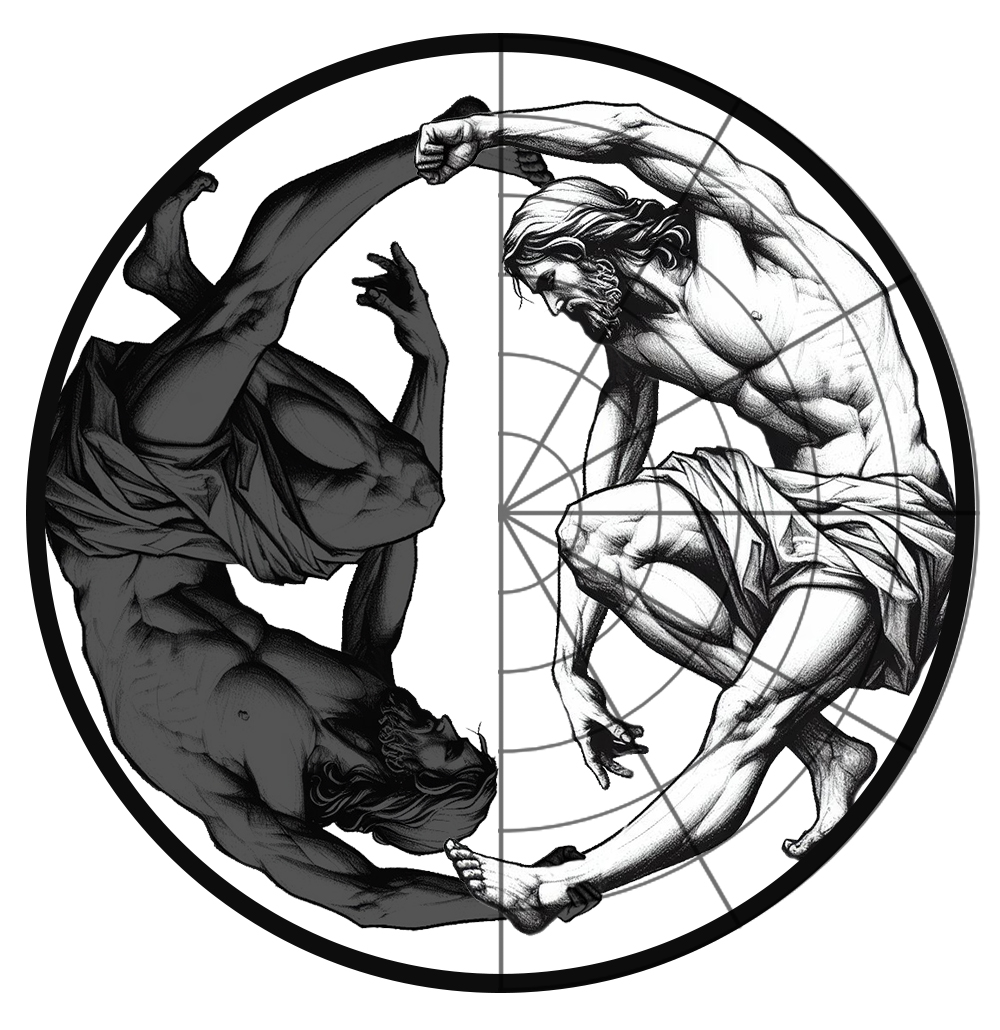
favored by MotherThey-Made "Esau"
favored by Father
And immediately he summoned themselves, and those who have sent away the Father of themselves, Endowment of He Is ("Zebedee"), within the Ship in company with the Hired Workers, went away hereafter to self.
And they are entering into Covering of Comfort ("Capernaum"), and immediately, on the Cessations, he who has entered into the Gathering, was teaching.
ἐκπλήσσω - struck, driven out of their senses
And they were struck on account of the Doctrine of himself, for he was him who is teaching themselves just like him who is holding an authority, and not like the Scholars.And immediately a man was within the Gathering of themselves, within an unclean spirit, and he screamed up,
he who is saying, "What is to ourselves, and to yourself, Salvation, Sproutling ("Nazarene")? Have you come to destroy away ourselves? I have seen yourself, who you are, the Holy One of the God!"
Come out of the Unclean Spirit!
And He bestowed honor to self, the Salvation,"Muzzle, and come out from himself!"A Mega Rooster Crow
And that which is tearing himself up, the Unclean Spirit, and that which crowed4 with a mega voice, he came out from himself.ἐπιτάσσει - to put/arrange upon one as a duty (mandate)
And they were all together astonished, so as to question toward their own selves, those who are saying, "Who is this new doctrine, according to an authority? And he is mandating upon the Unclean Spirits, and they are under-hearing to self!"Hearing Her
And she came out, the Hearing of himself, immediately everywhere into the Whole Surrounding Region of the Circuit ("Galilee").And immediately, those who have come out from the Gathering, came come into the House of Hearing ("Simōnos"), and of Manhood ("Andreou") in company with Heel Chaser ("Jakóbos") and Favored ("Jōannou").
And the Mother-in-law of Hearing was lying down, she who is suffering from a fever, and immediately they are speaking to self around to herself.
πυρετός pyretos - Scorching Heat
And he who has approached woke herself up, he who has taken control of the Hand, and the Fiery Heat sent away/let go of herself, and she was ministering to themselves.And she who who has become an evening at the time he sank down, the Sun, they were carrying toward himself all the ones who are holding evilly, and the ones who are being controlled by demonic spirit.
Her Portions Assembled back Together
And she was, the Entire City, she who has been assembled together toward the Door.And he treated multitudinous of those who are holding evilly various plagues/madnesses and he threw out multitudinous demonic influences, and he was not sending away the Demonic Influences to utter because they had known himself.
And he who has stood up exceedingly early at night, came out and went away into a Lonely Position, and there he was offering prayers.
And Hearing closely pursued himself, also the ones in company with himself.
And they found himself, and they are saying to self that everyone is seeking yourself!
And he is speaking to themselves, "Lead away another way into the ones who are holding villages so that there also I might proclaim, for I came out into this.
And he came, he who is proclaiming, into the Gatherings of themselves, into the entire Circuit ("Galilee"), also he who is casting out the Demonic Influences.
"You have power to cleanse myself!"
And he is coming toward himself, a scaly one, he who is summoning himself close beside, and he who is falling on the knees, he who is saying to self that If you are willing, you have power to cleanse myself!ἅπτομαι - cling to, attached, fasten
And he who has been moved in the bowels, he who has stretched out the Hand of himself, he attached. And he is speaking to self, "I am willing. Be cleansed!And immediately she went away, away from himself, the Scaliness,5 and he was cleansed.

"I'm willing!"
No More an Ass
And he who snorted angrily to himself, immediately he cast out himself.
"Are you giving to a horse a heroine? Are you clothing the neck of himself with a thunder? Are you making him quake like the Locust? The majesty of his snort is a terrifying one!"
(Job 39:19 RBT)(גבורה giborah, Feminine passive participle from the same as gibbowr "warrior" i.e. "she who is valiant"...cf. #1369)
And he is speaking to self, See that you speak nothing to no one, but rather lead on, bring to light your own self to the Priest and bear around to the Purification of yourself whatever things Drawn Out ("Moses") arranged into a witness to themselves.
And the one who has gone out began to proclaim much, and to spread the Logos Ratio across so as for himself no longer to be able to enter manifestly into a city, but rather he was outside upon desolate places/positions, and they were coming toward himself everywhere.
Footnotes
Greek υἱοῦ Θεοῦ. A son of God
There is no definite article "the" here. Thus "the Son" is less than accurate.
Similarly, there is no definite article for ἀρχῆς "an origin/beginning." When there is no definite article we don't add one. When there is a definite article, we don't remove it.
τοῦ εὐαγγελίου Ἰησοῦ Χριστοῦ υἱοῦ τοῦ Θεοῦ
all these words are in the genitive.
αὐτός The True Self
Scholars always knew that the pronoun αὐτός was used "inordinately" throughout the New Testament (as in, way beyond normal usage of classical Greek), but failed to understand why. It is a word that fundamentally denotes one’s true self, often distinguishing the soul from the body (Od. 11.602) or, conversely, the body from the soul (Il. 1.4). It functions reflexively as “self” and, in oblique cases, as a personal pronoun (“him, her, it”).
It emphasizes individual identity in contrast to others, such as a king vs. his subjects (Il. 6.18), Zeus vs. the other gods (Il. 8.4), or a warrior vs. his weapons (Il. 1.47).
With the article (ὁ αὐτός, ἡ αὐτή, τὸ αὐτό), it signifies "the same" or "the very self."
In prose, αὐτός can appear without the article for proper names (αὐτὸς Μένων, X. An. 2.1.5) and is used impersonally in phrases like αὐτὸ δείξει ("the result will show," Cratin. 177). It also expresses volition (“of one’s own accord,” Il. 17.254) or personal presence (“in person,” D. 1.2).
The most frequent noun word used in the NT is not "God" (θεός), found 1,317 times, but rather αὐτός the self, found over 5,600 times. The only words more frequent are "and" (9,000 times) and "the" (20,000 times). Similarly, the most frequent word in the Old Testament Hebrew is את the eternal self, occuring over 11,000 times.

The Neuter Form
In philosophical or poetic usage, particularly in Homer and Plato, the neuter form αὐτό may denote one’s true self, either the soul (Od. 11.602) or, conversely, the body (Il. 1.4), depending on context. It also appears in abstract references to essence, identity, or the very thing itself (τὸ αὐτό), as in expressions of intrinsic nature or reality (cf. Plato, Republic 362d: αὐτὸ ὃ μάλιστα ἔδει ῥηθῆναι – "the very thing that most needed to be said").
Thus, while αὐτός is not reflexive in the grammatical sense (cf. ἑαυτοῦ, "of oneself/one's own self"), it does, especially in neuter form, preserve and express a conceptual sense of "Self" or "the same being", particularly in metaphysical or emphatic contexts.
in ancient Greek, αὐτό—specifically the neuter singular form of αὐτός—is the only appropriate and attested lexical item to express the metaphysical concept of "the self", especially in Platonic and post-Platonic philosophical discourse.
-
Philosophical Usage:
-
In Plato and later authors, expressions like τὸ αὐτό ("the selfsame") or αὐτὸ τὸ ὄν ("being itself") represent the essence or pure identity of a thing, distinct from its accidents or manifestations.
-
Notably, in Plato's dialogues, constructions such as:
-
αὐτὸ τὸ ἀγαθόν – “the Good itself”
-
αὐτὸ τὸ καλόν – “the Beautiful itself”
are paradigmatic examples of Forms or Ideas, i.e., entities existing in themselves and through themselves — the metaphysical “Selves” of their kind.
-
-
-
Semantic Range:
-
While αὐτός generally functions as a third-person pronoun or intensifier, its neuter form, especially when used absolutely or with the definite article, becomes substantive and ontologically loaded:
-
τὸ αὐτό = "the same", "the selfsame", "the self (in essence)"
- αὐτῷ "to self" (dative neuter is identical to dative masculine)
-
-
This contrasts with ἑαυτοῦ, which is grammatically reflexive and bound to a subject, not abstract or metaphysical.
-
-
Terminological Precedence:
-
Later philosophical traditions (Neoplatonic, Stoic, etc.) frequently use forms of αὐτός to express inner identity, core being, or metaphysical selfhood.
-
(cf. LSJ αὐτός)
Strong's #2223, ζώνη, properly the lower girdle worn by women just above the hips.
ζώνη is not the normal word used for a man’s belt. The more typical term for a man's belt, especially in martial or practical contexts, is ζωστήρ.
Key Differences:
-
ζώνη:
- Commonly refers to a woman’s belt or girdle, particularly the lower girdle worn around the hips.
- It is associated with women’s attire, marriage, childbirth, and sometimes metaphorical or symbolic uses (e.g., in phrases related to conception or waist regions).
- When used for men, it often describes non-martial belts or metaphorical uses (e.g., the belt of Orion, zones of the Earth).
-
ζωστήρ:
- The primary term for a man’s belt, especially in military contexts.
- It denotes the functional girdle worn over armor or clothing, often securing weapons or equipment.
- Found in epic poetry (e.g., Homer), where it is regularly associated with warriors and their battle gear.
Supporting Examples:
- ζώνη in Homer (e.g., Od. 5.231) clearly describes the girdle of women, emphasizing its use as part of feminine attire.
- ζωστήρ in the Iliad frequently appears in martial contexts, describing the belts of male warriors: e.g., ζωστῆρες ἕαττο ("they put on their belts," Il. 3.332).
While ζώνη can occasionally refer to a man’s belt, such usage is less common and tends to occur in non-martial or figurative contexts. For example:
- In Xenophon (Anabasis 1.6.10), ζώνη refers to the belt of barbarians, which held daggers, showing it could describe a practical belt worn by men, but it is secondary to ζωστήρ for Greek contexts.
Thus, ζώνη is primarily associated with women, while ζωστήρ is the standard term for a man’s belt, especially in contexts involving warriors or formal attire.
The Hebrew root נָצַר (nāṣar) primarily means “to watch, guard, preserve, keep” (cf. Deut. 32:10; Ps. 25:21; Prov. 2:8; Isa. 42:6; 49:8). Its Nifal participle נְצוּרה denotes “that which is guarded or enclosed” and, in a military or urban context, conveys the idea of a city under siege or blockaded. In Isaiah 1:8, the phrase עִיר נְצוּרָה — “a city besieged” — evokes the image of a city entirely surrounded, guarded, or confined, emphasizing vulnerability while under watch (cf. LXX: ὡς πόλις πολιορκουμένη).
The same root appears in place-names, most notably Ναζαρέτ (Nazaret) in the Greek NT, derived from נָצְרַת in Hebrew/Aramaic. While the etymology of נָצְרַת is debated, a plausible interpretation is “watchtower” or “guarded place”, linking the sense of נָצַר as “to guard or watch” with the topographical or strategic function of the settlement. Thus, both Isa. 1:8 and the toponym Νάζαρέτ share the semantic field of “guarded, watched, or enclosed”, whether metaphorically (besieged city) or literally (settlement on a hill or lookout).
To Fish in the Realm of Humans
The Greek noun ἁλιεῖς is a nominative plural form of ἁλιεύς, meaning "fisherman" or "seaman." It is not a verbal form. The verb ἁλιεύω, meaning "to fish," does not occur in this phrase. If the intention were to express the traditional interpretation—"those who fish for men"—the expected Greek construction would be οἱ ἀλιεύοντες, the articular present participle, meaning “the ones who are fishing” or “those who fish.” This participial form is attested in sources such as the Perseus corpus (Cf. Perseus ἀλιεύοντες):
οἱ ἀλιεύοντες ἀνθρώπους
“those who fish for men,”
with ἀνθρώπους in the accusative, indicating the direct object of the action.
The common rendering of ἁλιεῖς ἀνθρώπων as "fishers of men" reflects an English idiomatic translation rather than a precise grammatical equivalence. In Greek, ἀνθρώπων is genitive plural, which typically denotes possession, origin, or association—not direct object. Therefore, the phrase grammatically suggests “fishers belonging to men” or “fishers associated with men,” not “fishers who fish for men.”
The traditional interpretation thus imposes an accusative sense onto a genitive construction by exploiting an ambiguity in English. In English, the preposition "of" can sometimes imply agency or object, allowing a phrase like "fishers of men" to be understood as "those who fish for men." But in Greek, the genitive case does not serve this function unless the construction demands it—e.g., with partitive, possessive, or certain objective genitives in specific lexical contexts.
To express the idea "those who fish for men" in clear and grammatical Greek, one would expect either:
-
a verbal construction: οἱ ἀλιεύοντες ἀνθρώπους, or
-
a noun phrase with an accusative: ἁλιεῖς ἀνθρώπους.
In both cases, ἀνθρώπους (accusative plural) correctly serves as the direct object of the action implied by ἁλιεύειν. Conversely, ἁλιεῖς ἀνθρώπων, with ἀνθρώπων in the genitive, cannot grammatically bear the meaning “fishers for men” without significant theological or interpretive presumption.
In short, the phrase ἁλιεῖς ἀνθρώπων has been theologically or interpretively shaped to mean “those who fish for men,” but strictly speaking, this reading is not supported by the grammar of the Greek text. The traditional rendering is a case of interpretive license rather than syntactic fidelity.
The verb φωνέω phóneó, meaning "to make a sound," is used to describe the crowing of a rooster. While φωνέω has broad applications, including human and animal sounds, Greek does not have a distinct verb solely for "to crow." It is derived from φωνή phóné meaning "voice" or "sound." The closest would be κικκαβαῦ, "onomatop., a cry in imitation of the screechowlʼs note, toowhit, toowhoo, Ar." (cf. Middell Liddel κικκαβαῦ)
λέπρα, ας (ἡ) lèpre, skin disease characterized by scaly patches, Herodotus 1.138; Hippocrates, Aphorisms 1248; Theophrastus, Suda 13, etc.; Plutarch, Moralia 353f, 670f; in the plural, Hippocrates 114. || Ionic variant λέπρη, Herodotus, loc. cit.; Hippocrates, Aphorisms 1248. Etymology: from λέπω (lepo), meaning "to peel" or "to scale."
λέπρα (lépra) in ancient Greek could refer to any sort of skin disease that caused scaly, flaky, or rough patches on the skin. The term was used broadly to describe various skin conditions, not necessarily the specific disease we know as leprosy today.
(cf. Logeion λέπρα)