Romans 1
ἀφωρισμένος - To Mark off by a boundary
Small One ("Paul"), a slave of an anointed one of Salvation, a summoned one, a sent away one, one who has been marked off by boundary into a gospel of God,
ἀφορίζω - marked off by boundary, defined
("set apart" is a made up idiom for this word to explain the NT usage away)
(cf. LSJ)γραφή - representation by lines, drawings
which he promised in advance straight across through the Prophets of himself, within holy writings/drawings.1From one Born to the Flesh
around to the Son of Himself, the one who has become from out of children of Beloved ("David") according to a flesh,...to One born of spirit
of the one who has been marked out by boundary as a son of God within a powerful one according to a spirit of a holiness, from out of a standing up of dead ones of Salvation Anointed the Master of ourselves.2ὑπακοὴν - Listening Below
Across from whom we have taken hold of a grace, and a mission into an under-hearing of a trust3 within all the Herds for the sake of the Name of himself,within which you, yourselves also are summoned of Salvation Anointed One.
all of those who are being within Rome, beloved ones of God, summoned holy ones; A grace to yourselves and a peace away from God of a father of ourselves, and a master Salvation Anointed One.
First of all, I am giving thanks to the God of myself, straight across through Salvation Anointed One around everyone of yourselves, because the Trust of yourselves, she is proclaimed within the entire Order!
ἀδιάλειπτος - No Time Gaps
For he is a witness of myself, the God, to whom I work for hire within the Spirit of myself, within the Good News of the Son of himself, just as I am making an uninterrupted memory of yourselves,at all moments upon the Prayers of myself, he who is entreating if somehow already at last I will make a prosperous journey within the Will of God to come in toward yourselves!
χάρισμα Charisma - Intangible Gift/Favor
For I yearn to see yourselves so that I may impart some spiritual favor to yourselves into the Stabilization of yourselves.And this one is to be encouraged together within yourselves straight across through the Trust within each another, both of yourselves and of myself.
I am not willing to be ignorant/unaware of yourselves brothers, since I have repeatedly purposed to come toward yourselves but was hindered until the Present Moment, so that I should hold a certain fruit also within yourselves even as also within the Remaining Herds.
βάρβαρος - barbaric, uncultured, crude speech
To both Greeks and also to uncivilized ones, both to wise ones and unintelligent ones, a debtor I am.Thus the eagerness down to myself, and to gospelize to yourselves, the ones within Rome!
For I am not ashamed of the Gospel, for she is a powerful one of God into a salvation for everyone who is trusting— both to Caster first and to Greek.
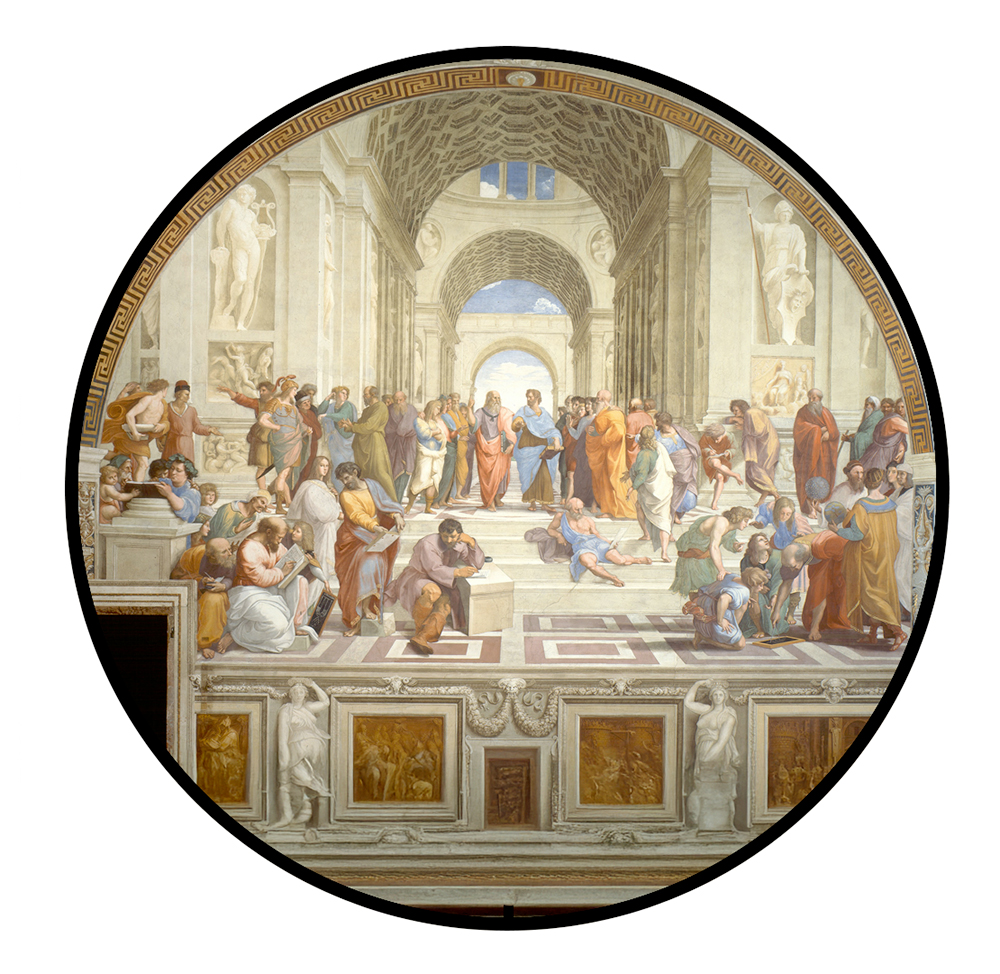
The ancient Greeks considered themselves to be the most educated and intellectually advanced people in the world (very ethnocentric), particularly during 5-4th century BCE. They were culturally superior to non-Greek-speaking peoples. They were the educated ones. For them, language itself was essentially the marker of intellectual and cultural achievement. It was not about manners or politeness per se, but rather, if you spoke Greek or not. Those who did not know Greek or the Greek customs, they called "barbarian."
For a just one of God within himself is being unveiled from out of a trust, into a trust, just as has been written/drawn, and the Just One from out of a trust will live!

The Wrath Unveiled
For she is being unveiled, the Wrath of God away from a heavenly one upon every ungodly one, and injustice of men, the ones who are holding down the Truth within an injustice!Because the Known One of the God is made manifest within themselves, for the God is making visible to themselves.
For the Invisible One of himself, away from a founding of an order is distinctly perceived, those who are observed/understood by the Makings, both the Eternal Power of himself and a divine nature, into themselves being unable to give a defense.
Babbling/Mute Hannah
For those who have recognized the God, did not glorify like God, nor did they give thanks, but rather they became futile/aimless within the Debates of Themselves, and the Incoherent Heart of Themselves, she became darkened!
"And Hannah, herself is she who speaks upon the heart of herself, yet the dual lips of herself are those who wander/waver to and fro, and the voice of herself he is not hearing, and My God ("Eli") considered herself a drunk one."
(1 Samuel 1:13 RBT)Those who are asserting to be wise ones, they have become foolish/tasteless.
And they altered the Glory of an incorruptible God within a copy of an image of a mortal man, and of flying/winged ones, and of four-footed ones, and of creeping ones.
So, Samson
Across from which he handed themselves over, the God, within the Desires of the Hearts of themselves, into an uncleanness of the Dishonoring of the Bodies of themselves within themselves.ἐσεβάσθησαν - Reverenced, Respected Feared: Darnel Right Beside the Wheat
Anyone who altered the Truth of the God within the False One, and were revered/feared,4 and worked for hire for the Founding/Establishment close beside the one who founded, whosoever is a blessed one into the Eternal (aiōn) Ones, Trustworthy One ("amen")!πάθη pathos - pathological Helplessness
Because of this he handed themselves over, the God, into a pathos of dishonor, for both of the Females of themselves altered the Natural usefulness into the one going beyond nature.5ἀντιμισθία antimisthia - anti wage/corresponding return
Likewise also both of the Males, those who have sent away the Natural usage/intimacy of the Female, burned out within the Desire of themselves into each other, males within males, laboring to achieve an ugly one, and the Corresponding Reward, her whom it was necessary for them to take back from the Delusion of themselves within their own selves!
male within a male
loins not girded up/around
ἀδόκιμον - A Mind Not standing the test, reprobate
And according as they did not approve after scrutiny to hold the God within a recognition, the God handed themselves over into a reprobate mind to make those things that are not fitting,So, Delilah: You Ate Your fill
those who have been filled up with every injustice, badness, greediness, malicious evil, full of envy, murder, contention, fish bait, bad disposition/character, whisperers,ἀλαζόνας alazonas - wanderer, vagrant, charlatan, pretentious
down talkers, hated of God, insolent, arrogant, wanderers, inventors of evil things, disobedient to parents,ἀσύνθετος - Without composition/lacking order/structure
incoherent/unintelligible ones, uncomposed ones, hardhearted/disaffectionate ones, merciless ones,anyone who knew the right ordinance of the God, that the ones who are practicing such things are counterbalancing death— they are not only those who are making them, but the ones who are practicing are also joining in approval!
Footnotes
γραφή, ἡ
Primary Meaning: Drawing, delineation, or painting. Examples include:
- Representation by lines: κατὰ γραφήν (in outline), Herodotus 4.36; γραφῇ κοσμέειν (decorate with painting), Herodotus 3.24.
- The art of drawing or painting: Plato, Politicus 277c; Timaeus 19b.
Secondary Meaning: That which is written or the act of writing. Examples include:
- γράφω evolving into "writing" or "the art of writing" (Plato, Phaedrus 274b).
- Legal, literary, or administrative writing: αἱ γραφαὶ τῶν δικῶν (the registration of legal cases, Aristotle, Politics 1321b36); γραφαὶ περὶ συμμαχίας (treaties, ib. 1280a40).
- Documents: ψευδεῖς γραφαί (pseudo documents, Demosthenes 18.55); ἐν τῇ πρώτῃ γραφῇ (in the first book, Epicurus, Nat. Herc. 1431.16).
- Inscription, contract, or list: Thucydides 1.134; IG (epigraphy collections).
Etymology:
The word γραφή is the origin of the modern term graphics, which refers to visual representation in contemporary contexts, such as design, digital imagery, and art. This connection reflects its original sense of "drawing" or "delineation" as well as the broader concept of representation. While γραφή originally referred to "drawing" or "painting," its usage extended to encompass "writing" due to the close relationship between inscribing and artistic representation.
(cf. Logeion γραφή)
There are in fact a variety of Greek words that can be used for "scriptures" or "books" or "documents", but they are not used here:
- Συγγράφω (συγγραφή): This would be the most plain word for "writing, composition," or authoring a systematic work; often refers to books or treatises.
- Γράμμα (γράμματα): Letters, characters, drawn lines, figures, mathematical diagram; can refer to writing, literature, or written texts.
- Στίχος: A line of writing or verse, commonly used in poetry or legal contexts.
- Χάρτης (χαρτίον): A sheet of papyrus or parchment; χαρτίον is the diminutive form, meaning a small document or piece of writing.
- Πίναξ (πινάκιον): A writing tablet, often of wax or wood; πινάκιον is the diminutive form for smaller, portable tablets.
- Κύλινδρος: A scroll, referring to the physical medium of written texts.
- Χειρόγραφον: A manuscript or something written by hand.
- Βίβλος / Βιβλίον: A book or scroll; βιβλίον is the diminutive, referring to a small book or text.
- Καταγραφή Kata-graphe: Drawing of maps, delination, also record or registry, emphasizing the act of cataloging or documenting.
- Ἐπιγραφή: An inscription, often carved or engraved.
Greek νεκρῶν Ἰησοῦ Χριστοῦ τοῦ Κυρίου ἡμῶν. These are all in the genitive case.
νεκρῶν τοῦ Κυρίου would translate to "of the dead of the Lord" and thus, without altering standard Greek grammar, νεκρῶν Ἰησοῦ Χριστοῦ translates to "of the dead of Jesus Christ"
Strong's #5218 ὑπακοὴν The scholars have noted,
"The word is not found in secular authors; nor in the Sept., except in 2 Samuel 22:36 with the sense of favorable hearing."
It is created from a compound of #191 akoúō, "to hear" and #5259 hypó, "beneath" to convey an idea of "hearing below" or "listening upward."
Strong's G4071. The verb σεβάσσομαι (aorist σεβάσσατο) in Homeric Greek differs from its later meaning of "to revere" or "to worship," or "to feel shame," (cf. Logeion σέβομαι)
In the Iliad (e.g., Il. 6.167, 6.417), it conveys a sense of being restrained or held back by awe, shame, or respect, often due to social or moral considerations. This nuance aligns it with αἰδέομαι ("to feel shame or respect"). For instance, in Il. 6.167, "σεβάσσατο τό γε θυμῷ" is translated as "he was restrained in his spirit by it," indicating an internal conflict influenced by honor or propriety. This reflects the broader cultural emphasis on αἰδώς (a blend of shame, respect, and reverence) in ancient Greek thought. Over time, the meaning of σέβομαι evolved into a more religious context, signifying veneration or reverence or worship.
Pathological "Learned Helplessness"
The term πᾰθη (pathē), is plural, and is derived from πάσχω (to suffer). It refers to a passive state in which something is done to a person or a thing, as opposed to πρᾶξις (praxis), which signifies active doing. This concept is found in texts like Plato's Timaeus (80b) and Laws (903b), where πάθος encompasses experiences or events that occur to an individual, such as suffering or misfortune, as seen in various tragedies and historical accounts (e.g., Sophocles' Ajax 295, Herodotus 1.122). Πᾰθ-η can also refer to specific afflictions like blindness (Herodotus 2.111) or physical suffering caused by conditions like suffocation (Plato, Philebus 32a).
In the context of feelings of helplessness or feeling out of control, πάθος pathos is the go-to word. it captures the experience of being subjected to "forces outside of one's control," where the individual is the passive recipient of actions or events, rather than an active participant. This passive suffering—whether through misfortune, bodily affliction, or external circumstances—reflects a state where a person has no agency over their own life, embodying a profound sense of powerlessness and vulnerability. The modern psychological concept of learned helplessness (a term coined by psychologist Martin Seligman) is closely rooted in this ancient notion of πάθος pathos, describing a condition in which an individual, after repeated exposure to uncontrollable stressors, comes to believe they have no control over their circumstances, leading to feelings of despair and passivity.
"Why are the guys so passive?!?"
The idea of passivity in πάθος pathos resonates with modern terms such as external locus of control, where an individual perceives their fate as determined by external forces (e.g., luck, others' actions, or societal constraints, or higher powers) rather than their own decisions and efforts. This psychological outlook contributes to the experience of........ victimhood, in which a person feels unable to change or influence their environment. Thus, πάθος pathos symbolizes that existential struggle where the individual feels overwhelmed by forces beyond his or her ability to influence or alter, akin to the psychological states of powerlessness and a diminished sense of agency.
Thus as the saying goes, as a man is, so is the strength of himself.
παρά with the accusative does not inherently carry the sense of against or contrary to. One must dig deep to find the metaphorical abstraction, connoting going beyond limits of nature:
πὰρ τὴν φύσιν (Thucydides 6.17)
(cf. LSJ παρά, C.III.4)
The rare split in the construction τὴν παρὰ φύσιν is not merely a stylistic accident but likely a deliberate syntactic and semantic strategy that draws attention to that which is "gone past nature."
Thus, the phrase should be interpreted as a cohesive unit where the spatial/metaphorical semantics of παρά remain salient despite the syntactic separation, underlining the idea of something or someone fundamentally “beyond nature” in the sense of being unnatural or violating natural limits.