RBT Paraphrase
The Garden of Self
1 And the Serpent
has become more prudent than any Animal of
the Field whom
He Is mighty ones made.
And he is speaking toward the Woman even though mighty ones has said she is not eating himself from any
tree of
the Protected-Garden.
2 And the Woman is saying toward the Serpent, "From the fruit of
a tree of
the Protected-Garden, we are eating.
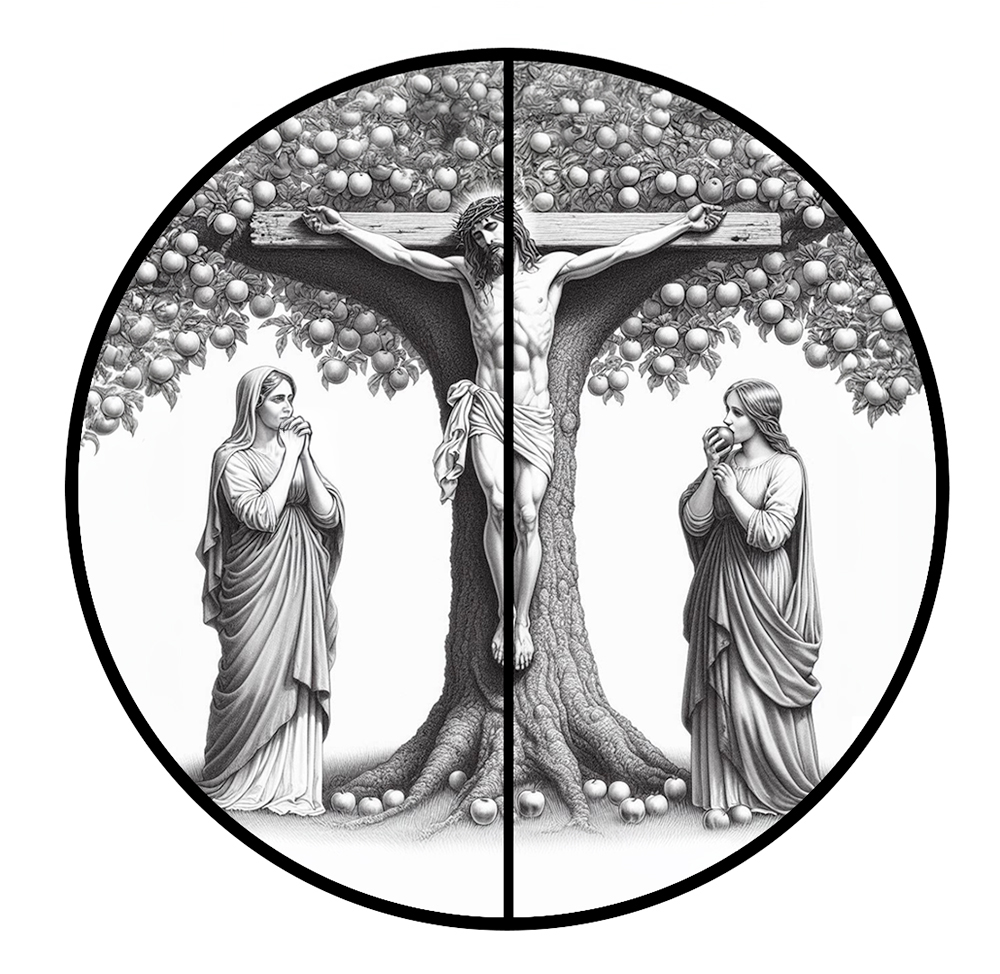
Bad Fruit: "Do not touch the Lord's Anointed!"
3 And from the fruit of
the Tree who is within the Middle of
the Protected-Garden mighty ones has said, You all are not eating from out of the manna of himself, and you all are not touching within himself, lest your inner selves die!"
You Were Beguiled
4 And the Serpent is saying toward the Woman, "
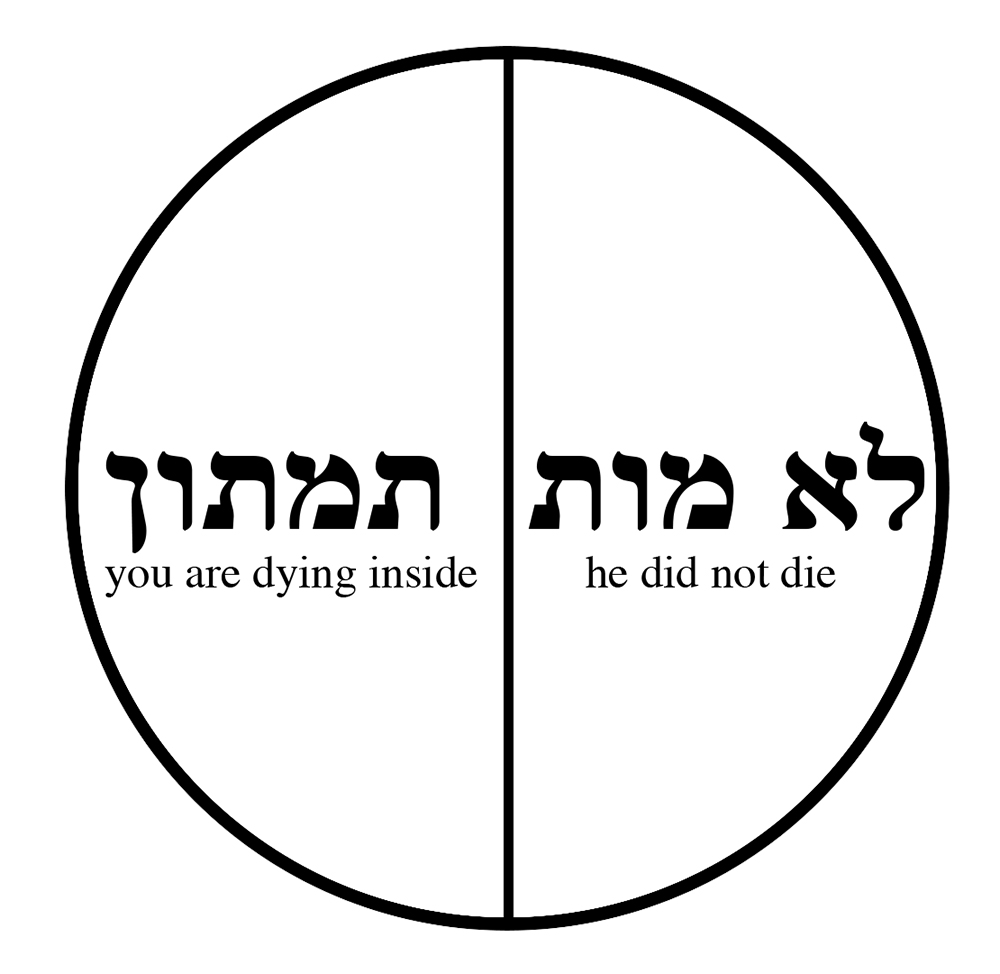
He did not die, your inner selves are dying!
Woken Up: Elohim Ate Elohim
5 For mighty ones
saw that within
the Day, he ate
yourselves from out of ourselves! And the eyes of yourselves
have been opened, and
you all became as mighty ones, those who are perceiving
the good one and
evil one!"
Interweaving
6 And the Woman is perceiving that
the Tree has become
a good one for food, and that
Himself is
a longing desire to the dual Eyes. And
the Tree is him who is desirable to interweave. And she is taking hold from the fruit of himself, and she is eating, and she is also giving to the man of herself close beside herself, and he is eating.
They are Awakened
7 And
they are being opened,
eyes of the both of themselves, and they are perceiving that
the cities of themselves are
themselves. And they are sewing together a leaf of a fig tree, and they are making for themselves
a girdle.
Good Fruit: They Hear a Voice
8 And they are hearing
a self eternal voice of
He Is mighty ones, he who makes himself walk within
the Protected-Garden to
the spirit/wind of Today, and
the Human is causing himself to hide and the woman of himself from the faces of
He Is mighty ones in the Middle of
a Tree of
the Protected-Garden.
9 And
He Is mighty ones is calling out toward
the Human, and he is saying to himself, "Where is yourself?"
Enigma: Thievery of Self
10 And he is saying, "I have heard
a self eternal voice of yourself within
the Protected-Garden, and I am afraid because the
city of themselves is
my own self (אנכי), and I am hiding."
11 And he is saying, "Who has exposed to yourself that your eternal self is
a city of themselves? From out of
the Tree whom I have commanded yourself, excepting that he has eaten from out of the manna of himself, have you eaten?"
"This Mystery is Profound"
12 And
the Human is saying, "The Woman whom you have given close beside myself, she, Himself, has given to myself from out of
the Tree, and he has eaten."
A Healing Testament
13 And
He Is mighty ones is saying to the woman, "What is
this one you have made?" And the Woman is saying, "The Serpent has credited myself, and he ate."
He lost his wings and feet
14 And
He Is mighty ones is saying toward the Serpent, "Because you have made
this one, your eternal self is accursed more than every
Wild Animal, and more than every
domesticated-animal of
the Field. You are walking upon the curve [gachon] of yourself, and the dust you are eating, all of
the days of the living ones of yourself.
15 And I am setting
a hated-one ("Job-ah") in between yourself and in between the Woman and in between
the seed of yourself and in between
the seed of herself
He, himself, is gaping upon yourself, a head, and you, your eternal self are gaping upon him,
Jacob ("Heel").
Dual: The Born Children of the Slavewoman and the Added Children of the Free woman - Isaiah 54:1
16 Toward the Woman he said, "She is causing to multiply; I am multiplying the inner afflicted one of yourself, and the inner pregnant one of yourself. In sorrow you are begetting sons! And the
passion/longing of yourself is toward the man of yourself, and he, himself is ruling as king within yourself!"
The Days of the Living Ones Eat in Grief
17 And he has spoken to each adam that You have listened to
the voice of the woman of yourself, and she is eating from out of the Tree, whom I have charged you to speak, 'She is not eating from out of himself.' She who is cursed is
the Ground of Adam ("
Adamah") within the crossing over of yourself. Within an inner pain
they [women] are eating, all the days of
the living ones of yourself,
Not a Young Tender Shoot and Leaves
18 And
a thorn and
a bramble bush she is producing to yourself, and you have eaten the self eternal grass of
the Field.
To Kick the Dust from Whence You Came
19 In the sweat of your dual noses you are eating bread until the turning back of yourself toward
the Ground of Adam, for from out of her you have taken hold, for
your eternal self is dust, and toward the dust you are turning back!"
"I, Myself am the Zoe-Life"
20 And
the Human is summoning a name of the woman of himself,
Life Giver ("Chavah"), for she has become of Himself, a mother of every
living one.
The Seamlessly Woven One Piece - Two into One Flesh
21 And
He is mighty ones is making for
the Human and for the Woman of himself, tunics of skin, and he is clothing themselves.
ממנו - From out of himself
22 And
He Is mighty ones is saying, "Behold!
the Human has become as
one, from out of Himself, to perceive the
good one and
evil one. And
now
, a corner, he is sending away
the hand of himself, and he has taken hold also from the Tree of the Living Ones, and he has eaten, and he has lived to the Eternal One!"
Sent: Till the Ground from Which he was Taken
23 And
He Is mighty ones is sending
himself out from
the Protected-Garden of
Delight to serve
the self eternal Ground of Adam ("
Adamah"), from out of whom he was taken.
Second Adam
24 And
the self eternal Human ("The Adam") is driving out, and he is causing
the self eternal Cherubim to encamp from the front of
the Protected-Garden of
Delight and the self eternal flame of
the Sword,
the one who inverts herself to keep watch over the self eternal
road of
the Tree of
the Living Ones.
RBT Hebrew Literal
1 And the Serpent
has become more prudent from all of
a living-one of the Field whom
Yahweh elohim has made, and he is speaking toward the Woman even though elohim has said she is not eating him from any wood of the Enclosure.
2 And the Woman is speaking toward the Serpent, "From a fruit of a wood of the Enclosure, he is being eaten.
3 And from a fruit of the Wood who is in the middle of the Enclosure elohim has said "You are not eating from out of himself, and you are not touching within himself, lest your inner selves are dying."
4 And the Serpent is saying toward the Woman, `He has not died, your inner selves are being put to death!`
5 for he saw elohim, that in a hot-one he ate-yourselves from out of ourselves, and the eyes of you all have been opened, and you
all have become as elohim, those-who-see
good one and ruined-one.`
6 And the Woman is perceiving for he has become good the Wood for a food, and for a desire himself to the Dual-Eyes, and he-who-is-coveted is the Wood to cause to be interwoven, and she is taking from his fruit, and she is eating, and she is giving, also to the woman close beside herself, and he is eating.
7 And
they are being opened, the eyes of the both of themselves, and they are perceiving that their cities
are themselves. And they are sewing
together a leaf of a fig, and they are making to-themselves
a girdle.
8 And they are hearing אֶת-the voice of Yahweh elohim, he who walks himself in the Enclosure to a wind of the Hot-one, and the Red-one is making himself hide, and his woman, from the faces of Yahweh elohim in the middle of a wood of the Enclosure.
9 And
Yahweh elohim is summoning/calling toward the
Red-one, and is saying to-himself, `Where is yourself?`
10 And he is saying, `I have heard
אֶת-your voice in the Enclosure, and I am fearing, for the city of themselves
is my self, and I am hiding.`
11 And he is saying, `Who has exposed to-yourself that their city
is אֶת-herself? From out of the Wood whom I have charged you unless he has eaten from the manna of himself, have you eaten?`
12 And the
Red-one is saying, `The Woman whom you have given close-with-me Himself she has given to-myself from out of the Wood, and he has eaten.`
13 And is saying
Yahweh elohim, to woman, What
is this one you have made?` And the Woman is saying, `The Serpent has credited me, and he ate.`
14 And
Yahweh elohim is saying toward the Serpent, for you have made
this one, he-who-is-accursed
is אתה-yourself from the whole of the Behemah, and from the whole of the
living-one of the Field. Upon the curve of yourself [gachon] you are walking, and a dust you are eating, all of the days of your
living-ones.
15 And a
hated-one I am setting between you and between the Woman and between your seed and between her seed, himself he is gaping over you, head, and you, את-yourself are gaping upon him, heel.`
16 Toward the Woman he has said, `He is causing to multiply, I am multiplying your inner-afflicted-one and your inner-conceiving-one, in sorrow you are begetting sons, and toward your man
is your
passion, and himself is reigning in-yourself.`
17 And to
a red-one he has said 'For you have heard to the voice of the woman of yourself, and she is eating from out of the Wood which I have laid-charge to you, to say, She is not eating from out of himself, she-who-is-cursed
is the
Red-one within-across-yourself. In an inner-pained-one
they are eating the whole of the days of the
living-ones of yourself,
18 and thorn and bramble she is causing to sprout forth to-yourself, and you have eaten
את-grass of the Field.
19 In the sweat of your dual-nostrils you are eating bread until your turning back toward the
Red-one, for from her you have taken, for a dust
is את yourself, and toward dust you are turning back.`
20 And the
Red-one is summoning a name of the woman of himself
Life-giver [Chavah] for himself
she has become a mother of the whole of the
living-one.
21 And Yahweh elohim is making for the Red-one and for his woman tunics of skin, and is clothing them.
22 And
Yahweh elohim is saying, `Behold, the
Red-one has become as
one from out of himself, to perceive
good one and ruined-one. And now, a corner he is sending away his hand, and he has taken hold also of the Wood of the
Living-ones, and he has eaten, and he has lived to the concealed-one.`
23 And
Yahweh elohim is sending him forth from the enclosure of Eden to serve
אֶת-the
Red-one which he has been taken from out of there.
24 And את-the Red-one he is driving out and is causing to dwell from the front [east] to the enclosure of Eden את-the Cherubim and את-a flame of the Sword of the One-who-inverts-herself to guard את-the road of the Wood of the Living-ones.
Notes
| 109 | Genesis 3:1
|
| 110 | Genesis 3:1
|
| 110b | Genesis 3:1 Hebrew יאמר אל האשה אף כי. He is speaking toward the Woman even though...
The phrase אף כי is a Hebrew idiom that serves as a comparative intensifier or conjunction. It often introduces an argument from lesser to greater (a fortiori reasoning), highlighting the heightened relevance or gravity of the subsequent statement compared to a preceding context or assumed premise. Depending on the specific context, it can carry various nuances:
-
"How much more..."
In many cases, אף כי is used to argue that if a statement is true or significant in a lesser scenario, it is even more so in a greater scenario. Examples include:
- Deuteronomy 31:27 – If they rebel while Moses is alive, how much more after his death.
- 1 Kings 8:27 – If the heavens cannot contain God, how much less a physical temple.
- Job 35:14 - "How much more when you say, 'You cannot see Him'"
-
"Even though" or "Especially since"
In some contexts, אף כי emphasizes the surprising or intensified nature of the current statement despite (or because of) prior conditions. For example:
- Ezekiel 15:5 – Behold in his becoming complete/blameless, he is not making for the angelic-task especially since the fire has has devoured himself and he is scorched!
-
Rhetorical emphasis
The phrase can also underscore the gravity or absurdity of a situation, often to highlight human folly or divine justice:
- Job 15:16 – If humanity is abominable and corrupt, how much more a individual who indulges iniquity.
- Proverbs 21:27 – If the sacrifice of the wicked is abhorrent, how much worse when it is offered with ulterior motives.
By introducing these comparisons or rhetorical highlights, אף כי draws attention to the logical or emotional weight of the statement that follows, creating a powerful argumentative or illustrative effect.
In either case אף כי is not an interrogative phrase that signals a question. Biblical Hebrew has a clear way of signaling an interrogative (cf. unfoldingWord's Particle Interrogative). In this text, "ויאמר אל האשה אף כי אמר אלהים לא תאכלו" ("And he spoke to the woman, even though God has said, 'You shall not eat'"), אף כי functions purely as a conjunction meaning "even though" or "although", or "especially since."
תאכלו - two possible meanings:
-
"You (plural) will eat" – Qal imperfect 2nd person masculine plural of אכל ("to eat").
- Is the serpent here speaking to the woman alone using a 2nd person masculine plural? How fitting semantically to the context is that?
-
"She is eating him/it" – Qal imperfect 3rd person feminine singular with the direct object suffix -ו ("it/him," masculine object).
- The second possibility is certainly more grammatically fitting, if not conventional.
How to Distinguish?
- If תאכלו stands alone, it's most likely "you (plural) will eat."
- If תאכלו has a clear feminine subject (e.g., fire, land, sword, etc.), then it means "she will eat it."
Strongs Hebrew #1588 גן, gan. fenced enclosure. Interpreted as "garden." From the root גנן ganan (#1598) meaning to cover, surround, protect, defend. The root has little to do with vegetation, flowers, food, trees, etc. But it certainly has to do with something guarded, protected, fortified, fenced off.
Eat
verb: eat, consume, manducate, erode
|
| 111 | Genesis 3:3
Hebrew תמתון "you" are dying.
See study Paragogic Nun Suffix as Inner Self
This suffix ון- is attached to about 300 verbs. The morphology of all of them have been interpreted in the plural—either second person or third person masculine plural. But its meaning is unknown (cf. Unfolding Hebrew's Paragogic Nun Suffix). This means it's pure conjecture from surrounding grammatical context.
In Hebrew, the combination of a vav and a final nun ון- also forms a diminutive suffix for many nouns, such as "אישון" (ishon) This suffix is often used to denote smallness, affection, or endearment, similar to how "-ie" or "-y" might be used in English. In Psalms 17:8, "אישון עינך" (ishon einekha) has been interpreted as "little man of your eye" or "little one of your eye." Most know it as "the apple of your eye" to express endearment. It is also used in this way in Modern Hebrew.
The problem we face here is that this suffix modifies the normal verb suffixes somehow. The normal known conjugation for "you all are dying" is תמתו (temutu) and not תמתון (temuton) This ending is also found in several feminine singular verbs. The normal Hebrew for "you are clinging" in the feminine singular is תדבקי (tadbeqi) and not תדבקין (tadbeqin) So why is the normal conjugation not used? Why are there some feminine singular verbs found with this ending but no masculine singular verbs ending with ון-?
שבתון is another noun meaning sabbath/rest/stillness (Strongs #7677). Does it mean "the little still one"? Taken from the phrase שבת שבתון sabbath of sabbaton which is redundant, but according Exodus 16:23 where it first appears there is some rich meaning to be found:
"And he is speaking toward themselves, 'He Is ("Yahweh") has spoken Himself straightly. The still one is a holy still one to He Is ("Yahweh"), tomorrow."
What this suffix seems to denote is found in the difference between the eternal "Today" and the "today" within temporal constraint. That is "a today within Today." The "little man/apple of the eye" refers to the one who is in the middle of the eye of time, "a man within the Man", given that we understand the relationship of eternity and time as an "eye" with its circumference being the circuit of time. And based on this we can conjecture that the verb suffix has to do with "the man in the middle" or "the small self in the middle."
Qal active, you are dying. niphal passive, being put to death. The Qal active and Niphal Passive verb forms are identical in the second person masculine plural form. See verb chart:

Touch and Die?
See note on Exodus 19:13—there the pronoun him is also used of the mountain, “No hand is touching within himself”.
The order of the words of "no hand is touching within himself" is relevant:
לא תגע בו יד
lit. is not touching/being touched in himself a hand. This is the same order found in Genesis 3:3:
לא תגעו בו פן
lit. you are not touching/being touched in himself a corner. |
| 112 | Genesis 3:5
|
| 113 | Genesis 3:5
Genesis 3:5 is surely one of the most challenging verses to translate in the Bible due to the syntax that doesn't seem to "fit" any coherent sense. It follows that, unless one should "lift their eyes," the human bias is bound to ruin the profundity, especially when governed by a fear that puts the eyes down. In the case of the scholars, they followed a bias, and put everyone's eyes to the ground. There are very meaningful words within this saying that must be paid attention to:
והייתם is in the perfect/complete: and you all have become
ידע is also in the complete perfect: he has seen/has known
The Hebrew phrase "כי ידע אלהים כי ב יום אכלכם ממנו" translates literally to "for elohim has seen that in the day, he has eaten yourselves from out of us/him".
He Ate You
The construct אכלכם occurs only one time in all of scripture. Morphologists have marked it as an infinitive with a possessive suffix: your eating. This means they took it for a verbal noun. This might be plausible, but this is non-standard, atypical, "exceptional" Biblical Hebrew, as suffixes attached to verbs are primarily to be taken as direct objects (accusative) unless there is a clear signal given by usage of prepositions. When it takes a suffix without any preposition, there is ambiguity: is the suffix the object (accusative) or the possessive/genitive?
Adding a preposition such as ל, ב, is the typical way a verbal noun is signified, and usually forces a nominal reading:
Gesenius outlined the usage of infinitives with pronominal suffixes and writes that active verbs in particular take the accusative,
"The infinitive construct of an active verb may be construed with an accusative, and therefore can also take a verbal suffix, i.e. the accusative of the personal pronoun."
(cf. Gesenius §61.)
אכל is in the active Qal. Without a preposition to signal a verbal noun, the construct אכלכם becomes ambiguous, with the default meaning he ate you. Scholarly wisdom in this case will tell us overwhelmingly that it should be “your eating” because the literal verbal-object meaning seems absurd — no one is eating people! But the concept exists in the very same corpus: John 6:53–56: "unless you eat my flesh." By biblical standards, it's not absurd, but an essential act.
The proper morphology combines the perfect "אכל" (akhal), meaning "he ate," with the second-person plural direct object suffix "כם" (-khem), indicating "you all" (masculine or mixed-gender group). This is written to be distinct from the singular construct used previously "אכלך" "your eating/he ate you." So, "אכלכם" (akalkhem) can be understood as "he has eaten you all" addressing a group of people.
In addition, attempting to translate the verse any other way also defies the logic of the conjunction כי "for/because/that" which lends the greatest weight to the verbal action of אכלכם. But translators were faced with a lot of puzzling aspects, and ultimately a verse way over their heads, and instead of translating objectively and honestly, they opted to delete and change the words to be in accordance with traditional fear-based contexts. All the standard English translations of Genesis 3:5 obscure the syntactical coordination introduced by the conjunctive ו in כי ביום אכלכם ממנו ונפקחו עיניכם. This conjunction coordinates two distinct completed events — "he ate you" and "your eyes were opened" — rather than subordinating the latter as a temporal or causal consequence of the former. The conjuction, by the traditional interpretation, leaves the reader with a confusing sentence that is abruptly cut off, "that in the day of your eating from out of it/him, and" This is incoherent and unreadable without inserting words that aren't there, or removing ones that are. Thus they omit or gloss over the ו, insert the word "when" and conflate these events into a single temporal clause ("when you eat... your eyes will be opened"). To respect the conjunctions, and not force anything onto the text, אכלכם should be recognized as a verb, not a verbal noun. No additions, deletions, or changes necessary.
What?
The form אכלכם as "he ate you" demonstrates the standard rule that pronominal suffixes on verbal forms—including infinitive constructs—function as direct objects in the accusative, not as possessives or genitives. As Gesenius observes, “The pronominal suffixes appended to the verb express the accusative of the personal pronoun” and are “less closely connected with the verb than the possessive pronoun (the genitive) is with the noun” (§58a, §58h). Waltke & O’Connor likewise state:
“With the suffixes, no matter what their form is (§65a), the object must be also regarded as being in the accusative. Consequently, if the suffix of an inf. cst. refers to the object of the action, it is assumed to be in the accusative; if it refers to the subject of the action, it is in the genitive” (§124).
This means that when a suffix is attached to an infinitive construct, it is by default understood to be the object of the action — i.e., in the accusative case, unless context clearly shows otherwise.
Waltke & O’Connor note the ambiguity of examples like that found in 2 Sam 16:7 – קִלְלְךָ, does it mean “he cursing you” (accusative)? or “your cursing” (genitive)? They say one would probably expect a different form (e.g., קִלְלָתוֹ) for clarity if it meant “his cursing.”
Clarity versus ambiguity and confusion is what is at stake. Thus, it has been left to the present authorities to decide for the people what is what, often creating simplified heuristic (rule of thumb) to "aid beginners":
“If an infinitive‑construct has -ל plus a suffix, treat the suffix as object; otherwise treat it as subject.” (BibleArc Hebrew III)
That sounds confusing compared to what Gesenius writes. But this is an instructional shortcut, designed to reduce cognitive load for students encountering lots of "bizarre" Hebrew paradigms simultaneously. This is also why countless Bible students choke under the weight of crushing confusion. Two thousand years of textual-criticism filling countless libraries around the world still has not deciphered even half of the usage of the divine language.
By contrast, Gesenius, Waltke & O’Connor, Joüon‑Muraoka, and other standard grammars derive their rules from comprehensive corpus analyses, not from classroom convenience. They show:
- Suffixes on verbs (including infinitives) are by default accusative (object).
- Genitive readings are exceptional, requiring lexical, syntactic, or semantic evidence (e.g. true substantivization, clear possessive meaning).
Waltke & O’Connor (§124d) admit that ultimately, you just have to resort to your contextual bias:
“It is sometimes difficult to determine whether the suffix is the subject or the object… Context must decide.”
1 Gesenius, Gesenius’ Hebrew Grammar, ed. E. Kautzsch & A. E. Cowley, §58a, 58h.
2 Waltke & O’Connor, An Introduction to Biblical Hebrew Syntax, §124.
3 BibleArc Hebrew III (Equip), “Infinitive‐construct with pronominal suffixes,” https://equip.biblearc.com/course/hebrew-iii/115780.
ממנו can mean either "from out of us" or "from out of him"
cf. Genesis 31:40 where a similar construct is used אכלני חרב "the sword/drought consumed me" (i.e. this would not be translated as "my eating").
|
| 114 | Genesis 3:6
|
| 115 | Genesis 3:6
|
| 117 | Genesis 3:7
Hebrew וידעו כי עירמם הם
Firstly, notice that עירמם irmam is different from ערומים arumim "naked ones" which was just used in Genesis 2:25. The orthographic form עירם and (עירמם) is notably ambiguous in unpointed Hebrew due to the convergence of several homographic roots. It may derive from:
-
עִירָם (“their city”) ← עִיר (fem. noun, “city”) + 3rd masc. plural suffix;
-
עֵירֻמִּם (“naked ones”) ← עֵירֹם / עֵרֹם (adj., “naked”), pl. form with pronominal suffix; if י is dropped
-
Potential misreading with עֵיר (“male donkey”) or עָרוּם (“cunning”) due to shared triliteral roots (ע־י־ר, ע־ו־ר, ע־ר־ם).
See Gesenius' Hebrew Grammar §85t and comparative lexica for root overlap. The Masoretic pointing sought to "resolve" the ambiguity contextually, but such forms remain morphologically and semantically polysemous in unpointed texts. So, did they have the context right?
What could it be?
Scholars assume the letter י was dropped from "naked ones" עירמים irrumim in their interpretations. BDB simply adds the missing letter:
"plural עֵירֻמִּים) Genesis 3:7;"
(BDB #5903)
Yet, that is not quite what is written. For our part, we don't like adding letters, and try to avoid it. Irrumim is not the same as arumim. Furthermore, this does not follow the usual pattern of word constructs that end with two letter ממ מם. The ending מם occurs around 240 times in the Hebrew scriptures and is usually the third person plural suffix as in ירומם "he is exalting them" (Hosea 11:7) or תקומם "he is standing them up" (Isaiah 58:12) or adverbial.
The phrase כי עירמם הם is not simple to decipher, especially when obscured by so much muck. The construct עירמם irmam doesn't occur anywhere else in the scriptures, but its components do. Traditionally it is taken for an "irregular" form of ערום arum the masculine for "naked," similar to the more common feminine ערוה arvah "nakedness." These stem from the root ערה arah (Strong's #6168). But there is quite the overlap of tri-literal roots here.
The noun עיר is a masculine noun and also means "city". The plural form of cities is the contracted ערים irim in which the first letter yod is dropped, hence the straightforward, well-attested translation of "their cities."
The word "city" itself is derived from the root עור (Strong's #5782) meaning "to awaken, arouse."
The word תפקחנה (tipkakhnah) is the third person plural feminine form of the verb פקח (paqach), meaning "to open." It can be "they are opening" or "they are being opened." The feminine plural verb construct has the same consonantal spelling for all the strong incomplete verb forms except the reflexive

Additionally, we also find that עיר means "young male donkey" (Strong's #5895). The similarity between these three words could certainly cause a lot of confusion. The plural for "young colts/donkeys" can be either עירים or עירם (cf. Genesis 32:15) thus the plural of עירם with the possessive suffix ם- "their young colts/donkeys" could also be valid translation, however, the context doesn't accommodate this meaning. When it comes to challenges like these, the perception of the context or the contextual bias, becomes an end-all. |
| 118 | Genesis 3:7
|
| 119 | Genesis 3:8 |
| 120 | Genesis 3:8 |
| 121 | Genesis 3:10 The form עירם is composed of the singular noun עִיר (“city”) with the third person masculine plural pronominal suffix -ם (“their”), yielding the meaning “their city.” This form contrasts with the explicit plural עירמם (“their cities”), formed from the plural עָרִים, which appears more commonly in narrative or legal prose (e.g., Num. 32:17). |
| 122 | Genesis 3:10
|
| 124 | Genesis 3:11
|
| 125 | Genesis 3:11
|
| 126 | Genesis 3:11
|
| 127 | Genesis 3:12
|
| 126b | Genesis 3:12
Strong's #398 to eat in the complete form. Without the lamed ל preposition, we don't take it for an infinitive. The difference between okel and akal is a matter of pronunciation. Which one is it here? The dialogue of Adam uses two verbs in the complete/perfect, so the complete "he ate" maintains the consistency here as well as with the previous question posed in the perfect "have you eaten?" rather than "are you eating?" The expected answer would be "I have eaten" אכלתי but that is not the case.
אכל okel I am eating (incomplete/imperfect, more properly with a vav אוכל but this creates an identical form with "I am able")
אכל akal He ate (complete/perfect)
אכלה akalah She ate (complete/perfect)
|
| 127b | Genesis 3:13
|
| 128 | Genesis 3:14 |
| 129 | Genesis 3:14 |
| 130 | Genesis 3:14
|
| 131 | Genesis 3:15
|
| 132 | Genesis 3:15
Strong’s #7779, shuph. To gape upon. Gesenius explains, to gape (as was first seen by Umbreit on Job 9:17), hence to lie in wait for any thing, he (the seed of the woman, man) shall "lie in wait for your head, and you shalt lie in wait for his heel" Job 9:17, "who falls upon [gapes at] me in a tempest." Metaph. Psalms "a dark-one shall fall upon [gape upon] me" 139:11
At the point where Heaven meets Earth, they are "gaping upon" one another. This verse is one of the more enigmatic, and challenging to translate. The information presented is only in part, and the full knowledge of the whole is necessary to rightly interpret it.
The plural suffix ־נו can be "us/ourselves" or a contraction of נְהוּ "him/himself." See Gesenius, Gesenius' Hebrew Grammar/58. The Pronominal Suffixes of the Verb. |
| 134 | Genesis 3:16
|
| 135 | Genesis 3:16
|
| 136 | Genesis 3:16 |
| 137 | Genesis 3:16 |
| 138 | Genesis 3:16
|
| 139 | Genesis 3:16
|
| 140 | Genesis 3:17
|
| 141 | Genesis 3:17
Paragogic nun ending. Strong’s #6093, עצבון itstsabon. (inner) afflicted one, sorrowful one.
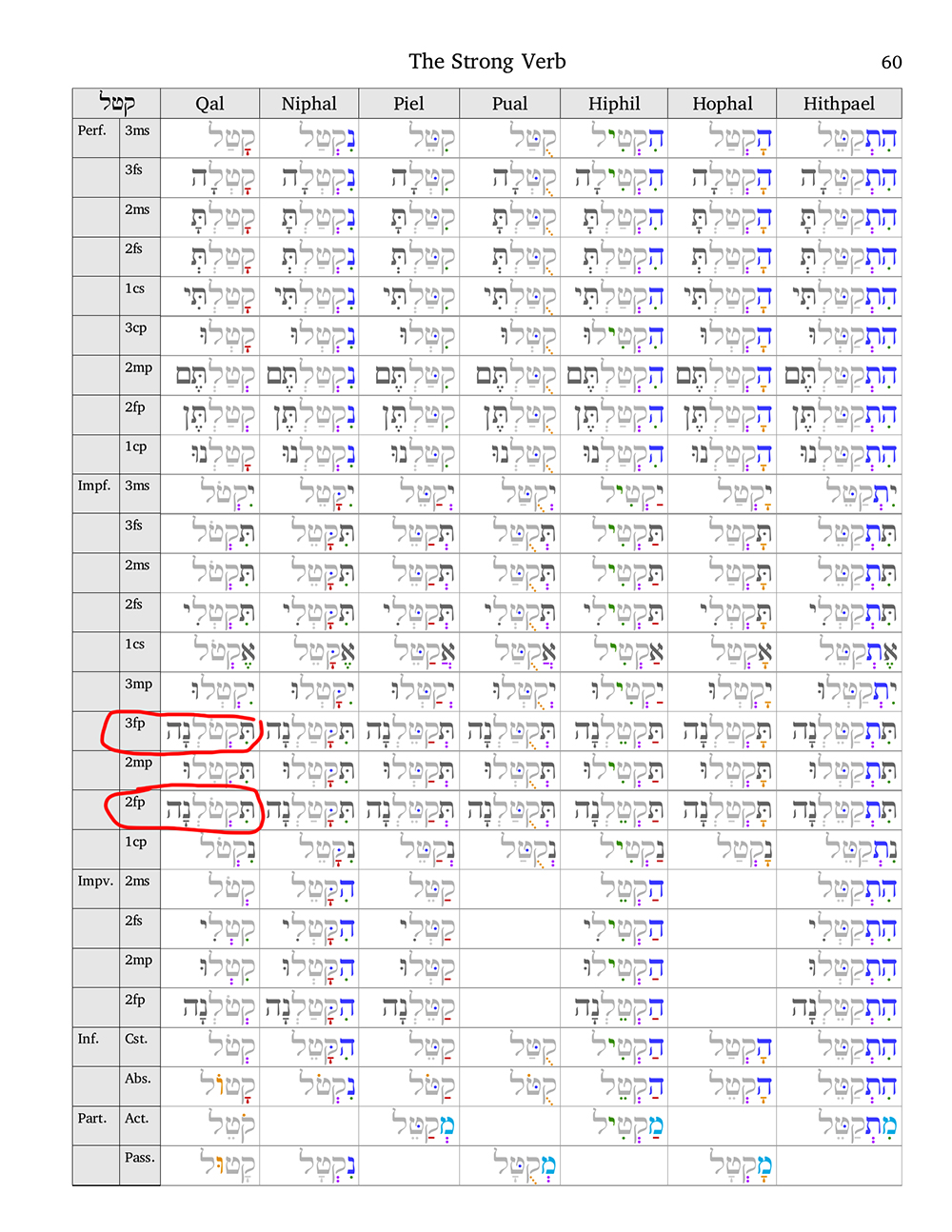
Hebrew תאכלנה. they are eating (fem). The suffix "נה" (pronounced as "-na") in Biblical Hebrew is a feminine suffix. It can be either interpreted as "you are eating her" which is where the traditional interpration i.e. "you are eating of it" comes from, or properly as third person feminine plural incomplete "they are eating", or second person feminine plural incomplete "you all are eating." See the chart below.
For example:
- ראוּ (ra'u) means "they (masculine or mixed gender) see."
- ראוּנה (ra'unah) means "they (feminine) see."
So, "נה" is added to verbs to match the gender of the subject when the subject is a group of females or a feminine noun.
What scholars did here was to take the direct object suffix for "her" as "you are eating her" in a neuter sense "it" and then sneakily plugged in the word "of" to come up with "you are eating of it." It is not only strange to say "you are eating her" in terms of the Ground (hence why they add the words "of it"). The rendering "of it" breaks the rules of what a direct object suffix means. A direct object suffix, as they are interpreting it as, is a direct object suffix. It is not an indirect object suffix, hence, direct object suffix. Hebrew does not have or use indirect object suffixes. Indirect objects are always expressed with prepositions. This is Hebrew 101 level grammar.
How to express properly the indirect object? It is quite easy, and the pattern of "eating from/of" (indirect) is used throughout this narrative. Not only that, the preposition מן (min "from out of" ) follows nearly every other instance of the verb "to eat" in the narrative. They are in effect leading one to believe there exists such a prepostion, i.e. "from the ground" when there does not.
Here are all the instances:
- Genesis 2:16, "you are eating from" verb + prep
- Genesis 2:17, "you are not eating from" verb + prep
- Genesis 3:1, "you all are not eating from" verb + prep
- Genesis 3:2, "you all are not eating from" verb + prep
- Genesis 3:3, "you all are not eating from" verb + prep
- Genesis 3:5, "your eating from" infinitive possesive verb + prep
- Genesis 3:6 "and she ate." verb no prep
- Genesis 3:11 "he ate from" verb + prep
- Genesis 3:14 "you are eating dust" verb + noun
Hebrew תאכל she is eating
In Hebrew, the future tense conjugations for the second person masculine singular and the third person feminine singular forms of verbs appear identical, both written and pronounced. Therefore, "תאכל" (ta'akhal) could represent either "you (masculine singular) eats" or "she eats" depending on the context.
|
| 142 | Genesis 3:19 |
| 142a | Genesis 3:19 Hebrew תאכלנה you all are eating. This is in the second person feminine plural. The suffix "נָה-" (-nah) indicates the third person feminine plural subject, so it refers to a group of females performing the action of eating. What scribes did was interpret the suffix for a singular feminine on a second person complete "you have eaten her."
Other words with the suffix ך- "yours" can be either feminine or masculine. The suffix ך is a matter of pronunciation. The original Hebrew does not give the pronunciation so what the Masoretes did was to add the masculine pronunciation: ךָ |
| 143 | Genesis 3:20
|
| 144 | Genesis 3:20 |
| 145 | Genesis 3:21 |
| 146 | Genesis 3:22
|
| 147 | Genesis 3:22

Eternity or everlasting have been interpreted as abstract concepts. But what if the eternal was as concrete as a circle, or wheel, is concrete?
There is another element to consider. Olam is a Hebrew word that appears around 15 or 16 times with a definite article, i.e. The Olam. It also often appears with the preposition "to" לעלם "to Olam". If there is no definiteness to "eternity" or "everlasting" then there is quite a contradiction in the idea of "the Eternity" or "the Everlasting."
Note also the perfect/complete state of the clause ואכל וחי "and he has lived and he has eaten." To translate these in a present, incomplete, or infinitive sense is not true to the word.
|
| 148 | Genesis 3:24 |
| 149 | Genesis 3:24 |
| 150 | Genesis 3:24
|
| 151 | Genesis 3:24 |