 Matthew 18:22

|
Strongs 3004
[list] Λογεῖον Perseus Legei Λέγει is saying V-PIA-3S |
|
Strongs 846
[list] Λογεῖον Perseus autō αὐτῷ self/itself/himself PPro-DM/N3S |
|
Strongs 3588
[list] Λογεῖον Perseus ho ὁ the Art-NMS |
|
Strongs 2424
[list] Λογεῖον Perseus Iēsous Ἰησοῦς Salvation N-NMS |
|
Strongs 3756
[list] Λογεῖον Perseus Ou Οὐ Not Adv |
|
Strongs 3004
[list] Λογεῖον Perseus legō λέγω I am saying V-PIA-1S |
|
Strongs 4771
[list] Λογεῖον Perseus soi σοι you PPro-D2S |
|
Strongs 2193
[list] Λογεῖον Perseus heōs ἕως until Prep |
|
Strongs 2034
[list] Λογεῖον Perseus heptakis ἑπτάκις seven times Adv |
|
Strongs 235
[list] Λογεῖον Perseus alla ἀλλὰ but Conj |
|
Strongs 2193
[list] Λογεῖον Perseus heōs ἕως until Prep |
|
Strongs 1441
[list] Λογεῖον Perseus hebdomēkontakis ἑβδομηκοντάκις seventy times Adv |
|
Strongs 2033
[list] Λογεῖον Perseus hepta ἑπτά seven Adj-GNP |
"And toward Drawn Out ("Moses") he said, "Climb up toward He Is your eternal self, and Inner Conceived One ("Aaron"), Volunteer ("Nadab"), My Father is Himself ("Abihu"), and seventy from aged men of God Contends, and you all have bowed to yourselves from a remote time/place."
(Exodus 24:1 RBT)And Jesus says to him, I say not to thee, till seven times; but till seventy times seven.
Jesus said to him, I do not say to you, Until seven times, but, Until seventy times seven.
Footnotes
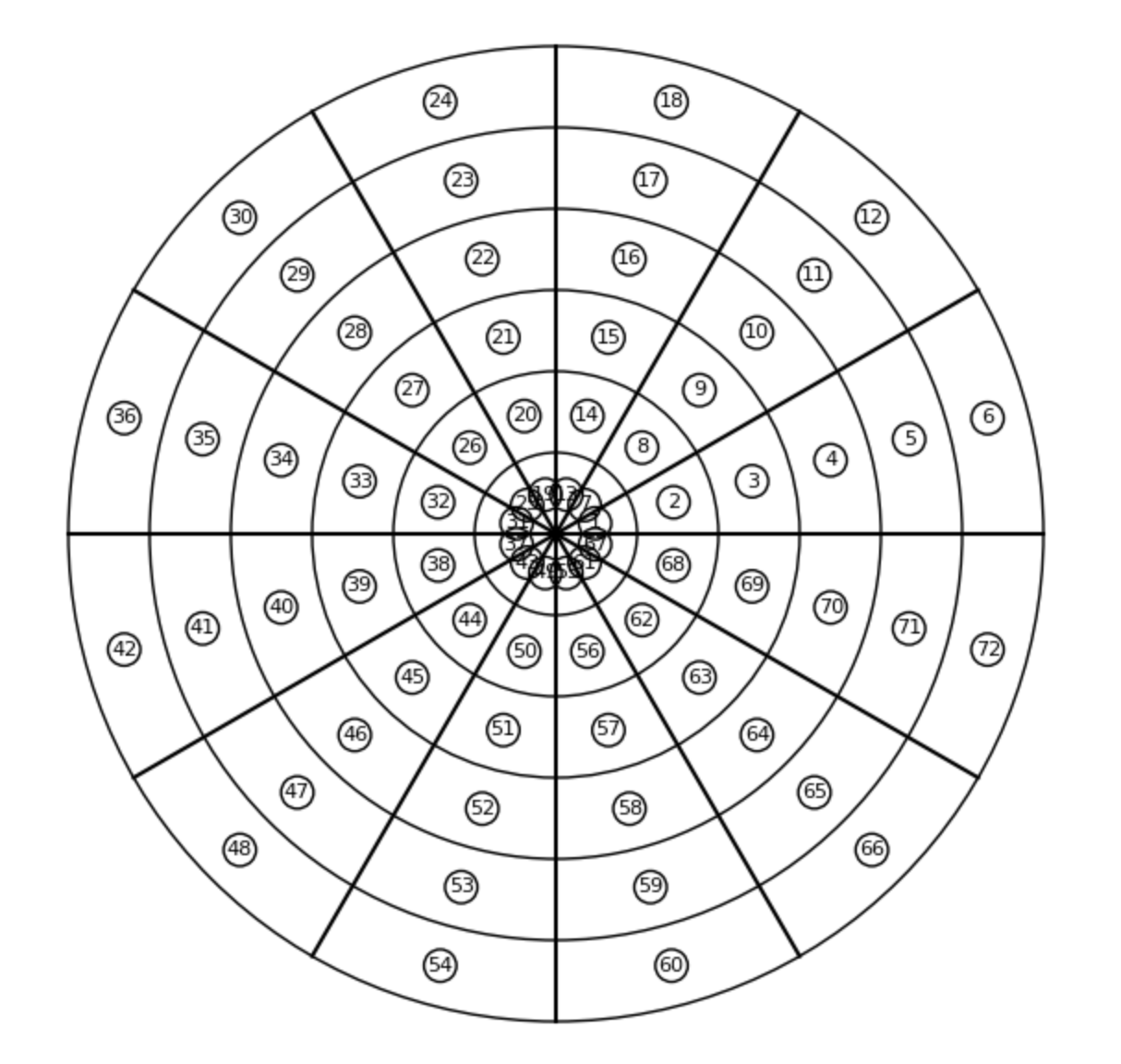
| 37 | Mat 18:22 Genesis 4:24 This saying is verbatim of what is in the Septuagint translation of Genesis 4:24, εβδομηκοντάκις επτά. The correct NT translations will have seventy fold/times, of seven (επτά is genitive) which is two separate numbers (cf. Meyer’s NT Commentary). Lamech is 70 and therefore avenged seventyfold. There were 70 sons of Ahab in Samaria (2 Kings 10), 70 souls born to Heel in Egypt (Exodus 1:5), 70 elders with Moses who went up to see God from afar (Exodus 24:1), 70 other elders (Num. 11:16), 70 kings (Judg. 1:7), 70 struck down by God (1 Sam. 6:19), Gideon’s 70 sons (Judg. 8:30), 70 offspring riding 70 donkeys (Judg. 12:14), and 70 elders of the House of Israel worshiping idols (Ezekiel 8:11). In Luke, 70 learners are sent out (some translations have the number of 72, see Expositor’s Greek Testament, Cambridge, Pulpit, etc.). “but the evidence preponderates in favour of the reading “seventy.”” Elicott’s Commentary on Luke 10:1. Further, the Israelites camped at a place called Elim where there were twelve springs of dual-waters and 70 palm trees” (Numbers 33:9), the total number of grandkids (a.k.a. nations) of Rest (Noah) listed in Genesis 10 is 70 (although this is 72 in the Septuagint), and in Numbers 29:13-39 we find a total of 70 bulls sacrificed over the course of 7 days during the Feast of Tabernacles. The full field computes to 72 (6 x 12) with the timeless one in the middle. So then, why do we read 70? Because 2 voices are already harmonized. Thus one forgives (himself) seventy fold, of seven. Read in an aonic frame of mind, the whole passage sounds less like moral rule-keeping and more like field dynamics. The “Earthly One” becomes the embodied, chronological self — the self within matter and sequence. The “Heavenly One” is the aionic field, the non-local pattern where all states already exist. To “chain” or “unbind” is to align or de-align resonance between the two — not moral permission or punishment, but coherence or decoherence between levels of reality. καὶ καὶ καὶ καὶ καὶ καὶ καὶ καὶ καὶ καὶ καὶ καὶ καὶ καὶ καὶ καὶ καὶ καὶ καὶ καὶ ו ו ו ו ו ו ו ו ו ו ו ו ו ו ו ו ו ו ו ו ו ו ו ו ו ו ו ו ו ו ו ו ו ו ו ו ו ו ו ו The Hebrew conjunctive waw appears roughly 50,000–52,000 times in the Masoretic Text, depending on how one counts attached prefixes and orthographic variants. That’s around 5–7% of all words in the Hebrew Bible. The Pentateuch alone carries over 20,000 instances, with Genesis and Exodus particularly saturated—often beginning sentences or clauses with ו. The “two harmonizing in voice” is then an interference pattern — two frequencies forming constructive resonance. Agreement (symphōnēsōsin) doesn’t mean verbal consent; it means phase coherence. When inner and outer selves (or two beings) phase-lock around an intent, the energy circuit completes, and manifestation occurs — “it will become for themselves.” The “two or three gathered in the Name” points to a threshold of coherence: when separate nodes synchronize around the same center (“in my Name,” i.e., in the unified field identity), the Presence arises “in the middle.” The middle is the field of overlap — the shared locus where aonic consciousness appears. The “seventy-fold-seven” at the end extends this to temporal forgiveness — releasing charge, re-harmonizing the field without limit. Seven being the full cycle, seventy-times-seven is endless recirculation until all discord is reintegrated. It’s not indulgence, but continual phase restoration — the self learning to remain transparent enough that nothing stays bound. |