Chapter 1
 Isaiah 1:3

ידע
יָדַע
has perceived
3045
ידע
yâdaʻ
Definition: to know (properly, to ascertain by seeing); used in a great variety of senses, figuratively, literally, euphemistically and inferentially (including observation, care, recognition; and causatively, instruction, designation, punishment, etc.)
Root: a primitive root;
Exhaustive: a primitive root; to know (properly, to ascertain by seeing); used in a great variety of senses, figuratively, literally, euphemistically and inferentially (including observation, care, recognition; and causatively, instruction, designation, punishment, etc.); acknowledge, acquaintance(-ted with), advise, answer, appoint, assuredly, be aware, (un-) awares, can(-not), certainly, comprehend, consider, [idiom] could they, cunning, declare, be diligent, (can, cause to) discern, discover, endued with, familiar friend, famous, feel, can have, be (ig-) norant, instruct, kinsfolk, kinsman, (cause to let, make) know, (come to give, have, take) knowledge, have (knowledge), (be, make, make to be, make self) known, [phrase] be learned, [phrase] lie by man, mark, perceive, privy to, [idiom] prognosticator, regard, have respect, skilful, shew, can (man of) skill, be sure, of a surety, teach, (can) tell, understand, have (understanding), [idiom] will be, wist, wit, wot.
yâdaʻ
Definition: to know (properly, to ascertain by seeing); used in a great variety of senses, figuratively, literally, euphemistically and inferentially (including observation, care, recognition; and causatively, instruction, designation, punishment, etc.)
Root: a primitive root;
Exhaustive: a primitive root; to know (properly, to ascertain by seeing); used in a great variety of senses, figuratively, literally, euphemistically and inferentially (including observation, care, recognition; and causatively, instruction, designation, punishment, etc.); acknowledge, acquaintance(-ted with), advise, answer, appoint, assuredly, be aware, (un-) awares, can(-not), certainly, comprehend, consider, [idiom] could they, cunning, declare, be diligent, (can, cause to) discern, discover, endued with, familiar friend, famous, feel, can have, be (ig-) norant, instruct, kinsfolk, kinsman, (cause to let, make) know, (come to give, have, take) knowledge, have (knowledge), (be, make, make to be, make self) known, [phrase] be learned, [phrase] lie by man, mark, perceive, privy to, [idiom] prognosticator, regard, have respect, skilful, shew, can (man of) skill, be sure, of a surety, teach, (can) tell, understand, have (understanding), [idiom] will be, wist, wit, wot.
Verb Qal perfect third person masculine singular
שור
שׁוֹר
the traveler [ox]
7794
שור
shôwr
Definition: a bullock (as a traveller)
Root: from H7788 (שור);
Exhaustive: from שור; a bullock (as a traveller); bull(-ock), cow, ox, wall (by mistake for שור).
shôwr
Definition: a bullock (as a traveller)
Root: from H7788 (שור);
Exhaustive: from שור; a bullock (as a traveller); bull(-ock), cow, ox, wall (by mistake for שור).
Noun common both singular absolute
קנהו
קֹנֵהוּ
his erected-one
9033
| ו
None
Definition: him, personal pronoun - verb/prep. 3rd person masculine singular
Root: None
Exhaustive: Personal object pronoun - suffix for propositions and verbs without an object: 3rd person masculine singular
None
Definition: him, personal pronoun - verb/prep. 3rd person masculine singular
Root: None
Exhaustive: Personal object pronoun - suffix for propositions and verbs without an object: 3rd person masculine singular
7069
קנה
qânâh
Definition: to erect, i.e. create; by extension, to procure, especially by purchase (causatively, sell); by implication to own
Root: a primitive root;
Exhaustive: a primitive root; to erect, i.e. create; by extension, to procure, especially by purchase (causatively, sell); by implication to own; attain, buy(-er), teach to keep cattle, get, provoke to jealousy, possess(-or), purchase, recover, redeem, [idiom] surely, [idiom] verily.
qânâh
Definition: to erect, i.e. create; by extension, to procure, especially by purchase (causatively, sell); by implication to own
Root: a primitive root;
Exhaustive: a primitive root; to erect, i.e. create; by extension, to procure, especially by purchase (causatively, sell); by implication to own; attain, buy(-er), teach to keep cattle, get, provoke to jealousy, possess(-or), purchase, recover, redeem, [idiom] surely, [idiom] verily.
Verb Qal participle active masculine singular construct, Suffix pronominal third person masculine singular
וחמור
וַחֲמוֹר
and the fermenting-one
2543
| חמור
chămôwr
Definition: a male ass (from its dun red)
Root: or (shortened) חמר; from H2560 (חמר);
Exhaustive: or (shortened) חמר; from חמר; a male ass (from its dun red); (he) ass.
chămôwr
Definition: a male ass (from its dun red)
Root: or (shortened) חמר; from H2560 (חמר);
Exhaustive: or (shortened) חמר; from חמר; a male ass (from its dun red); (he) ass.
9002
ו
None
Definition: and
Root: None
Exhaustive: Conjunctive vav - i.e. followed by prefix, suffix or non-verb (conjunctive) (‘and/but’)
None
Definition: and
Root: None
Exhaustive: Conjunctive vav - i.e. followed by prefix, suffix or non-verb (conjunctive) (‘and/but’)
Conjunction, Noun common both singular absolute
אבוס
אֵבוּס
feeding trough
18
אבוס
ʼêbûwç
Definition: a manger or stall
Root: from H75 (אבס);
Exhaustive: from אבס; a manger or stall; crib.
ʼêbûwç
Definition: a manger or stall
Root: from H75 (אבס);
Exhaustive: from אבס; a manger or stall; crib.
Noun common both singular construct
בעליו
בְּעָלָיו
his owner
9023
| הו
None
Definition: his, personal posessive - noun suffix: 3rd person masculine singular
Root: None
Exhaustive: Personal posessive pronoun - suffix for nouns, adjectives and passive participles: 3rd person masculine singular
None
Definition: his, personal posessive - noun suffix: 3rd person masculine singular
Root: None
Exhaustive: Personal posessive pronoun - suffix for nouns, adjectives and passive participles: 3rd person masculine singular
1167
בעל
baʻal
Definition: a master; hence, a husband, or (figuratively) owner (often used with another noun in modifications of this latter sense)
Root: from H1166 (בעל);
Exhaustive: from בעל; a master; hence, a husband, or (figuratively) owner (often used with another noun in modifications of this latter sense); [phrase] archer, [phrase] babbler, [phrase] bird, captain, chief man, [phrase] confederate, [phrase] have to do, [phrase] dreamer, those to whom it is due, [phrase] furious, those that are given to it, great, [phrase] hairy, he that hath it, have, [phrase] horseman, husband, lord, man, [phrase] married, master, person, [phrase] sworn, they of.
baʻal
Definition: a master; hence, a husband, or (figuratively) owner (often used with another noun in modifications of this latter sense)
Root: from H1166 (בעל);
Exhaustive: from בעל; a master; hence, a husband, or (figuratively) owner (often used with another noun in modifications of this latter sense); [phrase] archer, [phrase] babbler, [phrase] bird, captain, chief man, [phrase] confederate, [phrase] have to do, [phrase] dreamer, those to whom it is due, [phrase] furious, those that are given to it, great, [phrase] hairy, he that hath it, have, [phrase] horseman, husband, lord, man, [phrase] married, master, person, [phrase] sworn, they of.
Noun common masculine plural construct, Suffix pronominal third person masculine singular
ישראל
יִשְׂרָאֵל
God-Contends
3478
ישראל
Yisrâʼêl
Definition: Jisrael, a symbolical name of Jacob; also (typically) of his posterity
Root: from H8280 (שרה) and H410 (אל); he will rule as God;
Exhaustive: from שרה and אל; he will rule as God; Jisrael, a symbolical name of Jacob; also (typically) of his posterity; Israel.
Yisrâʼêl
Definition: Jisrael, a symbolical name of Jacob; also (typically) of his posterity
Root: from H8280 (שרה) and H410 (אל); he will rule as God;
Exhaustive: from שרה and אל; he will rule as God; Jisrael, a symbolical name of Jacob; also (typically) of his posterity; Israel.
Noun proper name
לא
לֹא
not
3808
לא
lôʼ
Definition: not (the simple or abs. negation); by implication, no; often used with other particles
Root: or לוא; or לה; (Deuteronomy 3:11), a primitive particle;
Exhaustive: or לוא; or לה; (Deuteronomy 3:11), a primitive particle; not (the simple or abs. negation); by implication, no; often used with other particles; [idiom] before, [phrase] or else, ere, [phrase] except, ig(-norant), much, less, nay, neither, never, no((-ne), -r, (-thing)), ([idiom] as though...,(can-), for) not (out of), of nought, otherwise, out of, [phrase] surely, [phrase] as truly as, [phrase] of a truth, [phrase] verily, for want, [phrase] whether, without.
lôʼ
Definition: not (the simple or abs. negation); by implication, no; often used with other particles
Root: or לוא; or לה; (Deuteronomy 3:11), a primitive particle;
Exhaustive: or לוא; or לה; (Deuteronomy 3:11), a primitive particle; not (the simple or abs. negation); by implication, no; often used with other particles; [idiom] before, [phrase] or else, ere, [phrase] except, ig(-norant), much, less, nay, neither, never, no((-ne), -r, (-thing)), ([idiom] as though...,(can-), for) not (out of), of nought, otherwise, out of, [phrase] surely, [phrase] as truly as, [phrase] of a truth, [phrase] verily, for want, [phrase] whether, without.
Particle negative
ידע
יָדַע
has perceived
3045
ידע
yâdaʻ
Definition: to know (properly, to ascertain by seeing); used in a great variety of senses, figuratively, literally, euphemistically and inferentially (including observation, care, recognition; and causatively, instruction, designation, punishment, etc.)
Root: a primitive root;
Exhaustive: a primitive root; to know (properly, to ascertain by seeing); used in a great variety of senses, figuratively, literally, euphemistically and inferentially (including observation, care, recognition; and causatively, instruction, designation, punishment, etc.); acknowledge, acquaintance(-ted with), advise, answer, appoint, assuredly, be aware, (un-) awares, can(-not), certainly, comprehend, consider, [idiom] could they, cunning, declare, be diligent, (can, cause to) discern, discover, endued with, familiar friend, famous, feel, can have, be (ig-) norant, instruct, kinsfolk, kinsman, (cause to let, make) know, (come to give, have, take) knowledge, have (knowledge), (be, make, make to be, make self) known, [phrase] be learned, [phrase] lie by man, mark, perceive, privy to, [idiom] prognosticator, regard, have respect, skilful, shew, can (man of) skill, be sure, of a surety, teach, (can) tell, understand, have (understanding), [idiom] will be, wist, wit, wot.
yâdaʻ
Definition: to know (properly, to ascertain by seeing); used in a great variety of senses, figuratively, literally, euphemistically and inferentially (including observation, care, recognition; and causatively, instruction, designation, punishment, etc.)
Root: a primitive root;
Exhaustive: a primitive root; to know (properly, to ascertain by seeing); used in a great variety of senses, figuratively, literally, euphemistically and inferentially (including observation, care, recognition; and causatively, instruction, designation, punishment, etc.); acknowledge, acquaintance(-ted with), advise, answer, appoint, assuredly, be aware, (un-) awares, can(-not), certainly, comprehend, consider, [idiom] could they, cunning, declare, be diligent, (can, cause to) discern, discover, endued with, familiar friend, famous, feel, can have, be (ig-) norant, instruct, kinsfolk, kinsman, (cause to let, make) know, (come to give, have, take) knowledge, have (knowledge), (be, make, make to be, make self) known, [phrase] be learned, [phrase] lie by man, mark, perceive, privy to, [idiom] prognosticator, regard, have respect, skilful, shew, can (man of) skill, be sure, of a surety, teach, (can) tell, understand, have (understanding), [idiom] will be, wist, wit, wot.
Verb Qal perfect third person masculine singular
עמי
עַמּי
the people of myself/with me
9020
| י
None
Definition: my, personal posessive - noun suffix: 1st person common singular
Root: None
Exhaustive: Personal posessive pronoun - suffix for nouns, adjectives and passive participles: 1st person singular
None
Definition: my, personal posessive - noun suffix: 1st person common singular
Root: None
Exhaustive: Personal posessive pronoun - suffix for nouns, adjectives and passive participles: 1st person singular
5971a
עם
ʻam
Definition: a people (as a congregated unit); specifically, a tribe (as those of Israel); hence (collectively) troops or attendants; figuratively, a flock
Root: from H6004 (עמם);
Exhaustive: from עמם; a people (as a congregated unit); specifically, a tribe (as those of Israel); hence (collectively) troops or attendants; figuratively, a flock; folk, men, nation, people.
ʻam
Definition: a people (as a congregated unit); specifically, a tribe (as those of Israel); hence (collectively) troops or attendants; figuratively, a flock
Root: from H6004 (עמם);
Exhaustive: from עמם; a people (as a congregated unit); specifically, a tribe (as those of Israel); hence (collectively) troops or attendants; figuratively, a flock; folk, men, nation, people.
Noun common both singular construct, Suffix pronominal first person both singular
לא
לֹא
not
3808
לא
lôʼ
Definition: not (the simple or abs. negation); by implication, no; often used with other particles
Root: or לוא; or לה; (Deuteronomy 3:11), a primitive particle;
Exhaustive: or לוא; or לה; (Deuteronomy 3:11), a primitive particle; not (the simple or abs. negation); by implication, no; often used with other particles; [idiom] before, [phrase] or else, ere, [phrase] except, ig(-norant), much, less, nay, neither, never, no((-ne), -r, (-thing)), ([idiom] as though...,(can-), for) not (out of), of nought, otherwise, out of, [phrase] surely, [phrase] as truly as, [phrase] of a truth, [phrase] verily, for want, [phrase] whether, without.
lôʼ
Definition: not (the simple or abs. negation); by implication, no; often used with other particles
Root: or לוא; or לה; (Deuteronomy 3:11), a primitive particle;
Exhaustive: or לוא; or לה; (Deuteronomy 3:11), a primitive particle; not (the simple or abs. negation); by implication, no; often used with other particles; [idiom] before, [phrase] or else, ere, [phrase] except, ig(-norant), much, less, nay, neither, never, no((-ne), -r, (-thing)), ([idiom] as though...,(can-), for) not (out of), of nought, otherwise, out of, [phrase] surely, [phrase] as truly as, [phrase] of a truth, [phrase] verily, for want, [phrase] whether, without.
Particle negative
RBT Translation:
None
RBT Paraphrase:
The traveler ("ox") has perceived his erected-one, and the fermenting-one ("he-ass") the feeding manger of his owner. God Contends ("Israel") has not perceived, my People has not discerned himself!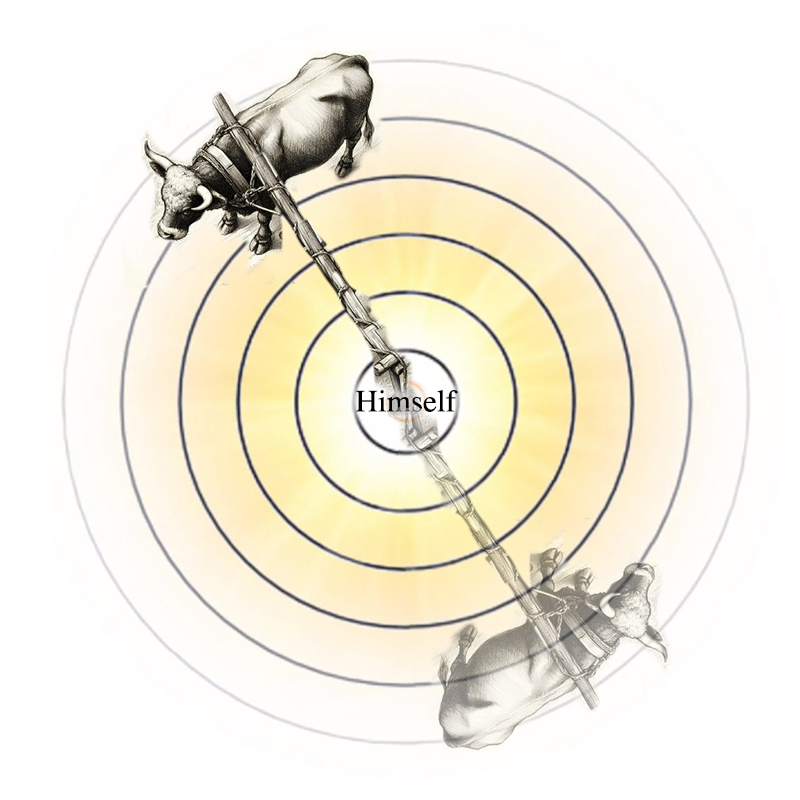
The traveler ("ox") has perceived his erected-one, and the fermenting-one ("he-ass") the feeding manger of his owner. God Contends ("Israel") has not perceived, my People has not discerned himself!
Straight is the Way.
The Ox treading out the Grain. The erected one/possessor in the middle.
The Ox treading out the Grain. The erected one/possessor in the middle.
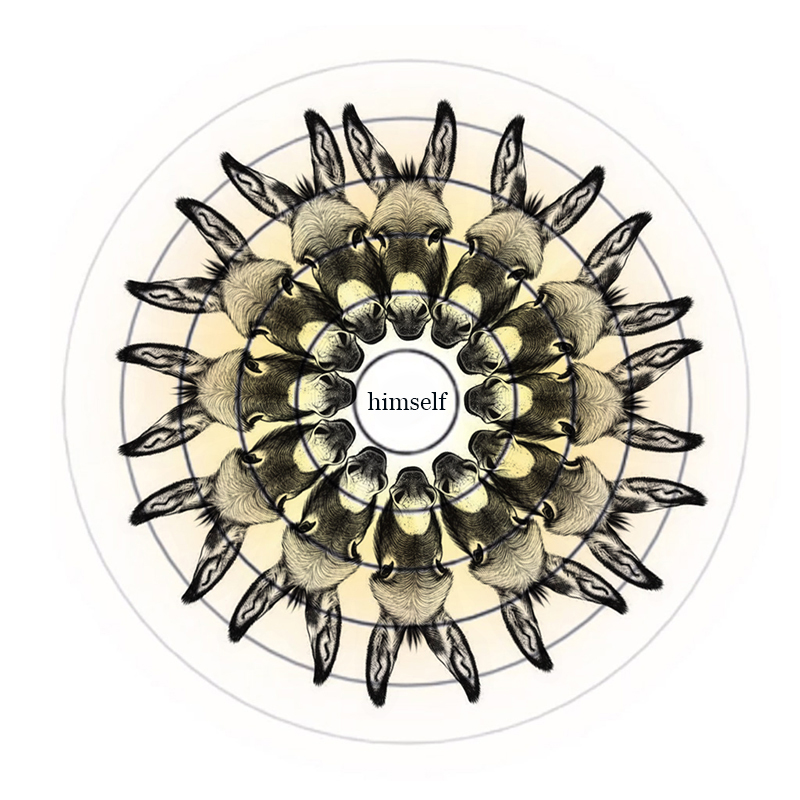
Donkey eating from the manger/feeding trough.
Julia Smith Literal 1876 Translation:
The ox knew his possessor, and the ass his lord's stall: Israel knew not; my people understood not.
The ox knew his possessor, and the ass his lord's stall: Israel knew not; my people understood not.
LITV Translation:
The ox knows his owner, and the ass his master's manger, but Israel does not know; My people have not understood.
The ox knows his owner, and the ass his master's manger, but Israel does not know; My people have not understood.
Brenton Septuagint Translation:
The ox knows his owner, and the ass his master’s crib: but Israel does not know me, and the people has not regarded me.
The ox knows his owner, and the ass his master’s crib: but Israel does not know me, and the people has not regarded me.