 Galatians 2:7

|
Strongs 235
[list] Λογεῖον Perseus alla ἀλλὰ but Conj |
|
Strongs 5121
[list] Λογεῖον Perseus tounantion τοὐναντίον on the contrary Adv-C |
|
Strongs 3708
[list] Λογεῖον Perseus idontes ἰδόντες those who have perceived V-APA-NMP |
|
Strongs 3754
[list] Λογεῖον Perseus hoti ὅτι because/that Conj |
|
Strongs 4100
[list] Λογεῖον Perseus pepisteumai πεπίστευμαι I have been trusted with V-RIM/P-1S |
|
Strongs 3588
[list] Λογεῖον Perseus to τὸ the Art-ANS |
|
Strongs 2098
[list] Λογεῖον Perseus euangelion εὐαγγέλιον glad tiding/gospel N-ANS |
|
Strongs 3588
[list] Λογεῖον Perseus tēs τῆς the Art-GFS |
|
Strongs 203
[list] Λογεῖον Perseus akrobystias ἀκροβυστίας acro-plug/extremity stopper N-GFS |
|
Strongs 2531
[list] Λογεῖον Perseus kathōs καθὼς just as Adv |
|
Strongs 4074
[list] Λογεῖον Perseus Petros Πέτρος Small Stone N-NMS |
|
Strongs 3588
[list] Λογεῖον Perseus tēs τῆς the Art-GFS |
|
Strongs 4061
[list] Λογεῖον Perseus peritomēs περιτομῆς circumcision N-GFS |
ἀκροβυστία acro-bystia - "Top Plug"
But on the other hand, those who have perceived that I have been entrusted with the Good News of the Acro-Plug,3 just as Small Stone of the Cutting Around.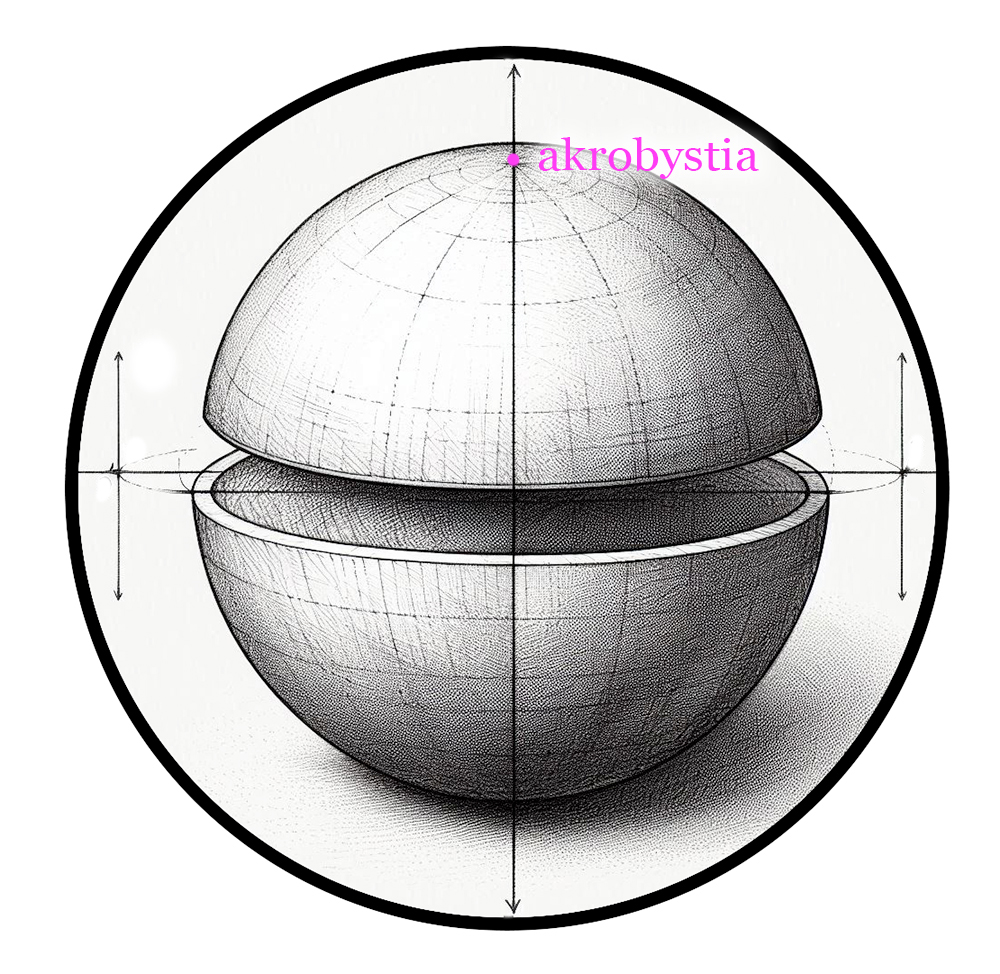
A fitting term to describe plugging the center of one's being, so that it is...not a drain. In this way what was an "abyss" or "bottomless pit well" now becomes a highest point yielding "sons of the highest."
But on the contrary, having seen that I have been entrusted with the good news of uncircumcision, as Peter of circumcision;
but on the contrary, seeing that I have been entrusted with the gospel of the uncircumcision, even as Peter to the circumcision,
Footnotes
| 3 | Gal 2:7 The Acro-Plug Strong's #G203 ἀκροβυστία akro-bystia. "head depth, peak depth, deep point" This is a word thought to be modified from the normal Classical Greek ἀκροποσθία akro-posthia (tip of foreskin) because posthia/peos (ποσθία/πέος) referred to the male penis and/or foreskin. The first part ἀκρο "akro" means "end, farthest point, tip, limb, extremity, rim, crest." It also can mean "citadel built on a steep rock overhanging a town."
Absent any signification in this compound for the male "membrum virile" we are left with βυστία bystia. What is this? No one seems to know, and the assumption was that it came from a different pronunciation of "posthia." The prefix βύσ- in Greek is often associated with depth or something deep. The Diccionario Griego-Español (DGE) provides a brief and uncertain meaning of the word βύστος (bystos), suggesting that it might mean "submerged in the depths" and notes its association with the term "καμπτός" (bent, curved) and its heavy-sounding nature, as explained in the context of the name "Ἥφαιστος" (Hephaestus) (cf. DGE βύστος). Gemini Pro 3 AI tells us the following: While βυστία (bystia) is not the most common form found in standard dictionaries (the standard singular noun is usually βύσμα or βύστρα), it is entirely valid as a derivation meaning "plug," "stuffing," or "bung." Here is the linguistic breakdown of why it means "plug" and how it connects to the text of Hephaestus: The core of all these words is the verb (or sometimes βυνέω), which means:
From this verb, Ancient Greek creates several nouns regarding things that "plug" or "stuff":
βυστία would function as the plural of a diminutive form βύστιον (bystion - "little plug") or a variant noun for "stuffing/plugs." This is the fascinating etymological link to the Hephaestus text.
So, if you see βυστία in a text, you should translate it as "plugs," "stoppings," or "stuffing." Thus the word ἀκροβυστία is a combination of two elements:
When combined, the compound word literally translates to: "A plug or covering at the extremity/tip." Strongs #G899 βάθος is a word meaning depth and is used in either direction: depth, height — (accusative, as measured down or up) as in "deep into the mountain" and hence, Ω (omega) depth of the riches! Also of wisdom and knowledge... (Romans 11:33 RBT) the deep ones of the God. (1 Corinthians 2:10 RBT) If the author were really after "uncircumcision" he could easily have used ἀπεριτομῆς "without circumcision/cutting around." |