Chapter 17
 Psalms 17:6

אני
אֲנִי־
myself
9014
| ־
None
Definition: link
Root: None
Exhaustive: None
None
Definition: link
Root: None
Exhaustive: None
589
אני
ʼănîy
Definition: I
Root: contracted from H595 (אנכי);
Exhaustive: lemma אני second vowel, corrected to אני; contracted from אנכי; I; I, (as for) me, mine, myself, we, [idiom] which, [idiom] who.
ʼănîy
Definition: I
Root: contracted from H595 (אנכי);
Exhaustive: lemma אני second vowel, corrected to אני; contracted from אנכי; I; I, (as for) me, mine, myself, we, [idiom] which, [idiom] who.
Pronoun personal first person both singular
קראתיך
קְרָאתִיךָ
I have summoned yourself
9031
| ך
None
Definition: you, personal pronoun - verb/prep. 2nd person masculine singular
Root: None
Exhaustive: Personal object pronoun - suffix for propositions and verbs without an object: 2nd person masculine singular
None
Definition: you, personal pronoun - verb/prep. 2nd person masculine singular
Root: None
Exhaustive: Personal object pronoun - suffix for propositions and verbs without an object: 2nd person masculine singular
7121
קרא
qârâʼ
Definition: to call out to (i.e. properly, address by name, but used in a wide variety of applications)
Root: a primitive root (rather identical with H7122 (קרא) through the idea of accosting a person met);
Exhaustive: a primitive root (rather identical with קרא through the idea of accosting a person met); to call out to (i.e. properly, address by name, but used in a wide variety of applications); bewray (self), that are bidden, call (for, forth, self, upon), cry (unto), (be) famous, guest, invite, mention, (give) name, preach, (make) proclaim(-ation), pronounce, publish, read, renowned, say.
qârâʼ
Definition: to call out to (i.e. properly, address by name, but used in a wide variety of applications)
Root: a primitive root (rather identical with H7122 (קרא) through the idea of accosting a person met);
Exhaustive: a primitive root (rather identical with קרא through the idea of accosting a person met); to call out to (i.e. properly, address by name, but used in a wide variety of applications); bewray (self), that are bidden, call (for, forth, self, upon), cry (unto), (be) famous, guest, invite, mention, (give) name, preach, (make) proclaim(-ation), pronounce, publish, read, renowned, say.
Verb Qal perfect first person common singular, Suffix pronominal second person masculine singular
כי
כִי־
for
9014
| ־
None
Definition: link
Root: None
Exhaustive: None
None
Definition: link
Root: None
Exhaustive: None
3588a
כי
kîy
Definition: (by implication) very widely used as a relative conjunction or adverb (as below); often largely modified by other particles annexed
Root: a primitive particle (the full form of the prepositional prefix) indicating causal relations of all kinds, antecedent or consequent;
Exhaustive: a primitive particle (the full form of the prepositional prefix) indicating causal relations of all kinds, antecedent or consequent; (by implication) very widely used as a relative conjunction or adverb (as below); often largely modified by other particles annexed; and, + (forasmuch, inasmuch, where-) as, assured(-ly), + but, certainly, doubtless, + else, even, + except, for, how, (because, in, so, than) that, + nevertheless, now, rightly, seeing, since, surely, then, therefore, + (al-) though, + till, truly, + until, when, whether, while, whom, yea, yet.
kîy
Definition: (by implication) very widely used as a relative conjunction or adverb (as below); often largely modified by other particles annexed
Root: a primitive particle (the full form of the prepositional prefix) indicating causal relations of all kinds, antecedent or consequent;
Exhaustive: a primitive particle (the full form of the prepositional prefix) indicating causal relations of all kinds, antecedent or consequent; (by implication) very widely used as a relative conjunction or adverb (as below); often largely modified by other particles annexed; and, + (forasmuch, inasmuch, where-) as, assured(-ly), + but, certainly, doubtless, + else, even, + except, for, how, (because, in, so, than) that, + nevertheless, now, rightly, seeing, since, surely, then, therefore, + (al-) though, + till, truly, + until, when, whether, while, whom, yea, yet.
Particle
תענני
תַעֲנֵנִי
you have eyed myself
9030
| ני
None
Definition: me, personal pronoun - verb/prep. suffix: 1st person common singular
Root: None
Exhaustive: Personal object pronoun - suffix for propositions and verbs without an object: 1st person singular
None
Definition: me, personal pronoun - verb/prep. suffix: 1st person common singular
Root: None
Exhaustive: Personal object pronoun - suffix for propositions and verbs without an object: 1st person singular
6030b
ענה
ʻânâh
Definition: properly, to eye or (generally) to heed, i.e. pay attention; by implication, to respond; by extension to begin to speak; specifically to sing, shout, testify, announce
Root: a primitive root;
Exhaustive: a primitive root; properly, to eye or (generally) to heed, i.e. pay attention; by implication, to respond; by extension to begin to speak; specifically to sing, shout, testify, announce; give account, afflict (by mistake for ענה), (cause to, give) answer, bring low (by mistake for ענה), cry, hear, Leannoth, lift up, say, [idiom] scholar, (give a) shout, sing (together by course), speak, testify, utter, (bear) witness. See also בית ענות, בית ענת.
ʻânâh
Definition: properly, to eye or (generally) to heed, i.e. pay attention; by implication, to respond; by extension to begin to speak; specifically to sing, shout, testify, announce
Root: a primitive root;
Exhaustive: a primitive root; properly, to eye or (generally) to heed, i.e. pay attention; by implication, to respond; by extension to begin to speak; specifically to sing, shout, testify, announce; give account, afflict (by mistake for ענה), (cause to, give) answer, bring low (by mistake for ענה), cry, hear, Leannoth, lift up, say, [idiom] scholar, (give a) shout, sing (together by course), speak, testify, utter, (bear) witness. See also בית ענות, בית ענת.
Verb Qal imperfect second person masculine singular, Suffix pronominal first person both singular
אל
אֵל
toward
410
אל
ʼêl
Definition: strength; as adjective, mighty; especially the Almighty (but used also of any deity)
Root: shortened from H352 (איל);
Exhaustive: shortened from איל; strength; as adjective, mighty; especially the Almighty (but used also of any deity); God (god), [idiom] goodly, [idiom] great, idol, might(-y one), power, strong. Compare names in '-el.'
ʼêl
Definition: strength; as adjective, mighty; especially the Almighty (but used also of any deity)
Root: shortened from H352 (איל);
Exhaustive: shortened from איל; strength; as adjective, mighty; especially the Almighty (but used also of any deity); God (god), [idiom] goodly, [idiom] great, idol, might(-y one), power, strong. Compare names in '-el.'
Noun common both singular absolute
הט
הַט־
extend/stretch
9014
| ־
None
Definition: link
Root: None
Exhaustive: None
None
Definition: link
Root: None
Exhaustive: None
5186
נטה
nâṭâh
Definition: to stretch or spread out; by implication, to bend away (including moral deflection); used in a great variety of application
Root: a primitive root;
Exhaustive: a primitive root; to stretch or spread out; by implication, to bend away (including moral deflection); used in a great variety of application; [phrase] afternoon, apply, bow (down, -ing), carry aside, decline, deliver, extend, go down, be gone, incline, intend, lay, let down, offer, outstretched, overthrown, pervert, pitch, prolong, put away, shew, spread (out), stretch (forth, out), take (aside), turn (aside, away), wrest, cause to yield.
nâṭâh
Definition: to stretch or spread out; by implication, to bend away (including moral deflection); used in a great variety of application
Root: a primitive root;
Exhaustive: a primitive root; to stretch or spread out; by implication, to bend away (including moral deflection); used in a great variety of application; [phrase] afternoon, apply, bow (down, -ing), carry aside, decline, deliver, extend, go down, be gone, incline, intend, lay, let down, offer, outstretched, overthrown, pervert, pitch, prolong, put away, shew, spread (out), stretch (forth, out), take (aside), turn (aside, away), wrest, cause to yield.
Verb Hiphil imperative second person masculine singular
אזנך
אָזְנְךָ
the ear of yourself
9021
| ך
None
Definition: your, personal posessive - noun suffix: 2nd person masculine singular
Root: None
Exhaustive: Personal posessive pronoun - suffix for nouns, adjectives and passive participles: 2nd person masculine singular
None
Definition: your, personal posessive - noun suffix: 2nd person masculine singular
Root: None
Exhaustive: Personal posessive pronoun - suffix for nouns, adjectives and passive participles: 2nd person masculine singular
241
אזן
ʼôzen
Definition: broadness. i.e. (concrete) the ear (from its form in man)
Root: from H238 (אזן);
Exhaustive: from אזן; broadness. i.e. (concrete) the ear (from its form in man); [phrase] advertise, audience, [phrase] displease, ear, hearing, [phrase] show.
ʼôzen
Definition: broadness. i.e. (concrete) the ear (from its form in man)
Root: from H238 (אזן);
Exhaustive: from אזן; broadness. i.e. (concrete) the ear (from its form in man); [phrase] advertise, audience, [phrase] displease, ear, hearing, [phrase] show.
Noun common both singular construct, Suffix pronominal second person masculine singular
לי
לִ֝֗י
to myself
9030
| ני
None
Definition: me, personal pronoun - verb/prep. suffix: 1st person common singular
Root: None
Exhaustive: Personal object pronoun - suffix for propositions and verbs without an object: 1st person singular
None
Definition: me, personal pronoun - verb/prep. suffix: 1st person common singular
Root: None
Exhaustive: Personal object pronoun - suffix for propositions and verbs without an object: 1st person singular
9005
ל
None
Definition: to, for
Root: None
Exhaustive: None
None
Definition: to, for
Root: None
Exhaustive: None
Preposition, Suffix pronominal first person both singular
שמע
שְׁמַע
he has heard/hear
8085
שמע
shâmaʻ
Definition: to hear intelligently (often with implication of attention, obedience, etc.; causatively, to tell, etc.)
Root: a primitive root;
Exhaustive: a primitive root; to hear intelligently (often with implication of attention, obedience, etc.; causatively, to tell, etc.); [idiom] attentively, call (gather) together, [idiom] carefully, [idiom] certainly, consent, consider, be content, declare, [idiom] diligently, discern, give ear, (cause to, let, make to) hear(-ken, tell), [idiom] indeed, listen, make (a) noise, (be) obedient, obey, perceive, (make a) proclaim(-ation), publish, regard, report, shew (forth), (make a) sound, [idiom] surely, tell, understand, whosoever (heareth), witness.
shâmaʻ
Definition: to hear intelligently (often with implication of attention, obedience, etc.; causatively, to tell, etc.)
Root: a primitive root;
Exhaustive: a primitive root; to hear intelligently (often with implication of attention, obedience, etc.; causatively, to tell, etc.); [idiom] attentively, call (gather) together, [idiom] carefully, [idiom] certainly, consent, consider, be content, declare, [idiom] diligently, discern, give ear, (cause to, let, make to) hear(-ken, tell), [idiom] indeed, listen, make (a) noise, (be) obedient, obey, perceive, (make a) proclaim(-ation), publish, regard, report, shew (forth), (make a) sound, [idiom] surely, tell, understand, whosoever (heareth), witness.
Verb Qal imperative second person masculine singular
אמרתי
אִמְרָתִי׃
I have spoken/my discourses
9016
None
Definition: verseEnd
Root: None
Exhaustive: None
| None
Definition: verseEnd
Root: None
Exhaustive: None
9020
| י
None
Definition: my, personal posessive - noun suffix: 1st person common singular
Root: None
Exhaustive: Personal posessive pronoun - suffix for nouns, adjectives and passive participles: 1st person singular
None
Definition: my, personal posessive - noun suffix: 1st person common singular
Root: None
Exhaustive: Personal posessive pronoun - suffix for nouns, adjectives and passive participles: 1st person singular
565a
אמרה
ʼimrâh
Definition: {something said}
Root: or אמרה; feminine of H561 (אמר), and meaning the same
Exhaustive: or אמרה; feminine of אמר, and meaning the same; {something said}; commandment, speech, word.
ʼimrâh
Definition: {something said}
Root: or אמרה; feminine of H561 (אמר), and meaning the same
Exhaustive: or אמרה; feminine of אמר, and meaning the same; {something said}; commandment, speech, word.
Noun common feminine singular construct, Suffix pronominal first person both singular
RBT Translation:
myself I have summoned yourself for you have eyed myself a god extend/stretch the ear of yourself to myself he has heard/hear I have spoken/my discourses
RBT Paraphrase:
Myself, I have summoned yourself, for you have eyed myself, a mighty one. Stretch out the ear of yourself to myself! Hear the discourses of myself!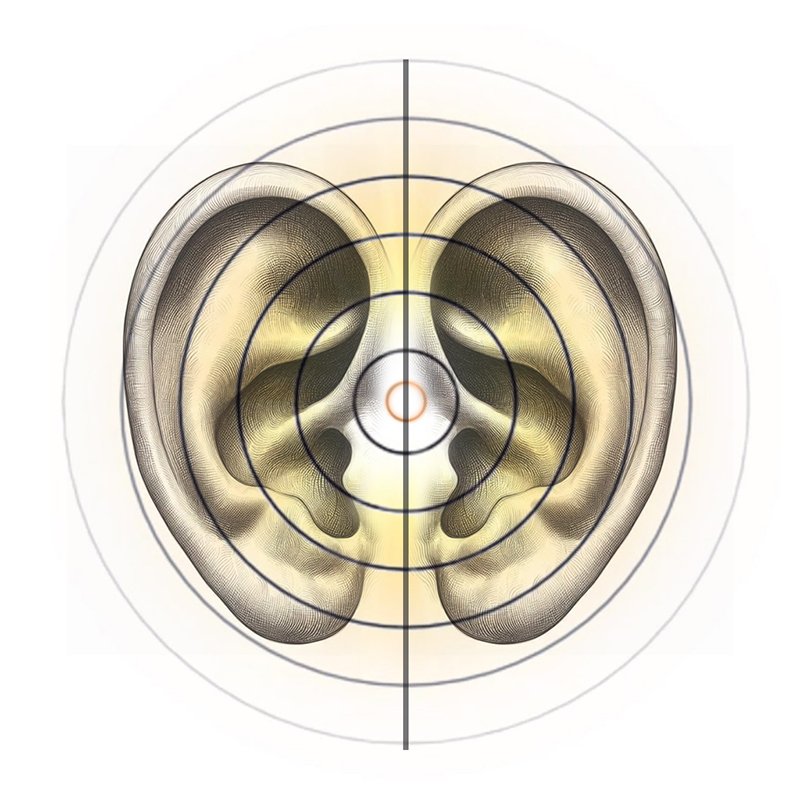
Myself, I have summoned yourself, for you have eyed myself, a mighty one. Stretch out the ear of yourself to myself! Hear the discourses of myself!
"One Ear"
הט אזנך - Spread/stretch out your ear
הט אזנך - Spread/stretch out your ear
Julia Smith Literal 1876 Translation:
I called thee, for thou wilt answer me, O God: incline thine ear to me, hear my sayings.
I called thee, for thou wilt answer me, O God: incline thine ear to me, hear my sayings.
LITV Translation:
I have called on You, for You will answer me, O God; bow down Your ear to me and hear my word.
I have called on You, for You will answer me, O God; bow down Your ear to me and hear my word.
Brenton Septuagint Translation:
The pangs of hell came round about me: The snares of death prevented me.
The pangs of hell came round about me: The snares of death prevented me.