Chapter 5
 Proverbs 5:1

בני
בְּ֭נִי
sons/my son
9020
| י
None
Definition: my, personal posessive - noun suffix: 1st person common singular
Root: None
Exhaustive: Personal posessive pronoun - suffix for nouns, adjectives and passive participles: 1st person singular
None
Definition: my, personal posessive - noun suffix: 1st person common singular
Root: None
Exhaustive: Personal posessive pronoun - suffix for nouns, adjectives and passive participles: 1st person singular
1121a
בן
bên
Definition: a son (as a builder of the family name), in the widest sense (of literal and figurative relationship, including grandson, subject, nation, quality or condition, etc., (like father or brother), etc.)
Root: from H1129 (בנה);
Exhaustive: from בנה; a son (as a builder of the family name), in the widest sense (of literal and figurative relationship, including grandson, subject, nation, quality or condition, etc., (like father or brother), etc.); [phrase] afflicted, age, (Ahoh-) (Ammon-) (Hachmon-) (Lev-) ite, (anoint-) ed one, appointed to, ([phrase]) arrow, (Assyr-) (Babylon-) (Egypt-) (Grec-) ian, one born, bough, branch, breed, [phrase] (young) bullock, [phrase] (young) calf, [idiom] came up in, child, colt, [idiom] common, [idiom] corn, daughter, [idiom] of first, [phrase] firstborn, foal, [phrase] very fruitful, [phrase] postage, [idiom] in, [phrase] kid, [phrase] lamb, ([phrase]) man, meet, [phrase] mighty, [phrase] nephew, old, ([phrase]) people, [phrase] rebel, [phrase] robber, [idiom] servant born, [idiom] soldier, son, [phrase] spark, [phrase] steward, [phrase] stranger, [idiom] surely, them of, [phrase] tumultuous one, [phrase] valiant(-est), whelp, worthy, young (one), youth.
bên
Definition: a son (as a builder of the family name), in the widest sense (of literal and figurative relationship, including grandson, subject, nation, quality or condition, etc., (like father or brother), etc.)
Root: from H1129 (בנה);
Exhaustive: from בנה; a son (as a builder of the family name), in the widest sense (of literal and figurative relationship, including grandson, subject, nation, quality or condition, etc., (like father or brother), etc.); [phrase] afflicted, age, (Ahoh-) (Ammon-) (Hachmon-) (Lev-) ite, (anoint-) ed one, appointed to, ([phrase]) arrow, (Assyr-) (Babylon-) (Egypt-) (Grec-) ian, one born, bough, branch, breed, [phrase] (young) bullock, [phrase] (young) calf, [idiom] came up in, child, colt, [idiom] common, [idiom] corn, daughter, [idiom] of first, [phrase] firstborn, foal, [phrase] very fruitful, [phrase] postage, [idiom] in, [phrase] kid, [phrase] lamb, ([phrase]) man, meet, [phrase] mighty, [phrase] nephew, old, ([phrase]) people, [phrase] rebel, [phrase] robber, [idiom] servant born, [idiom] soldier, son, [phrase] spark, [phrase] steward, [phrase] stranger, [idiom] surely, them of, [phrase] tumultuous one, [phrase] valiant(-est), whelp, worthy, young (one), youth.
Noun common both singular construct, Suffix pronominal first person both singular
לחכמתי
לְחָכְמָתִי
to the wise one of myself
9020
| י
None
Definition: my, personal posessive - noun suffix: 1st person common singular
Root: None
Exhaustive: Personal posessive pronoun - suffix for nouns, adjectives and passive participles: 1st person singular
None
Definition: my, personal posessive - noun suffix: 1st person common singular
Root: None
Exhaustive: Personal posessive pronoun - suffix for nouns, adjectives and passive participles: 1st person singular
2451
| חכמה
chokmâh
Definition: wisdom (in a good sense)
Root: from H2449 (חכם);
Exhaustive: from חכם; wisdom (in a good sense); skilful, wisdom, wisely, wit.
chokmâh
Definition: wisdom (in a good sense)
Root: from H2449 (חכם);
Exhaustive: from חכם; wisdom (in a good sense); skilful, wisdom, wisely, wit.
9005
ל
None
Definition: to, for
Root: None
Exhaustive: None
None
Definition: to, for
Root: None
Exhaustive: None
Preposition, Noun common feminine singular construct, Suffix pronominal first person both singular
הקשיבה
הַקְשׁיבָה
incline the ear of herself
9012
| p
None
Definition: paragogic
Root: None
Exhaustive: None
None
Definition: paragogic
Root: None
Exhaustive: None
7181
קשב
qâshab
Definition: to prick up the ears, i.e. hearken
Root: a primitive root;
Exhaustive: a primitive root; to prick up the ears, i.e. hearken; attend, (cause to) hear(-ken), give heed, incline, mark (well), regard.
qâshab
Definition: to prick up the ears, i.e. hearken
Root: a primitive root;
Exhaustive: a primitive root; to prick up the ears, i.e. hearken; attend, (cause to) hear(-ken), give heed, incline, mark (well), regard.
Verb Hiphil imperative second person masculine singular, Suffix paragogic he
לתבונתי
לִ֝תְבוּנָתִ֗י
to the discerning one of myself
9020
| י
None
Definition: my, personal posessive - noun suffix: 1st person common singular
Root: None
Exhaustive: Personal posessive pronoun - suffix for nouns, adjectives and passive participles: 1st person singular
None
Definition: my, personal posessive - noun suffix: 1st person common singular
Root: None
Exhaustive: Personal posessive pronoun - suffix for nouns, adjectives and passive participles: 1st person singular
8394
| תבון
tâbûwn
Definition: intelligence; by implication, an argument; by extension, caprice
Root: and (feminine) תבונה; or תובנה; from H995 (בין);
Exhaustive: and (feminine) תבונה; or תובנה; from בין; intelligence; by implication, an argument; by extension, caprice; discretion, reason, skilfulness, understanding, wisdom.
tâbûwn
Definition: intelligence; by implication, an argument; by extension, caprice
Root: and (feminine) תבונה; or תובנה; from H995 (בין);
Exhaustive: and (feminine) תבונה; or תובנה; from בין; intelligence; by implication, an argument; by extension, caprice; discretion, reason, skilfulness, understanding, wisdom.
9005
ל
None
Definition: to, for
Root: None
Exhaustive: None
None
Definition: to, for
Root: None
Exhaustive: None
Preposition, Noun common feminine singular construct, Suffix pronominal first person both singular
הט
הַט־
extend/stretch
9014
| ־
None
Definition: link
Root: None
Exhaustive: None
None
Definition: link
Root: None
Exhaustive: None
5186
נטה
nâṭâh
Definition: to stretch or spread out; by implication, to bend away (including moral deflection); used in a great variety of application
Root: a primitive root;
Exhaustive: a primitive root; to stretch or spread out; by implication, to bend away (including moral deflection); used in a great variety of application; [phrase] afternoon, apply, bow (down, -ing), carry aside, decline, deliver, extend, go down, be gone, incline, intend, lay, let down, offer, outstretched, overthrown, pervert, pitch, prolong, put away, shew, spread (out), stretch (forth, out), take (aside), turn (aside, away), wrest, cause to yield.
nâṭâh
Definition: to stretch or spread out; by implication, to bend away (including moral deflection); used in a great variety of application
Root: a primitive root;
Exhaustive: a primitive root; to stretch or spread out; by implication, to bend away (including moral deflection); used in a great variety of application; [phrase] afternoon, apply, bow (down, -ing), carry aside, decline, deliver, extend, go down, be gone, incline, intend, lay, let down, offer, outstretched, overthrown, pervert, pitch, prolong, put away, shew, spread (out), stretch (forth, out), take (aside), turn (aside, away), wrest, cause to yield.
Verb Hiphil imperative second person masculine singular
אזנך
אָזְנֶךָ׃
the ear of yourself
9016
None
Definition: verseEnd
Root: None
Exhaustive: None
| None
Definition: verseEnd
Root: None
Exhaustive: None
9021
| ך
None
Definition: your, personal posessive - noun suffix: 2nd person masculine singular
Root: None
Exhaustive: Personal posessive pronoun - suffix for nouns, adjectives and passive participles: 2nd person masculine singular
None
Definition: your, personal posessive - noun suffix: 2nd person masculine singular
Root: None
Exhaustive: Personal posessive pronoun - suffix for nouns, adjectives and passive participles: 2nd person masculine singular
241
אזן
ʼôzen
Definition: broadness. i.e. (concrete) the ear (from its form in man)
Root: from H238 (אזן);
Exhaustive: from אזן; broadness. i.e. (concrete) the ear (from its form in man); [phrase] advertise, audience, [phrase] displease, ear, hearing, [phrase] show.
ʼôzen
Definition: broadness. i.e. (concrete) the ear (from its form in man)
Root: from H238 (אזן);
Exhaustive: from אזן; broadness. i.e. (concrete) the ear (from its form in man); [phrase] advertise, audience, [phrase] displease, ear, hearing, [phrase] show.
Noun common both singular construct, Suffix pronominal second person masculine singular
RBT Translation:
sons/my son to the wise one of myself incline the ear of herself to the discerning one of myself extend/stretch the ear of yourself
RBT Paraphrase:
Son of myself, incline her attention1 to the Wise One of myself! To the discerning one of myself stretch out the ear of yourself!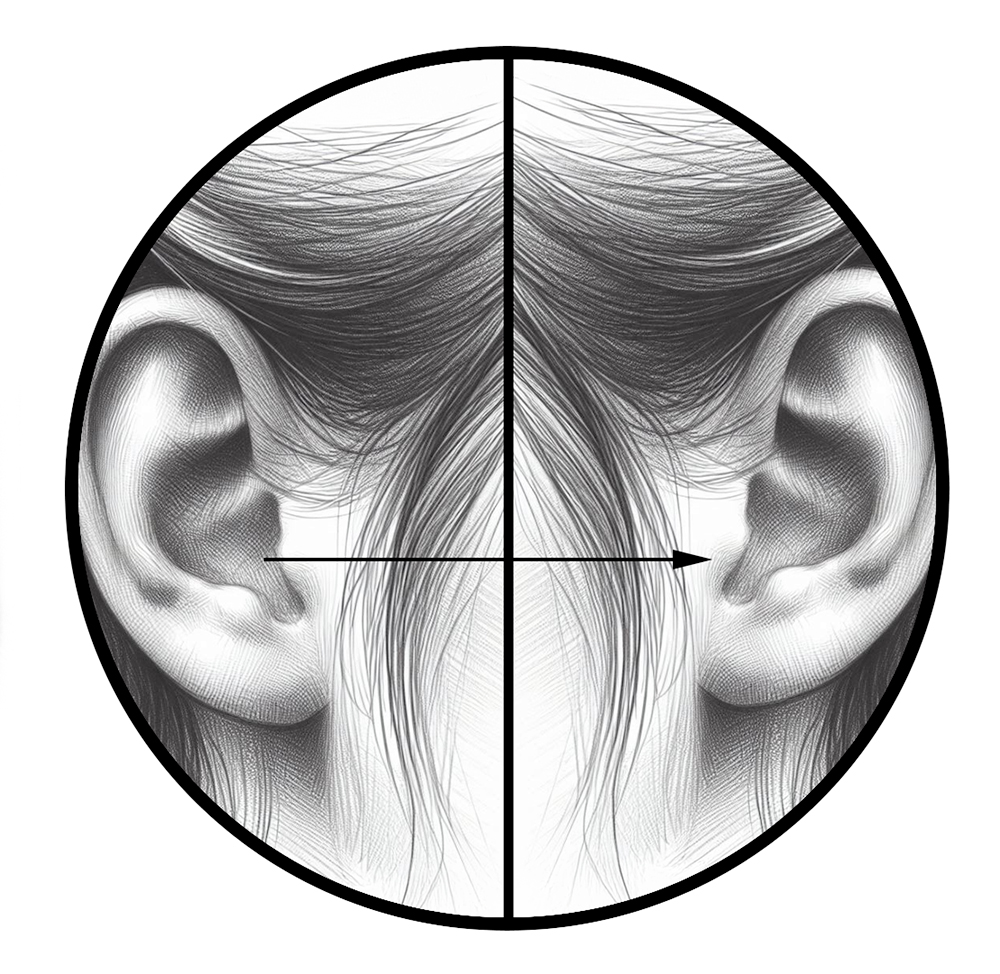
Son of myself, incline her attention1 to the Wise One of myself! To the discerning one of myself stretch out the ear of yourself!
הקשיבה לחכמת hiksheva l'chochmat - Incline her attention/make her pay attention to the Wise One
Julia Smith Literal 1876 Translation:
My son, attend to my wisdom; incline thine ear to understanding:
My son, attend to my wisdom; incline thine ear to understanding:
LITV Translation:
My son, listen to my wisdom; bow your ears to my understanding;
My son, listen to my wisdom; bow your ears to my understanding;
Brenton Septuagint Translation:
My son, attend to my wisdom, And apply thine ear to my words;
My son, attend to my wisdom, And apply thine ear to my words;
Footnotes
| Pro. 5:1 | Pro. 5:1 The feminine direct object suffix here ה- was disregarded as a "paragogic he" which simply means an added phonetic syllable with no meaning. They assumed the letter was added merely for stylistic reasons, or maybe euphonic, or maybe poetic meter, or maybe expressive emphasis. In any case, the primary meaning of "pay attention to her" was certainly not permissible. |