Chapter 2
 Joel 2:20

ואת
וְאֶת־
and אֵת-self eternal
9014
| ־
None
Definition: link
Root: None
Exhaustive: None
None
Definition: link
Root: None
Exhaustive: None
853
| את
ʼêth
Definition: properly, self (but generally used to point out more definitely the object of a verb or preposition, even or namely)
Root: apparent contracted from H226 (אות) in the demonstrative sense of entity;
Exhaustive: apparent contracted from אות in the demonstrative sense of entity; properly, self (but generally used to point out more definitely the object of a verb or preposition, even or namely); (as such unrepresented in English).
ʼêth
Definition: properly, self (but generally used to point out more definitely the object of a verb or preposition, even or namely)
Root: apparent contracted from H226 (אות) in the demonstrative sense of entity;
Exhaustive: apparent contracted from אות in the demonstrative sense of entity; properly, self (but generally used to point out more definitely the object of a verb or preposition, even or namely); (as such unrepresented in English).
9002
ו
None
Definition: and
Root: None
Exhaustive: Conjunctive vav - i.e. followed by prefix, suffix or non-verb (conjunctive) (‘and/but’)
None
Definition: and
Root: None
Exhaustive: Conjunctive vav - i.e. followed by prefix, suffix or non-verb (conjunctive) (‘and/but’)
Conjunction, Direct object eternal self
הצפוני
הַצְּפוֹנִ֞י
the Northern/Stored Up One
6830
| צפוני
tsᵉphôwnîy
Definition: northern
Root: from H6828 (צפון);
Exhaustive: from צפון; northern; northern.
tsᵉphôwnîy
Definition: northern
Root: from H6828 (צפון);
Exhaustive: from צפון; northern; northern.
9009
ה
None
Definition: the
Root: None
Exhaustive: definite article, the, used for all numbers and genders; originally a pronoun demonstrative, this. interrogative particle in direct and indirect questions; in disjunctive questions: whether--or.
None
Definition: the
Root: None
Exhaustive: definite article, the, used for all numbers and genders; originally a pronoun demonstrative, this. interrogative particle in direct and indirect questions; in disjunctive questions: whether--or.
Particle definite article, Adjective adjective both singular absolute
ארחיק
אַרְחִיק
I am distancing far
7368
רחק
râchaq
Definition: to widen (in any direction), i.e. (intransitively) recede or (transitively) remove (literally or figuratively, of place or relation)
Root: a primitive root;
Exhaustive: a primitive root; to widen (in any direction), i.e. (intransitively) recede or (transitively) remove (literally or figuratively, of place or relation); (a-, be, cast, drive, get, go, keep (self), put, remove, be too, (wander), withdraw) far (away, off), loose, [idiom] refrain, very, (be) a good way (off).
râchaq
Definition: to widen (in any direction), i.e. (intransitively) recede or (transitively) remove (literally or figuratively, of place or relation)
Root: a primitive root;
Exhaustive: a primitive root; to widen (in any direction), i.e. (intransitively) recede or (transitively) remove (literally or figuratively, of place or relation); (a-, be, cast, drive, get, go, keep (self), put, remove, be too, (wander), withdraw) far (away, off), loose, [idiom] refrain, very, (be) a good way (off).
Verb Hiphil imperfect first person common singular
מעליכם
מֵעֲלֵיכֶ֗ם
from upon yourselves
9036
| כם
None
Definition: you, personal pronoun - verb/prep. 2nd person masculine plural
Root: None
Exhaustive: Personal object pronoun - suffix for propositions and verbs without an object: 2nd person masculine plural
None
Definition: you, personal pronoun - verb/prep. 2nd person masculine plural
Root: None
Exhaustive: Personal object pronoun - suffix for propositions and verbs without an object: 2nd person masculine plural
5921a
| על
ʻal
Definition: above, over, upon, or against (yet always in this last relation with a downward aspect) in a great variety of applications
Root: properly, the same as H5920 (על) used as a preposition (in the singular or plural often with prefix, or as conjunction with a particle following);
Exhaustive: properly, the same as על used as a preposition (in the singular or plural often with prefix, or as conjunction with a particle following); above, over, upon, or against (yet always in this last relation with a downward aspect) in a great variety of applications; above, according to(-ly), after, (as) against, among, and, [idiom] as, at, because of, beside (the rest of), between, beyond the time, [idiom] both and, by (reason of), [idiom] had the charge of, concerning for, in (that), (forth, out) of, (from) (off), (up-) on, over, than, through(-out), to, touching, [idiom] with.
ʻal
Definition: above, over, upon, or against (yet always in this last relation with a downward aspect) in a great variety of applications
Root: properly, the same as H5920 (על) used as a preposition (in the singular or plural often with prefix, or as conjunction with a particle following);
Exhaustive: properly, the same as על used as a preposition (in the singular or plural often with prefix, or as conjunction with a particle following); above, over, upon, or against (yet always in this last relation with a downward aspect) in a great variety of applications; above, according to(-ly), after, (as) against, among, and, [idiom] as, at, because of, beside (the rest of), between, beyond the time, [idiom] both and, by (reason of), [idiom] had the charge of, concerning for, in (that), (forth, out) of, (from) (off), (up-) on, over, than, through(-out), to, touching, [idiom] with.
9006
מ
None
Definition: from
Root: None
Exhaustive: None
None
Definition: from
Root: None
Exhaustive: None
Prep-M, Preposition Suffix pronominal second person masculine plural
והדחתיו
וְהִדַּחְתִּיו
and I am forcing him
9033
| ו
None
Definition: him, personal pronoun - verb/prep. 3rd person masculine singular
Root: None
Exhaustive: Personal object pronoun - suffix for propositions and verbs without an object: 3rd person masculine singular
None
Definition: him, personal pronoun - verb/prep. 3rd person masculine singular
Root: None
Exhaustive: Personal object pronoun - suffix for propositions and verbs without an object: 3rd person masculine singular
5080
| נדח
nâdach
Definition: to push off; used in a great variety of applications, literally and figuratively (to expel, mislead, strike, inflict, etc.)
Root: a primitive root;
Exhaustive: a primitive root; to push off; used in a great variety of applications, literally and figuratively (to expel, mislead, strike, inflict, etc.); banish, bring, cast down (out), chase, compel, draw away, drive (away, out, quite), fetch a stroke, force, go away, outcast, thrust away (out), withdraw.
nâdach
Definition: to push off; used in a great variety of applications, literally and figuratively (to expel, mislead, strike, inflict, etc.)
Root: a primitive root;
Exhaustive: a primitive root; to push off; used in a great variety of applications, literally and figuratively (to expel, mislead, strike, inflict, etc.); banish, bring, cast down (out), chase, compel, draw away, drive (away, out, quite), fetch a stroke, force, go away, outcast, thrust away (out), withdraw.
9001
ו
None
Definition: sequential 'and'
Root: None
Exhaustive: Verbal vav: joined to verb with no intervening prefix (usually conversive) (future<->past)
None
Definition: sequential 'and'
Root: None
Exhaustive: Verbal vav: joined to verb with no intervening prefix (usually conversive) (future<->past)
conjunctive, Verb Hiphil sequential perfect first person common singular, Suffix pronominal third person masculine singular
אל
אֶל־
toward
9014
| ־
None
Definition: link
Root: None
Exhaustive: None
None
Definition: link
Root: None
Exhaustive: None
413
אל
ʼêl
Definition: near, with or among; often in general, to
Root: (but only used in the shortened constructive form אל ); a primitive particle; properly, denoting motion towards, but occasionally used of a quiescent position, i.e.
Exhaustive: (but only used in the shortened constructive form אל ); a primitive particle; properly, denoting motion towards, but occasionally used of a quiescent position, i.e.; near, with or among; often in general, to; about, according to, after, against, among, as for, at, because(-fore, -side), both...and, by, concerning, for, from, [idiom] hath, in(-to), near, (out) of, over, through, to(-ward), under, unto, upon, whether, with(-in).
ʼêl
Definition: near, with or among; often in general, to
Root: (but only used in the shortened constructive form אל ); a primitive particle; properly, denoting motion towards, but occasionally used of a quiescent position, i.e.
Exhaustive: (but only used in the shortened constructive form אל ); a primitive particle; properly, denoting motion towards, but occasionally used of a quiescent position, i.e.; near, with or among; often in general, to; about, according to, after, against, among, as for, at, because(-fore, -side), both...and, by, concerning, for, from, [idiom] hath, in(-to), near, (out) of, over, through, to(-ward), under, unto, upon, whether, with(-in).
Preposition
ארץ
אֶרֶץ
an earth
776
ארץ
ʼerets
Definition: the earth (at large, or partitively a land)
Root: from an unused root probably meaning to be firm;
Exhaustive: from an unused root probably meaning to be firm; the earth (at large, or partitively a land); [idiom] common, country, earth, field, ground, land, [idiom] natins, way, [phrase] wilderness, world.
ʼerets
Definition: the earth (at large, or partitively a land)
Root: from an unused root probably meaning to be firm;
Exhaustive: from an unused root probably meaning to be firm; the earth (at large, or partitively a land); [idiom] common, country, earth, field, ground, land, [idiom] natins, way, [phrase] wilderness, world.
Noun common both singular construct
ציה
צִיָּה
a parched land
6723
ציה
tsîyâh
Definition: aridity; concretely, a desert
Root: from an unused root meaning to parch;
Exhaustive: from an unused root meaning to parch; aridity; concretely, a desert; barren, drought, dry (land, place), solitary place, wilderness.
tsîyâh
Definition: aridity; concretely, a desert
Root: from an unused root meaning to parch;
Exhaustive: from an unused root meaning to parch; aridity; concretely, a desert; barren, drought, dry (land, place), solitary place, wilderness.
Noun common feminine singular absolute
ושממה
וּשְׁמָמָה֒
a desolation
8077a
| שממה
shᵉmâmâh
Definition: devastation; figuratively, astonishment
Root: or שממה; feminine of H8076 (שמם);
Exhaustive: or שממה; feminine of שמם; devastation; figuratively, astonishment; (laid, [idiom] most) desolate(-ion), waste.
shᵉmâmâh
Definition: devastation; figuratively, astonishment
Root: or שממה; feminine of H8076 (שמם);
Exhaustive: or שממה; feminine of שמם; devastation; figuratively, astonishment; (laid, [idiom] most) desolate(-ion), waste.
9002
ו
None
Definition: and
Root: None
Exhaustive: Conjunctive vav - i.e. followed by prefix, suffix or non-verb (conjunctive) (‘and/but’)
None
Definition: and
Root: None
Exhaustive: Conjunctive vav - i.e. followed by prefix, suffix or non-verb (conjunctive) (‘and/but’)
Conjunction, Noun common feminine singular absolute
את
אֶת־
את-self eternal
855
| את
ʼêth
Definition: a hoe or other digging implement
Root: of uncertain derivation;
Exhaustive: of uncertain derivation; a hoe or other digging implement; coulter, plowshare.
ʼêth
Definition: a hoe or other digging implement
Root: of uncertain derivation;
Exhaustive: of uncertain derivation; a hoe or other digging implement; coulter, plowshare.
853
את
ʼêth
Definition: properly, self (but generally used to point out more definitely the object of a verb or preposition, even or namely)
Root: apparent contracted from H226 (אות) in the demonstrative sense of entity;
Exhaustive: apparent contracted from אות in the demonstrative sense of entity; properly, self (but generally used to point out more definitely the object of a verb or preposition, even or namely); (as such unrepresented in English).
ʼêth
Definition: properly, self (but generally used to point out more definitely the object of a verb or preposition, even or namely)
Root: apparent contracted from H226 (אות) in the demonstrative sense of entity;
Exhaustive: apparent contracted from אות in the demonstrative sense of entity; properly, self (but generally used to point out more definitely the object of a verb or preposition, even or namely); (as such unrepresented in English).
Direct object eternal self
פניו
פָּנָ֗יו
faces of himself
9023
| הו
None
Definition: his, personal posessive - noun suffix: 3rd person masculine singular
Root: None
Exhaustive: Personal posessive pronoun - suffix for nouns, adjectives and passive participles: 3rd person masculine singular
None
Definition: his, personal posessive - noun suffix: 3rd person masculine singular
Root: None
Exhaustive: Personal posessive pronoun - suffix for nouns, adjectives and passive participles: 3rd person masculine singular
6440
פנים
pânîym
Definition: the face (as the part that turns); used in a great variety of applications (literally and figuratively); also (with prepositional prefix) as a preposition (before, etc.)
Root: plural (but always as singular) of an unused noun פנה; from H6437 (פנה));
Exhaustive: plural (but always as singular) of an unused noun פנה; from פנה); the face (as the part that turns); used in a great variety of applications (literally and figuratively); also (with prepositional prefix) as a preposition (before, etc.); [phrase] accept, a-(be-) fore(-time), against, anger, [idiom] as (long as), at, [phrase] battle, [phrase] because (of), [phrase] beseech, countenance, edge, [phrase] employ, endure, [phrase] enquire, face, favour, fear of, for, forefront(-part), form(-er time, -ward), from, front, heaviness, [idiom] him(-self), [phrase] honourable, [phrase] impudent, [phrase] in, it, look(-eth) (-s), [idiom] me, [phrase] meet, [idiom] more than, mouth, of, off, (of) old (time), [idiom] on, open, [phrase] out of, over against, the partial, person, [phrase] please, presence, propect, was purposed, by reason of, [phrase] regard, right forth, [phrase] serve, [idiom] shewbread, sight, state, straight, [phrase] street, [idiom] thee, [idiom] them(-selves), through ([phrase] -out), till, time(-s) past, (un-) to(-ward), [phrase] upon, upside ([phrase] down), with(-in, [phrase] -stand), [idiom] ye, [idiom] you.
pânîym
Definition: the face (as the part that turns); used in a great variety of applications (literally and figuratively); also (with prepositional prefix) as a preposition (before, etc.)
Root: plural (but always as singular) of an unused noun פנה; from H6437 (פנה));
Exhaustive: plural (but always as singular) of an unused noun פנה; from פנה); the face (as the part that turns); used in a great variety of applications (literally and figuratively); also (with prepositional prefix) as a preposition (before, etc.); [phrase] accept, a-(be-) fore(-time), against, anger, [idiom] as (long as), at, [phrase] battle, [phrase] because (of), [phrase] beseech, countenance, edge, [phrase] employ, endure, [phrase] enquire, face, favour, fear of, for, forefront(-part), form(-er time, -ward), from, front, heaviness, [idiom] him(-self), [phrase] honourable, [phrase] impudent, [phrase] in, it, look(-eth) (-s), [idiom] me, [phrase] meet, [idiom] more than, mouth, of, off, (of) old (time), [idiom] on, open, [phrase] out of, over against, the partial, person, [phrase] please, presence, propect, was purposed, by reason of, [phrase] regard, right forth, [phrase] serve, [idiom] shewbread, sight, state, straight, [phrase] street, [idiom] thee, [idiom] them(-selves), through ([phrase] -out), till, time(-s) past, (un-) to(-ward), [phrase] upon, upside ([phrase] down), with(-in, [phrase] -stand), [idiom] ye, [idiom] you.
Noun common masculine plural construct, Suffix pronominal third person masculine singular
אל
אֶל־
toward
9014
| ־
None
Definition: link
Root: None
Exhaustive: None
None
Definition: link
Root: None
Exhaustive: None
413
אל
ʼêl
Definition: near, with or among; often in general, to
Root: (but only used in the shortened constructive form אל ); a primitive particle; properly, denoting motion towards, but occasionally used of a quiescent position, i.e.
Exhaustive: (but only used in the shortened constructive form אל ); a primitive particle; properly, denoting motion towards, but occasionally used of a quiescent position, i.e.; near, with or among; often in general, to; about, according to, after, against, among, as for, at, because(-fore, -side), both...and, by, concerning, for, from, [idiom] hath, in(-to), near, (out) of, over, through, to(-ward), under, unto, upon, whether, with(-in).
ʼêl
Definition: near, with or among; often in general, to
Root: (but only used in the shortened constructive form אל ); a primitive particle; properly, denoting motion towards, but occasionally used of a quiescent position, i.e.
Exhaustive: (but only used in the shortened constructive form אל ); a primitive particle; properly, denoting motion towards, but occasionally used of a quiescent position, i.e.; near, with or among; often in general, to; about, according to, after, against, among, as for, at, because(-fore, -side), both...and, by, concerning, for, from, [idiom] hath, in(-to), near, (out) of, over, through, to(-ward), under, unto, upon, whether, with(-in).
Preposition
הים
הַיָּם
the Sea
3220
| ים
yâm
Definition: a sea (as breaking in noisy surf) or large body of water; specifically (with the article), the Mediterranean Sea; sometimes a large river, or an artifical basin; locally, the west, or (rarely) the south
Root: from an unused root meaning to roar;
Exhaustive: from an unused root meaning to roar; a sea (as breaking in noisy surf) or large body of water; specifically (with the article), the Mediterranean Sea; sometimes a large river, or an artifical basin; locally, the west, or (rarely) the south; sea ([idiom] -faring man, (-shore)), south, west (-ern, side, -ward).
yâm
Definition: a sea (as breaking in noisy surf) or large body of water; specifically (with the article), the Mediterranean Sea; sometimes a large river, or an artifical basin; locally, the west, or (rarely) the south
Root: from an unused root meaning to roar;
Exhaustive: from an unused root meaning to roar; a sea (as breaking in noisy surf) or large body of water; specifically (with the article), the Mediterranean Sea; sometimes a large river, or an artifical basin; locally, the west, or (rarely) the south; sea ([idiom] -faring man, (-shore)), south, west (-ern, side, -ward).
9009
ה
None
Definition: the
Root: None
Exhaustive: definite article, the, used for all numbers and genders; originally a pronoun demonstrative, this. interrogative particle in direct and indirect questions; in disjunctive questions: whether--or.
None
Definition: the
Root: None
Exhaustive: definite article, the, used for all numbers and genders; originally a pronoun demonstrative, this. interrogative particle in direct and indirect questions; in disjunctive questions: whether--or.
Particle definite article, Noun common both singular absolute
הקדמני
הַקַּדְמֹנִי
the Frontward One
6931
| קדמוני
qadmôwnîy
Definition: (of time) anterior or (of place) oriental
Root: or קדמני; from H6930 (קדמון);
Exhaustive: or קדמני; from קדמון; (of time) anterior or (of place) oriental; ancient, they that went before, east, (thing of) old.
qadmôwnîy
Definition: (of time) anterior or (of place) oriental
Root: or קדמני; from H6930 (קדמון);
Exhaustive: or קדמני; from קדמון; (of time) anterior or (of place) oriental; ancient, they that went before, east, (thing of) old.
9009
ה
None
Definition: the
Root: None
Exhaustive: definite article, the, used for all numbers and genders; originally a pronoun demonstrative, this. interrogative particle in direct and indirect questions; in disjunctive questions: whether--or.
None
Definition: the
Root: None
Exhaustive: definite article, the, used for all numbers and genders; originally a pronoun demonstrative, this. interrogative particle in direct and indirect questions; in disjunctive questions: whether--or.
Particle definite article, Adjective adjective both singular absolute
וספו
וְסֹפוֹ
and a termination
9023
| הו
None
Definition: his, personal posessive - noun suffix: 3rd person masculine singular
Root: None
Exhaustive: Personal posessive pronoun - suffix for nouns, adjectives and passive participles: 3rd person masculine singular
None
Definition: his, personal posessive - noun suffix: 3rd person masculine singular
Root: None
Exhaustive: Personal posessive pronoun - suffix for nouns, adjectives and passive participles: 3rd person masculine singular
5490
| סוף
çôwph
Definition: a termination
Root: from H5486 (סוף);
Exhaustive: from סוף; a termination; conclusion, end, hinder participle
çôwph
Definition: a termination
Root: from H5486 (סוף);
Exhaustive: from סוף; a termination; conclusion, end, hinder participle
9002
ו
None
Definition: and
Root: None
Exhaustive: Conjunctive vav - i.e. followed by prefix, suffix or non-verb (conjunctive) (‘and/but’)
None
Definition: and
Root: None
Exhaustive: Conjunctive vav - i.e. followed by prefix, suffix or non-verb (conjunctive) (‘and/but’)
Conjunction, Noun common both singular construct, Suffix pronominal third person masculine singular
אל
אֶל־
toward
9014
| ־
None
Definition: link
Root: None
Exhaustive: None
None
Definition: link
Root: None
Exhaustive: None
413
אל
ʼêl
Definition: near, with or among; often in general, to
Root: (but only used in the shortened constructive form אל ); a primitive particle; properly, denoting motion towards, but occasionally used of a quiescent position, i.e.
Exhaustive: (but only used in the shortened constructive form אל ); a primitive particle; properly, denoting motion towards, but occasionally used of a quiescent position, i.e.; near, with or among; often in general, to; about, according to, after, against, among, as for, at, because(-fore, -side), both...and, by, concerning, for, from, [idiom] hath, in(-to), near, (out) of, over, through, to(-ward), under, unto, upon, whether, with(-in).
ʼêl
Definition: near, with or among; often in general, to
Root: (but only used in the shortened constructive form אל ); a primitive particle; properly, denoting motion towards, but occasionally used of a quiescent position, i.e.
Exhaustive: (but only used in the shortened constructive form אל ); a primitive particle; properly, denoting motion towards, but occasionally used of a quiescent position, i.e.; near, with or among; often in general, to; about, according to, after, against, among, as for, at, because(-fore, -side), both...and, by, concerning, for, from, [idiom] hath, in(-to), near, (out) of, over, through, to(-ward), under, unto, upon, whether, with(-in).
Preposition
הים
הַיָּם
the Sea
3220
| ים
yâm
Definition: a sea (as breaking in noisy surf) or large body of water; specifically (with the article), the Mediterranean Sea; sometimes a large river, or an artifical basin; locally, the west, or (rarely) the south
Root: from an unused root meaning to roar;
Exhaustive: from an unused root meaning to roar; a sea (as breaking in noisy surf) or large body of water; specifically (with the article), the Mediterranean Sea; sometimes a large river, or an artifical basin; locally, the west, or (rarely) the south; sea ([idiom] -faring man, (-shore)), south, west (-ern, side, -ward).
yâm
Definition: a sea (as breaking in noisy surf) or large body of water; specifically (with the article), the Mediterranean Sea; sometimes a large river, or an artifical basin; locally, the west, or (rarely) the south
Root: from an unused root meaning to roar;
Exhaustive: from an unused root meaning to roar; a sea (as breaking in noisy surf) or large body of water; specifically (with the article), the Mediterranean Sea; sometimes a large river, or an artifical basin; locally, the west, or (rarely) the south; sea ([idiom] -faring man, (-shore)), south, west (-ern, side, -ward).
9009
ה
None
Definition: the
Root: None
Exhaustive: definite article, the, used for all numbers and genders; originally a pronoun demonstrative, this. interrogative particle in direct and indirect questions; in disjunctive questions: whether--or.
None
Definition: the
Root: None
Exhaustive: definite article, the, used for all numbers and genders; originally a pronoun demonstrative, this. interrogative particle in direct and indirect questions; in disjunctive questions: whether--or.
Particle definite article, Noun common both singular absolute
האחרון
הָאַחֲרוֹן
the Hinder One
314
| אחרון
ʼachărôwn
Definition: hinder; generally, late or last; specifically (as facing the east) western
Root: or (shortened) אחרן; from H309 (אחר);
Exhaustive: or (shortened) אחרן; from אחר; hinder; generally, late or last; specifically (as facing the east) western; after (-ward), to come, following, hind(-er, -ermost, -most), last, latter, rereward, ut(ter) most.
ʼachărôwn
Definition: hinder; generally, late or last; specifically (as facing the east) western
Root: or (shortened) אחרן; from H309 (אחר);
Exhaustive: or (shortened) אחרן; from אחר; hinder; generally, late or last; specifically (as facing the east) western; after (-ward), to come, following, hind(-er, -ermost, -most), last, latter, rereward, ut(ter) most.
9009
ה
None
Definition: the
Root: None
Exhaustive: definite article, the, used for all numbers and genders; originally a pronoun demonstrative, this. interrogative particle in direct and indirect questions; in disjunctive questions: whether--or.
None
Definition: the
Root: None
Exhaustive: definite article, the, used for all numbers and genders; originally a pronoun demonstrative, this. interrogative particle in direct and indirect questions; in disjunctive questions: whether--or.
Particle definite article, Adjective adjective both singular absolute
ועלה
וְעָלָה
and he climbed up
5927
| עלה
ʻâlâh
Definition: to ascend, intransitively (be high) or actively (mount); used in a great variety of senses, primary and secondary, literal and figurative
Root: a primitive root;
Exhaustive: a primitive root; to ascend, intransitively (be high) or actively (mount); used in a great variety of senses, primary and secondary, literal and figurative; arise (up), (cause to) ascend up, at once, break (the day) (up), bring (up), (cause to) burn, carry up, cast up, [phrase] shew, climb (up), (cause to, make to) come (up), cut off, dawn, depart, exalt, excel, fall, fetch up, get up, (make to) go (away, up); grow (over) increase, lay, leap, levy, lift (self) up, light, (make) up, [idiom] mention, mount up, offer, make to pay, [phrase] perfect, prefer, put (on), raise, recover, restore, (make to) rise (up), scale, set (up), shoot forth (up), (begin to) spring (up), stir up, take away (up), work.
ʻâlâh
Definition: to ascend, intransitively (be high) or actively (mount); used in a great variety of senses, primary and secondary, literal and figurative
Root: a primitive root;
Exhaustive: a primitive root; to ascend, intransitively (be high) or actively (mount); used in a great variety of senses, primary and secondary, literal and figurative; arise (up), (cause to) ascend up, at once, break (the day) (up), bring (up), (cause to) burn, carry up, cast up, [phrase] shew, climb (up), (cause to, make to) come (up), cut off, dawn, depart, exalt, excel, fall, fetch up, get up, (make to) go (away, up); grow (over) increase, lay, leap, levy, lift (self) up, light, (make) up, [idiom] mention, mount up, offer, make to pay, [phrase] perfect, prefer, put (on), raise, recover, restore, (make to) rise (up), scale, set (up), shoot forth (up), (begin to) spring (up), stir up, take away (up), work.
9001
ו
None
Definition: sequential 'and'
Root: None
Exhaustive: Verbal vav: joined to verb with no intervening prefix (usually conversive) (future<->past)
None
Definition: sequential 'and'
Root: None
Exhaustive: Verbal vav: joined to verb with no intervening prefix (usually conversive) (future<->past)
conjunctive, Verb Qal sequential perfect third person masculine singular
באשו
בָאְשׁ֗וֹ
cistern-stench
9023
| הו
None
Definition: his, personal posessive - noun suffix: 3rd person masculine singular
Root: None
Exhaustive: Personal posessive pronoun - suffix for nouns, adjectives and passive participles: 3rd person masculine singular
None
Definition: his, personal posessive - noun suffix: 3rd person masculine singular
Root: None
Exhaustive: Personal posessive pronoun - suffix for nouns, adjectives and passive participles: 3rd person masculine singular
889
באש
bᵉʼôsh
Definition: a stench
Root: from H877 (באר);
Exhaustive: None
bᵉʼôsh
Definition: a stench
Root: from H877 (באר);
Exhaustive: None
Noun common both singular construct, Suffix pronominal third person masculine singular
ותעל
וְתַעַל
and you/she is climbing up
5927
| עלה
ʻâlâh
Definition: to ascend, intransitively (be high) or actively (mount); used in a great variety of senses, primary and secondary, literal and figurative
Root: a primitive root;
Exhaustive: a primitive root; to ascend, intransitively (be high) or actively (mount); used in a great variety of senses, primary and secondary, literal and figurative; arise (up), (cause to) ascend up, at once, break (the day) (up), bring (up), (cause to) burn, carry up, cast up, [phrase] shew, climb (up), (cause to, make to) come (up), cut off, dawn, depart, exalt, excel, fall, fetch up, get up, (make to) go (away, up); grow (over) increase, lay, leap, levy, lift (self) up, light, (make) up, [idiom] mention, mount up, offer, make to pay, [phrase] perfect, prefer, put (on), raise, recover, restore, (make to) rise (up), scale, set (up), shoot forth (up), (begin to) spring (up), stir up, take away (up), work.
ʻâlâh
Definition: to ascend, intransitively (be high) or actively (mount); used in a great variety of senses, primary and secondary, literal and figurative
Root: a primitive root;
Exhaustive: a primitive root; to ascend, intransitively (be high) or actively (mount); used in a great variety of senses, primary and secondary, literal and figurative; arise (up), (cause to) ascend up, at once, break (the day) (up), bring (up), (cause to) burn, carry up, cast up, [phrase] shew, climb (up), (cause to, make to) come (up), cut off, dawn, depart, exalt, excel, fall, fetch up, get up, (make to) go (away, up); grow (over) increase, lay, leap, levy, lift (self) up, light, (make) up, [idiom] mention, mount up, offer, make to pay, [phrase] perfect, prefer, put (on), raise, recover, restore, (make to) rise (up), scale, set (up), shoot forth (up), (begin to) spring (up), stir up, take away (up), work.
9002
ו
None
Definition: and
Root: None
Exhaustive: Conjunctive vav - i.e. followed by prefix, suffix or non-verb (conjunctive) (‘and/but’)
None
Definition: and
Root: None
Exhaustive: Conjunctive vav - i.e. followed by prefix, suffix or non-verb (conjunctive) (‘and/but’)
Conjunction, Verb Qal third person feminine singular
צחנתו
צַחֲנָתוֹ
putrid smell
9023
| הו
None
Definition: his, personal posessive - noun suffix: 3rd person masculine singular
Root: None
Exhaustive: Personal posessive pronoun - suffix for nouns, adjectives and passive participles: 3rd person masculine singular
None
Definition: his, personal posessive - noun suffix: 3rd person masculine singular
Root: None
Exhaustive: Personal posessive pronoun - suffix for nouns, adjectives and passive participles: 3rd person masculine singular
6709
צחנה
tsachănâh
Definition: stench
Root: from an unused root meaning to putrefy;
Exhaustive: from an unused root meaning to putrefy; stench; ill savour.
tsachănâh
Definition: stench
Root: from an unused root meaning to putrefy;
Exhaustive: from an unused root meaning to putrefy; stench; ill savour.
Noun common feminine singular construct, Suffix pronominal third person masculine singular
כי
כִּי
for
3588a
כי
kîy
Definition: (by implication) very widely used as a relative conjunction or adverb (as below); often largely modified by other particles annexed
Root: a primitive particle (the full form of the prepositional prefix) indicating causal relations of all kinds, antecedent or consequent;
Exhaustive: a primitive particle (the full form of the prepositional prefix) indicating causal relations of all kinds, antecedent or consequent; (by implication) very widely used as a relative conjunction or adverb (as below); often largely modified by other particles annexed; and, + (forasmuch, inasmuch, where-) as, assured(-ly), + but, certainly, doubtless, + else, even, + except, for, how, (because, in, so, than) that, + nevertheless, now, rightly, seeing, since, surely, then, therefore, + (al-) though, + till, truly, + until, when, whether, while, whom, yea, yet.
kîy
Definition: (by implication) very widely used as a relative conjunction or adverb (as below); often largely modified by other particles annexed
Root: a primitive particle (the full form of the prepositional prefix) indicating causal relations of all kinds, antecedent or consequent;
Exhaustive: a primitive particle (the full form of the prepositional prefix) indicating causal relations of all kinds, antecedent or consequent; (by implication) very widely used as a relative conjunction or adverb (as below); often largely modified by other particles annexed; and, + (forasmuch, inasmuch, where-) as, assured(-ly), + but, certainly, doubtless, + else, even, + except, for, how, (because, in, so, than) that, + nevertheless, now, rightly, seeing, since, surely, then, therefore, + (al-) though, + till, truly, + until, when, whether, while, whom, yea, yet.
Particle
הגדיל
הִגְדּיל
he has greatly magnified
1431
גדל
gâdal
Definition: to be (causatively make) large (in various senses, as in body, mind, estate or honor, also in pride)
Root: a primitive root; properly, to twist (compare H1434 (גדל)), i.e.
Exhaustive: a primitive root; properly, to twist (compare גדל), i.e.; to be (causatively make) large (in various senses, as in body, mind, estate or honor, also in pride); advance, boast, bring up, exceed, excellent, be(-come, do, give, make, wax), great(-er, come to... estate, [phrase] things), grow(up), increase, lift up, magnify(-ifical), be much set by, nourish (up), pass, promote, proudly (spoken), tower.
gâdal
Definition: to be (causatively make) large (in various senses, as in body, mind, estate or honor, also in pride)
Root: a primitive root; properly, to twist (compare H1434 (גדל)), i.e.
Exhaustive: a primitive root; properly, to twist (compare גדל), i.e.; to be (causatively make) large (in various senses, as in body, mind, estate or honor, also in pride); advance, boast, bring up, exceed, excellent, be(-come, do, give, make, wax), great(-er, come to... estate, [phrase] things), grow(up), increase, lift up, magnify(-ifical), be much set by, nourish (up), pass, promote, proudly (spoken), tower.
Verb Hiphil perfect third person masculine singular
לעשות
לַעֲשׂוֹת׃
to make
9016
None
Definition: verseEnd
Root: None
Exhaustive: None
| None
Definition: verseEnd
Root: None
Exhaustive: None
6213a
| עשה
ʻâsâh
Definition: to do or make, in the broadest sense and widest application
Root: a primitive root;
Exhaustive: a primitive root; to do or make, in the broadest sense and widest application; accomplish, advance, appoint, apt, be at, become, bear, bestow, bring forth, bruise, be busy, [idiom] certainly, have the charge of, commit, deal (with), deck, [phrase] displease, do, (ready) dress(-ed), (put in) execute(-ion), exercise, fashion, [phrase] feast, (fight-) ing man, [phrase] finish, fit, fly, follow, fulfill, furnish, gather, get, go about, govern, grant, great, [phrase] hinder, hold (a feast), [idiom] indeed, [phrase] be industrious, [phrase] journey, keep, labour, maintain, make, be meet, observe, be occupied, offer, [phrase] officer, pare, bring (come) to pass, perform, pracise, prepare, procure, provide, put, requite, [idiom] sacrifice, serve, set, shew, [idiom] sin, spend, [idiom] surely, take, [idiom] thoroughly, trim, [idiom] very, [phrase] vex, be (warr-) ior, work(-man), yield, use.
ʻâsâh
Definition: to do or make, in the broadest sense and widest application
Root: a primitive root;
Exhaustive: a primitive root; to do or make, in the broadest sense and widest application; accomplish, advance, appoint, apt, be at, become, bear, bestow, bring forth, bruise, be busy, [idiom] certainly, have the charge of, commit, deal (with), deck, [phrase] displease, do, (ready) dress(-ed), (put in) execute(-ion), exercise, fashion, [phrase] feast, (fight-) ing man, [phrase] finish, fit, fly, follow, fulfill, furnish, gather, get, go about, govern, grant, great, [phrase] hinder, hold (a feast), [idiom] indeed, [phrase] be industrious, [phrase] journey, keep, labour, maintain, make, be meet, observe, be occupied, offer, [phrase] officer, pare, bring (come) to pass, perform, pracise, prepare, procure, provide, put, requite, [idiom] sacrifice, serve, set, shew, [idiom] sin, spend, [idiom] surely, take, [idiom] thoroughly, trim, [idiom] very, [phrase] vex, be (warr-) ior, work(-man), yield, use.
9005
ל
None
Definition: to, for
Root: None
Exhaustive: None
None
Definition: to, for
Root: None
Exhaustive: None
Preposition, Verb Qal infinitive construct common
RBT Translation:
and אֵת-self eternal the Northern/Stored Up One I am distancing far from upon yourselves and I am forcing him toward an earth a parched land a desolation את-self eternal faces of himself toward the Sea the Frontward One and a termination toward the Sea the Hinder One and he climbed up cistern-stench and you/she is climbing up putrid smell for he has greatly magnified to make
RBT Paraphrase:
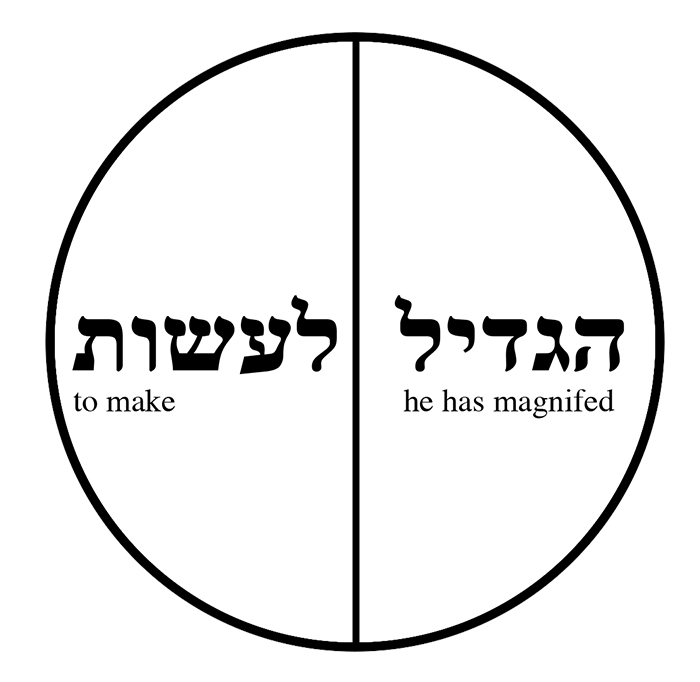
A Sea Serpent
And the self eternal Stored Up One4 I am distancing far from upon yourselves, and I am forcing him toward an earth of dryness and desolation, the self eternal faces of himself toward the Sea, the Frontward One, and the termination of himself toward the Sea, the Hinder One, and he climbed up, a cistern-stench, and she is climbing up, a putrid smell, for he has greatly magnified to make. tail | head
Julia Smith Literal 1876 Translation:
And the northern I will remove far off from you, and I thrust him into a land of dryness and desolation, with his face to the east sea, and his end to the last sea; and his stink came up, and his stench shall come up, for he magnified to do.
And the northern I will remove far off from you, and I thrust him into a land of dryness and desolation, with his face to the east sea, and his end to the last sea; and his stink came up, and his stench shall come up, for he magnified to do.
LITV Translation:
But I will remove the northern army far from you, and I will drive him into a dry and desolated land with his face toward the eastern sea, and his rear toward the western sea. And his stench shall come up, and his ill odor shall come up, because he was doing great things.
But I will remove the northern army far from you, and I will drive him into a dry and desolated land with his face toward the eastern sea, and his rear toward the western sea. And his stench shall come up, and his ill odor shall come up, because he was doing great things.
Brenton Septuagint Translation:
And I will chase away from you the northern adversary, and will drive him away into a dry land, and I will sink his face in the former sea, and his back parts in the latter sea, and his ill savor shall come up, and his stink shall come up, because he has wrought great things.
And I will chase away from you the northern adversary, and will drive him away into a dry land, and I will sink his face in the former sea, and his back parts in the latter sea, and his ill savor shall come up, and his stink shall come up, because he has wrought great things.
Footnotes
| Joe. 2:20 | Joe. 2:20 The term הצפוני (ha-tsefoní) derives from the root צפן (tsāfan), “to hide, store, treasure.” In adjectival form it denotes “the hidden/stored one,” and can be rendered “the treasured up one.” Context determines the nuance: it may signify one preserved for blessing or, ironically, kept in reserve for judgment. Past interpreters, by association with צפוֹן (“north”) which is also derived from the same root, translate “the northerner.” |