Chapter 36
 Job 36:33

יגיד
יַגִּיד
he is exposing
5046
נגד
nâgad
Definition: properly, to front, i.e. stand boldly out opposite; by implication (causatively), to manifest; figuratively, to announce (always by word of mouth to one present); specifically, to expose, predict, explain, praise
Root: a primitive root;
Exhaustive: a primitive root; properly, to front, i.e. stand boldly out opposite; by implication (causatively), to manifest; figuratively, to announce (always by word of mouth to one present); specifically, to expose, predict, explain, praise; bewray, [idiom] certainly, certify, declare(-ing), denounce, expound, [idiom] fully, messenger, plainly, profess, rehearse, report, shew (forth), speak, [idiom] surely, tell, utter.
nâgad
Definition: properly, to front, i.e. stand boldly out opposite; by implication (causatively), to manifest; figuratively, to announce (always by word of mouth to one present); specifically, to expose, predict, explain, praise
Root: a primitive root;
Exhaustive: a primitive root; properly, to front, i.e. stand boldly out opposite; by implication (causatively), to manifest; figuratively, to announce (always by word of mouth to one present); specifically, to expose, predict, explain, praise; bewray, [idiom] certainly, certify, declare(-ing), denounce, expound, [idiom] fully, messenger, plainly, profess, rehearse, report, shew (forth), speak, [idiom] surely, tell, utter.
Verb Hiphil imperfect third person masculine singular
עליו
עָלָיו
upon himself
9033
| ו
None
Definition: him, personal pronoun - verb/prep. 3rd person masculine singular
Root: None
Exhaustive: Personal object pronoun - suffix for propositions and verbs without an object: 3rd person masculine singular
None
Definition: him, personal pronoun - verb/prep. 3rd person masculine singular
Root: None
Exhaustive: Personal object pronoun - suffix for propositions and verbs without an object: 3rd person masculine singular
5921a
על
ʻal
Definition: above, over, upon, or against (yet always in this last relation with a downward aspect) in a great variety of applications
Root: properly, the same as H5920 (על) used as a preposition (in the singular or plural often with prefix, or as conjunction with a particle following);
Exhaustive: properly, the same as על used as a preposition (in the singular or plural often with prefix, or as conjunction with a particle following); above, over, upon, or against (yet always in this last relation with a downward aspect) in a great variety of applications; above, according to(-ly), after, (as) against, among, and, [idiom] as, at, because of, beside (the rest of), between, beyond the time, [idiom] both and, by (reason of), [idiom] had the charge of, concerning for, in (that), (forth, out) of, (from) (off), (up-) on, over, than, through(-out), to, touching, [idiom] with.
ʻal
Definition: above, over, upon, or against (yet always in this last relation with a downward aspect) in a great variety of applications
Root: properly, the same as H5920 (על) used as a preposition (in the singular or plural often with prefix, or as conjunction with a particle following);
Exhaustive: properly, the same as על used as a preposition (in the singular or plural often with prefix, or as conjunction with a particle following); above, over, upon, or against (yet always in this last relation with a downward aspect) in a great variety of applications; above, according to(-ly), after, (as) against, among, and, [idiom] as, at, because of, beside (the rest of), between, beyond the time, [idiom] both and, by (reason of), [idiom] had the charge of, concerning for, in (that), (forth, out) of, (from) (off), (up-) on, over, than, through(-out), to, touching, [idiom] with.
Preposition, Suffix pronominal third person masculine singular
רעו
רֵעוֹ
his friend
9023
| הו
None
Definition: his, personal posessive - noun suffix: 3rd person masculine singular
Root: None
Exhaustive: Personal posessive pronoun - suffix for nouns, adjectives and passive participles: 3rd person masculine singular
None
Definition: his, personal posessive - noun suffix: 3rd person masculine singular
Root: None
Exhaustive: Personal posessive pronoun - suffix for nouns, adjectives and passive participles: 3rd person masculine singular
7452
רע
rêaʻ
Definition: a crash (of thunder), noise (of war), shout (of joy)
Root: from H7321 (רוע);
Exhaustive: from רוע; a crash (of thunder), noise (of war), shout (of joy); [idiom] aloud, noise, shouted.
rêaʻ
Definition: a crash (of thunder), noise (of war), shout (of joy)
Root: from H7321 (רוע);
Exhaustive: from רוע; a crash (of thunder), noise (of war), shout (of joy); [idiom] aloud, noise, shouted.
Noun common both singular construct, Suffix pronominal third person masculine singular
מקנה
מִ֝קְנֶ֗ה
livestock/purchased
4735
מקנה
miqneh
Definition: something bought, i.e. property, but only livestock; abstractly, acquisition
Root: from H7069 (קנה);
Exhaustive: from קנה; something bought, i.e. property, but only livestock; abstractly, acquisition; cattle, flock, herd, possession, purchase, substance.
miqneh
Definition: something bought, i.e. property, but only livestock; abstractly, acquisition
Root: from H7069 (קנה);
Exhaustive: from קנה; something bought, i.e. property, but only livestock; abstractly, acquisition; cattle, flock, herd, possession, purchase, substance.
Noun common both singular absolute
אף
אַף
yea/a nostril/anger
637
אף
ʼaph
Definition: meaning accession (used as an adverb or conjunction); also or yea; adversatively though
Root: a primitive particle;
Exhaustive: a primitive particle; meaning accession (used as an adverb or conjunction); also or yea; adversatively though; also, [phrase] although, and (furthermore, yet), but, even, [phrase] how much less (more, rather than), moreover, with, yea.
ʼaph
Definition: meaning accession (used as an adverb or conjunction); also or yea; adversatively though
Root: a primitive particle;
Exhaustive: a primitive particle; meaning accession (used as an adverb or conjunction); also or yea; adversatively though; also, [phrase] although, and (furthermore, yet), but, even, [phrase] how much less (more, rather than), moreover, with, yea.
Noun common both singular absolute
על
עַל־
upon/against/yoke
9014
| ־
None
Definition: link
Root: None
Exhaustive: None
None
Definition: link
Root: None
Exhaustive: None
5921a
על
ʻal
Definition: above, over, upon, or against (yet always in this last relation with a downward aspect) in a great variety of applications
Root: properly, the same as H5920 (על) used as a preposition (in the singular or plural often with prefix, or as conjunction with a particle following);
Exhaustive: properly, the same as על used as a preposition (in the singular or plural often with prefix, or as conjunction with a particle following); above, over, upon, or against (yet always in this last relation with a downward aspect) in a great variety of applications; above, according to(-ly), after, (as) against, among, and, [idiom] as, at, because of, beside (the rest of), between, beyond the time, [idiom] both and, by (reason of), [idiom] had the charge of, concerning for, in (that), (forth, out) of, (from) (off), (up-) on, over, than, through(-out), to, touching, [idiom] with.
ʻal
Definition: above, over, upon, or against (yet always in this last relation with a downward aspect) in a great variety of applications
Root: properly, the same as H5920 (על) used as a preposition (in the singular or plural often with prefix, or as conjunction with a particle following);
Exhaustive: properly, the same as על used as a preposition (in the singular or plural often with prefix, or as conjunction with a particle following); above, over, upon, or against (yet always in this last relation with a downward aspect) in a great variety of applications; above, according to(-ly), after, (as) against, among, and, [idiom] as, at, because of, beside (the rest of), between, beyond the time, [idiom] both and, by (reason of), [idiom] had the charge of, concerning for, in (that), (forth, out) of, (from) (off), (up-) on, over, than, through(-out), to, touching, [idiom] with.
Preposition
עולה
עוֹלֶה׃
he who climbs up/injustice
9016
None
Definition: verseEnd
Root: None
Exhaustive: None
| None
Definition: verseEnd
Root: None
Exhaustive: None
5927
עלה
ʻâlâh
Definition: to ascend, intransitively (be high) or actively (mount); used in a great variety of senses, primary and secondary, literal and figurative
Root: a primitive root;
Exhaustive: a primitive root; to ascend, intransitively (be high) or actively (mount); used in a great variety of senses, primary and secondary, literal and figurative; arise (up), (cause to) ascend up, at once, break (the day) (up), bring (up), (cause to) burn, carry up, cast up, [phrase] shew, climb (up), (cause to, make to) come (up), cut off, dawn, depart, exalt, excel, fall, fetch up, get up, (make to) go (away, up); grow (over) increase, lay, leap, levy, lift (self) up, light, (make) up, [idiom] mention, mount up, offer, make to pay, [phrase] perfect, prefer, put (on), raise, recover, restore, (make to) rise (up), scale, set (up), shoot forth (up), (begin to) spring (up), stir up, take away (up), work.
ʻâlâh
Definition: to ascend, intransitively (be high) or actively (mount); used in a great variety of senses, primary and secondary, literal and figurative
Root: a primitive root;
Exhaustive: a primitive root; to ascend, intransitively (be high) or actively (mount); used in a great variety of senses, primary and secondary, literal and figurative; arise (up), (cause to) ascend up, at once, break (the day) (up), bring (up), (cause to) burn, carry up, cast up, [phrase] shew, climb (up), (cause to, make to) come (up), cut off, dawn, depart, exalt, excel, fall, fetch up, get up, (make to) go (away, up); grow (over) increase, lay, leap, levy, lift (self) up, light, (make) up, [idiom] mention, mount up, offer, make to pay, [phrase] perfect, prefer, put (on), raise, recover, restore, (make to) rise (up), scale, set (up), shoot forth (up), (begin to) spring (up), stir up, take away (up), work.
Verb Qal participle active masculine singular absolute
RBT Translation:
he is exposing upon himself his friend livestock/purchased yea/a nostril/anger upon/against/yoke he who climbs up/injustice
RBT Paraphrase:
The friend of himself is exposing against himself a purchased one in anger against an injustice!10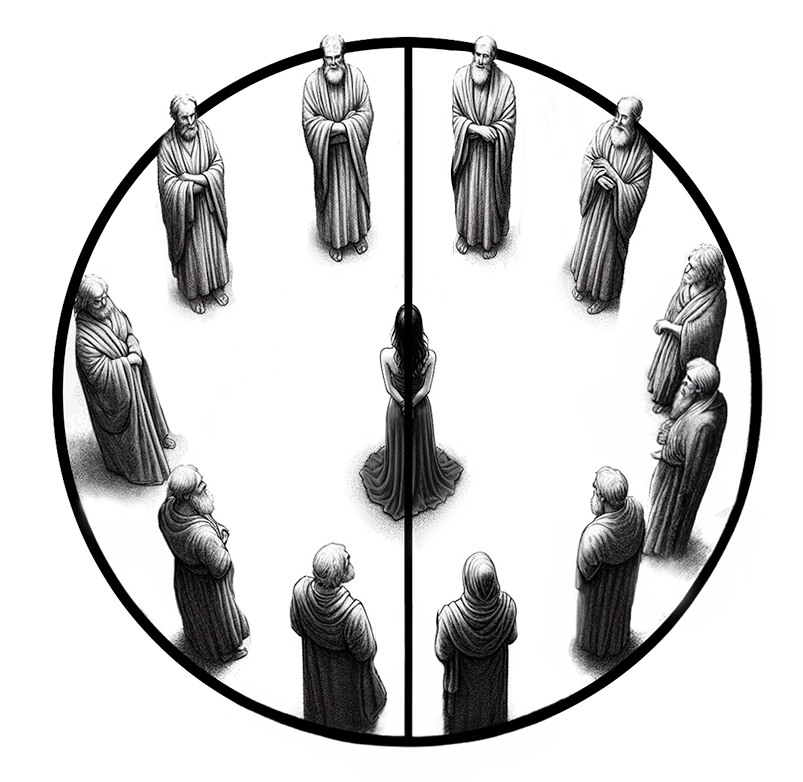
The friend of himself is exposing against himself a purchased one in anger against an injustice!10
an injustice
Julia Smith Literal 1876 Translation:
His thunder will announce concerning him, and the flock also concerning the going up.
His thunder will announce concerning him, and the flock also concerning the going up.
LITV Translation:
its thunder tells about Him; also the cattle, as to what is coming.
its thunder tells about Him; also the cattle, as to what is coming.
Brenton Septuagint Translation:
The Lord will declare concerning this to his friend: But there is a portion also for unrighteousness.
The Lord will declare concerning this to his friend: But there is a portion also for unrighteousness.
Footnotes
| Job. 36:33 | Job. 36:33 עולה has the masculine participle form "he who climbs up" or the feminine noun for "injustice/wrongdoing" (cf. Strong's #5766) |