

Skip to content
RBT Hebrew Interlinear:
יחינו יְחַיֵּנוּ
he is making ourselves live
STRONGS Fürst Gesenius
Verb Piel imperfect third person masculine singular, Suffix pronominal first person both plural
LXX: ζήσεται ἔζησεν ζήτω ζήσομαι ζωῇ
LXX Usage Statistics
H2421:
ζήσεται 55× (18.4%)
ἔζησεν 39× (12.3%)
ζήτω 11× (4.0%)
ζήσομαι 10× (3.2%)
ζωῇ 10× (3.6%)
ζῆσόν 9× (3.2%)
ζήσῃ 8× (2.8%)
ζήσεσθε 7× (2.2%)
'' 6× (1.8%)
ζήσονται 6× (2.1%)
מימים מִיֹּמָיִם
from dual-days/manifestations
STRONGS Fürst Gesenius
Prep-M, Noun common both dual absolute
LXX: ἡμέρᾳ ἡμέρασ σήμερον ἡμέραν ἡμερῶν
LXX Usage Statistics
H3117:
ἡμέρᾳ 574× (20.2%)
ἡμέρασ 571× (23.8%)
σήμερον 204× (9.1%)
ἡμέραν 171× (6.9%)
ἡμερῶν 153× (6.4%)
ἡμέρα 135× (5.4%)
ἡμέραισ 133× (4.6%)
ἡμέραι 116× (4.7%)
--- 51× (2.4%)
'' 46× (1.8%)
ביום בַּיּוֹם
within the Manifestation/Day
STRONGS Fürst Gesenius
Preposition -Within Art, Noun common both singular absolute
LXX: ἡμέρᾳ ἡμέρασ σήμερον ἡμέραν ἡμερῶν
LXX Usage Statistics
H3117:
ἡμέρᾳ 574× (20.2%)
ἡμέρασ 571× (23.8%)
σήμερον 204× (9.1%)
ἡμέραν 171× (6.9%)
ἡμερῶν 153× (6.4%)
ἡμέρα 135× (5.4%)
ἡμέραισ 133× (4.6%)
ἡμέραι 116× (4.7%)
--- 51× (2.4%)
'' 46× (1.8%)
השלישי הַשְּׁלִישִׁי
the Third One
STRONGS Fürst Gesenius
Particle definite article, Adjective ordinal number both singular absolute
LXX: τρίτῃ τρίτοσ τρίτον τρίτῳ τέταρτον
LXX Usage Statistics
H7992:
τρίτῃ 26× (22.9%)
τρίτοσ 20× (17.6%)
τρίτον 19× (15.6%)
τρίτῳ 12× (10.4%)
τέταρτον 3× (2.3%)
τρίτη 3× (2.6%)
τρίτην 3× (2.6%)
τρίτου 3× (2.5%)
μέρουσ 3× (2.0%)
τρίτησ 2× (2.1%)
יקמנו יְקִמֵנוּ
he is standing ourselves up
STRONGS Fürst Gesenius
Verb Hiphil imperfect third person masculine singular, Suffix pronominal first person both plural
ונחיה וְנִחְיֶה
and we are living
STRONGS Fürst Gesenius
Conjunction, Verb Qal first person common plural
LXX: ζήσεται ἔζησεν ζήτω ζήσομαι ζωῇ
LXX Usage Statistics
H2421:
ζήσεται 55× (18.4%)
ἔζησεν 39× (12.3%)
ζήτω 11× (4.0%)
ζήσομαι 10× (3.2%)
ζωῇ 10× (3.6%)
ζῆσόν 9× (3.2%)
ζήσῃ 8× (2.8%)
ζήσεσθε 7× (2.2%)
'' 6× (1.8%)
ζήσονται 6× (2.1%)
לפניו לְפָנָיו׃
to the faces of himself
STRONGS Fürst Gesenius
Preposition, Noun common masculine plural construct, Suffix pronominal third person masculine singular
LXX: προσώπου πρόσωπον ἐναντίον ἐνώπιον ἔναντι
LXX Usage Statistics
H6440:
προσώπου 450× (19.3%)
πρόσωπον 321× (14.0%)
ἐναντίον 190× (9.5%)
ἐνώπιον 176× (8.9%)
ἔναντι 157× (7.9%)
πρόσωπόν 105× (4.6%)
ἐνώπιόν 48× (2.4%)
--- 45× (2.3%)
'' 43× (1.8%)
RBT Translation:
he is making ourselves live from dual-days/manifestations within the Manifestation/Day the Third One he is standing ourselves up and we are living to the faces of himself
RBT Paraphrase:
He is giving life to ourselves from out of dual-manifestations within the Manifestation of the Third One1 He is standing ourselves up, and we are living to the faces of himself!
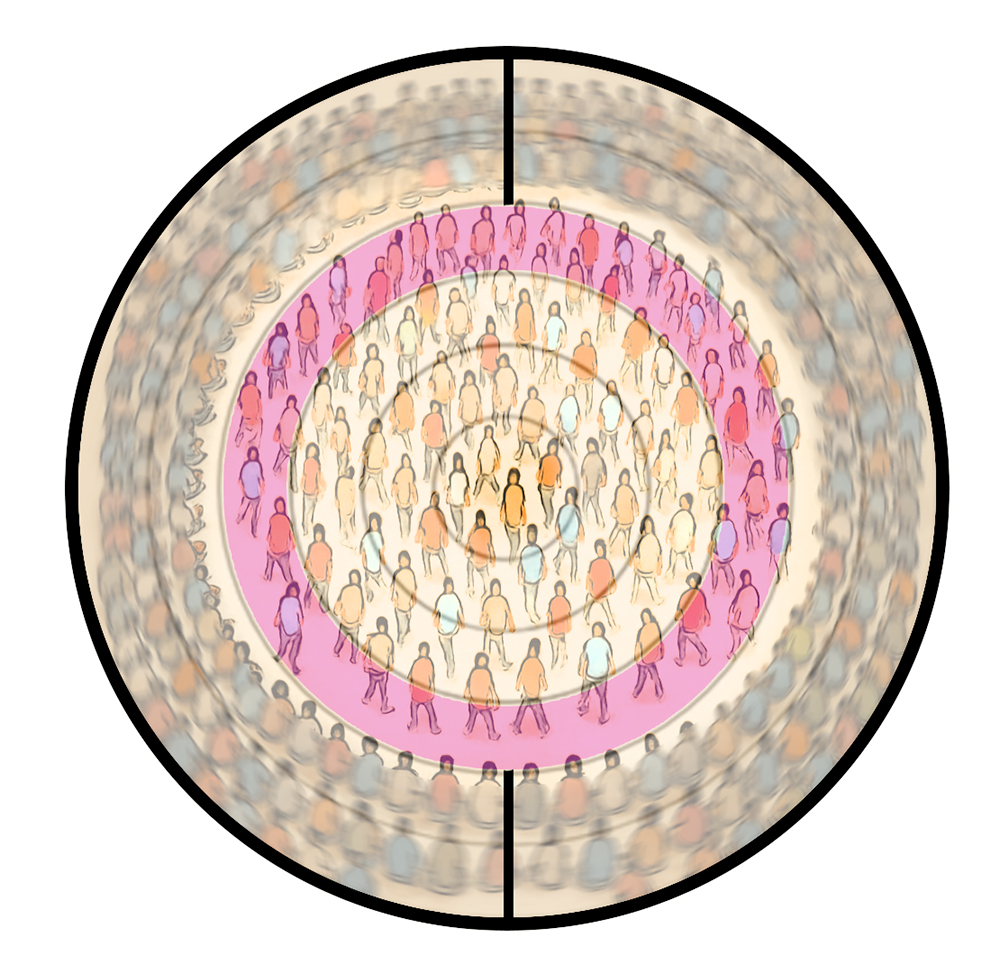
מימים - Dual Days
Standing up out of dual "days"
Julia Smith Literal 1876 Translation:
He will revive us after two days: in the third day he will raise us up and we shall live before him.
LITV Translation:
After two days He will bring us to life. In the third day He will raise us up, and we shall live before Him.
Brenton Septuagint Translation:
After two days he will heal us: in the third day we shall arise, and live before him, and shall know him:

Footnotes

Hos. 6:2
Hos. 6:2

Readers might be surprised to learn that there is no word "two" in this verse.

The rendering "after two days" is concocted from a single word meaning "from dual-days/manifestations." The proper Hebrew would be אַחֲרֵי שְׁנַיִם יָמִים (acharei sh’nayim yamim) — literally, “after two days.” The author was careful to not write this. Scholar's on the other hand (pun intended), didn't seem to care.

מִמִּים consists of the preposition מִ־ (“from”) and the noun ימים (מִיֹּמָיִם mi-yomayym “dual days”), which is a dual masculine plural or collective. Dualism in words represent a whole state not separate ones. When we see the dual noun shamayyim (dual-heavens) it does not mean two separate heavens. Does consistency with Hebrew grammar matter?

On the use of the preposition, the assumption that all these words speak of chronos time led scholars to concoct a function from the preposition מִ־ meaning "from out of" as pertaining to "from that chronos point and after." That crafty stretch is sufficient to maintain the traditions and pet-theologies. It might not seem like a big deal at first, but multiply that exact kind of craft by thousands and thousands, all across the entire corpus of Hebrew scripture, and you have one colossal mixed drink.